
I Let AI Interview Me. Here’s What Happened

AI Asked Me What I Actually Do
What if you could see the pattern before it made the decision for you?
Before you sent the text.
Before you tried to control the outcome.
Before you assumed you knew what someone else was thinking.
Before you pushed harder.
Before you withdrew.
Before you said yes when you wanted to say no.
Before uncertainty turned into an emergency.
That's the space that fascinates me.
The tiny space between what happens to us and what we do next.
I've spent decades studying that space.
Through psychology.
Leadership.
Professional sports.
Relationships.
My own life.
And now, strangely enough, artificial intelligence.
So I decided to try something I had never done before.
I handed AI the microphone.
And I told it to interview me.
Not with safe little questions.
I wanted it to ask the questions people actually ask me.
What exactly do you do?
Why are you so fascinated by athletes?
What does fitness have to do with leadership?
Do you analyze everyone you meet?
Why do you study Reality Transurfing?
How do you use ChatGPT?
What have your mentors taught you?
And after studying human behavior for all these years...
what are you still trying to understand?
That last question may have revealed more about my work than any résumé ever could.
My answer?
People.
Seriously.
People.
Myself included.
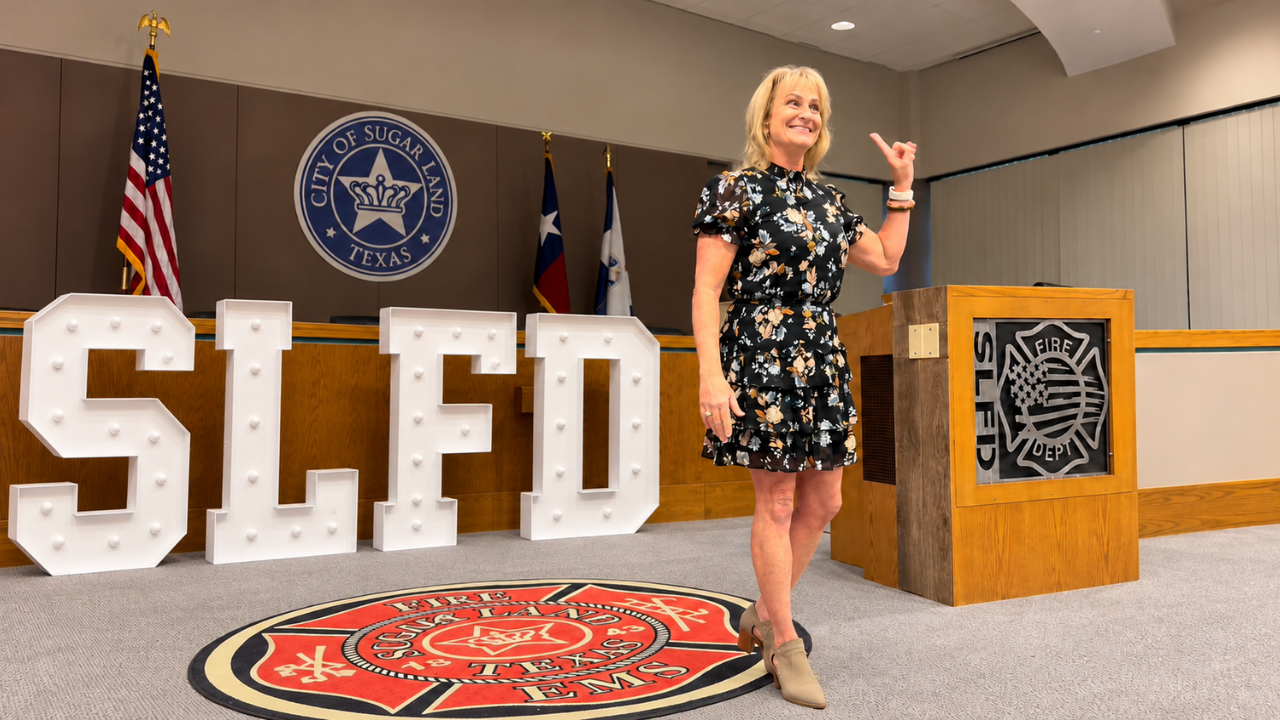
This episode of The Kathie Owen Perspective is different.
The questions are asked by Grace, an AI-generated voice. The answers are mine.
And yes, I had a lot of fun with this one.
I laughed.
I went off script.
I told stories.
I talked about a very strange dream involving cocktails in the trunk of a car.
Because apparently that's where we're going now. 😂
But underneath the fun is something much deeper.
This conversation connects pieces of my work that can look unrelated from the outside.
They're not.
🎧 Prefer to Listen?
Take it on a walk.
Listen in the car.
Or sit outside and watch the ducks.
I highly recommend the ducks.
You'll understand why shortly.

I've Been Studying Patterns Longer Than I Knew
For years, I tried to put what I do into a neat little box.
Fitness trainer.
Corporate wellness director.
Consultant.
Speaker.
Writer.
Podcast host.
I have a degree in psychology. I've worked in fitness for more than two decades. I spent years inside corporate wellness. Today, I consult with individuals and organizations around human behavior, leadership and patterns under pressure.
All of those things matter.
But none of them completely explains what I do.
Because underneath all of them, I've been studying the same thing:
Patterns.
Especially what happens to those patterns when pressure enters the room.
Fitness taught me this long before I had language for it.
Someone gets tired.
Now what?
Someone can't perform an exercise they think they should be able to perform.
And you know how I feel about should.
It's a dirty word. 😂
But watch what happens next.
Do they get embarrassed?
Push harder?
Get angry?
Give up?
Compare themselves to someone else?
Listen to their body?
The exercise is physical.
The response is human.
That's what fascinated me.
And after decades of watching people, I began seeing the same thing everywhere.
Pressure Doesn't Always Create the Pattern
Sometimes pressure reveals it.
That's one reason I love studying professional sports.
Sports compress pressure.
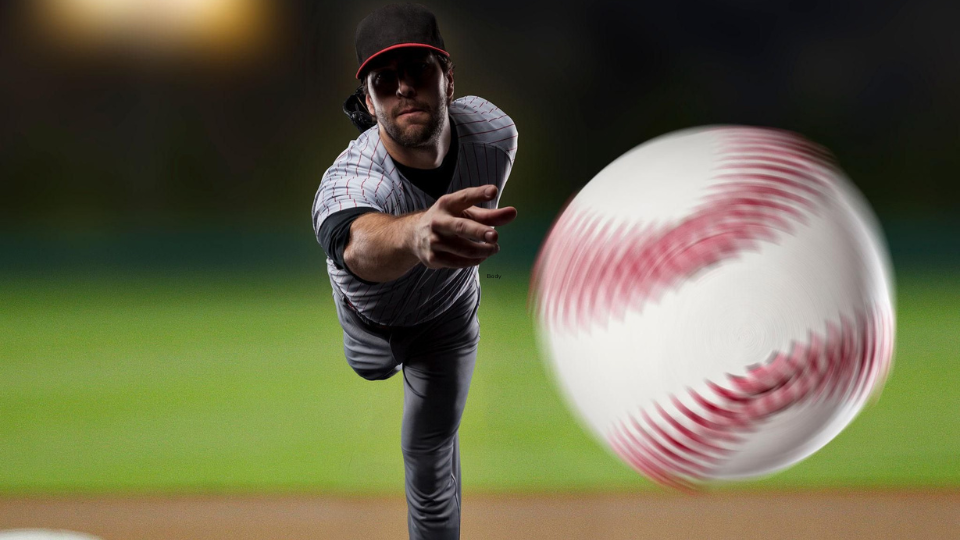
Imagine a pitcher.
Bases loaded.
Two outs.
Full count.
Thousands of people screaming.
His job hasn't technically changed.
Throw the baseball.
But psychologically?
Everything has changed.
Now watch him.
Does he rush?
Does he slow down?
Does he abandon his routine?
Does he breathe?
Does he try to force the outcome?
Sports gives us something business and relationships often don't.
A scoreboard.
We don't have to debate whether the pitch worked.
The ball will tell us.
This is also why I'm so interested in leaders and organizations under pressure.
Everything can look wonderful when everything is going well.
Then the acquisition happens.
The founder has to surrender some control.
A key executive leaves.
Revenue drops.
The company scales faster than expected.
Two leaders disagree.
Now watch.
Who becomes controlling?
Who disappears?
Who starts criticizing?
Who begins carrying responsibilities that aren't theirs?
Who says everything is fine while quietly resisting?
That's where my work around Human Patterns Under Pressure and human diligence becomes particularly important.
Financial diligence matters.
Legal diligence matters.
Operational diligence matters.
But spreadsheets don't always show you the human risk sitting quietly in the room.

Seeing a Pattern Doesn't Mean You Know the Truth
This may be one of the biggest lessons I've learned.
I'm very good at recognizing patterns.
But pattern recognition has a shadow side.
You can start believing that because you've seen something...
you know.
I saw A.
I've seen A before.
A usually leads to B.
Therefore B is definitely going to happen.
No.
Maybe it will.
Maybe it won't.
A pattern is information.
It is not a verdict.
I've had to learn this in my own life, sometimes painfully.
I can observe behavior.
I can notice repetition.
I can develop a hypothesis.
But I still need curiosity.
Because I cannot always know another person's intention.
And when pattern recognition turns into certainty, certainty can turn into ego very quickly.
That's why one phrase has become incredibly important to me:
Observation does not create obligation.
I can see something without fixing it.
I can notice something without explaining it.
I can recognize a pattern without warning everyone.
I don't have to intervene.
And I definitely don't have to carry it home with me.
That takes discipline.

Image taken by my home in Sugar Land, Texas. Photo taken by: Kathie Owen
Sometimes I Need to Watch the Ducks
Yes.
The ducks. 🦆
Pattern recognition can be exhausting when every observation feels like a responsibility.
Nature has helped teach me another way.
I can go outside and watch ducks.
I notice where they gather.
I notice which ones stay together.
I notice when the groups change.
I notice how they move.
My brain still gets to do what it loves doing.
Observe.
But there's nothing for me to fix.
It's observation without responsibility.
Walking gives me that.
Movement gives me that.
Sports gives me that.
Nature gives me that.
Sometimes our nervous systems don't need another answer.
Sometimes they need somewhere safe to pay attention.

Reality Transurfing Changed Another Piece
I study Reality Transurfing by Vadim Zeland extensively.
One reason it resonates so deeply with me is that many of its concepts intersect with patterns I was already observing around attachment, importance, control, choice and uncertainty.
Especially non-attachment.
Non-attachment does not mean you don't care.
It doesn't mean you shouldn't want anything.
You can want something deeply.
You can have goals.
You can have preferences.
You can move toward something you desire.
But desire does not have to become certainty.
And certainty does not have to become control.
That's where things get interesting.
We don't merely decide what we'd like.
We decide:
It has to happen this way.
By this date.
Through this person.
With this outcome.
And suddenly we're gripping reality.
What if the thing you cannot currently see is better than the thing you're trying desperately to force?
That question has become increasingly important to me.
The Pause Is Where Choice Lives
Imagine getting this text:
Can we talk later?
Oh boy.
Your brain can write an entire Netflix series in seven seconds.
They're angry.
Something happened.
You're in trouble.
They're leaving.
You screwed something up.
Or...
maybe they want to ask what you're having for dinner.
You don't know.
But human beings don't particularly enjoy not knowing.
So we manufacture certainty.
Sometimes bad certainty feels safer than uncertainty.
That's why I talk so much about the pause.
The pause is the space where the old automatic response hasn't happened yet.
It's where awareness can enter.
And awareness gives us access to choice.

Even My Dreams Become Data
I told a strange story in this episode about a dream.
I was making cocktails for people.
But I wasn't standing at a beautiful bar.
I was making them in the trunk of a car.
Everyone else was gathered together.
And there I was.
In the back.
Serving everybody.
When I woke up and began examining it, something caught my attention.
How often had I put myself in the back while helping everybody else shine?
That's a pattern I've had to examine in myself.
I don't use dreams to predict the future.
I use them as another opportunity for observation.
What was I feeling?
What role was I playing?
What was I carrying?
What was I avoiding?
What was I trying to fix?
The dream doesn't have to tell me what reality means.
Sometimes it simply helps me see what my own mind is processing.
And Then There's AI
People sometimes ask me how I create so much content.
Here's the funny part.
I rarely sit down anymore and announce:
TODAY I SHALL CREATE CONTENT.
That sounds exhausting.
My content usually starts with something I notice.
A baseball game.
A conversation.
A dream.
A client question.
Something I read.
Something uncomfortable.
Something that makes me curious.
Or something that irritates the hell out of me.
Irritation is excellent material.
Just saying. 😂
Then I bring the observation into ChatGPT.
But I don't simply say:
"Write me a post about leadership."
I use AI differently.
I'll say:
Here's what happened.
Here's what bothered me.
Here's what I think I see.
Tell me what I'm missing.
Challenge this.
Where am I assuming something?
What else could explain this?
What pattern might be operating here?
That's where it gets useful.
I don't want AI to think for me.
I want it to think with me.
AI doesn't have my decades of experience.
It doesn't have my body.
It hasn't worked inside the organizations I've worked inside.
It hasn't trained the people I've trained.
It hasn't lived my life.
I bring that.
AI helps me move the pieces around.
Sometimes it shows me two pieces I didn't realize belonged together.
And suddenly...
there's the article.
There's the podcast.
There's the idea.
There's the question I didn't know I needed to ask.

My Mentors Sometimes Sit at an Invisible Table
Two people I consider mentors are Cintia and Joseph Rodrigues.
I've interviewed both in the past.
But their influence didn't end when those interviews ended.
Sometimes I meet with mentors through what Napoleon Hill called invisible counsel.
I get quiet.
I imagine sitting with people whose thinking I respect.
And I ask questions.
What am I not seeing?
Am I making this too difficult?
What would you notice here?
What's the next move?
I'm not claiming I know where every answer comes from.
I don't need to.
Sometimes later I'll hear Joseph say something in one of his videos that speaks almost perfectly to the question I've been considering.
Is he somehow answering my question?
I don't know.
Maybe I've simply primed my attention to recognize an answer I might otherwise have missed.
Maybe there's more happening.
I can leave room for mystery.
I don't have to turn an experience into certainty for it to be valuable.
Cintia has given me another lens.
Ease.
Opportunity.
Stop assuming struggle makes something more valuable.
Sometimes I can practically hear her asking:
Where is the opportunity, Kathie?
Great mentors eventually become more than people who give us answers.
Their questions become part of the way we think.
Maybe Growth Isn't What We Think It Is
For a long time, I think many of us have imagined personal growth as reaching some magical place where nothing bothers us anymore.
Good luck with that.
You can meditate.
Journal.
Exercise.
Study your patterns.
Practice breathing.
Walk in nature.
Study Reality Transurfing.
Do all the things.
Then somebody sends one text message and your nervous system goes:
HELLO!
😂
Growth isn't necessarily eliminating the reaction.
Maybe growth is recognizing it sooner.
Creating a little more space.
Taking radical responsibility for what belongs to you.
Refusing to carry what doesn't.
Having the courage to see something you would rather not see.
And then choosing.
Not perfection.
Awareness.
Choice.
What Am I Still Curious About?
At the end of the interview, AI asked me this:
After everything you've studied—psychology, fitness, leadership, sports, human behavior, Reality Transurfing and artificial intelligence—what are you most curious about now?
My answer surprised even me a little.
The space I haven't seen yet.
I don't need life to give me the entire map anymore.
Show me the next piece.
Maybe it's a person.
A conversation.
An idea.
An opportunity.
Maybe tomorrow I recognize a pattern I've repeated for 40 years and suddenly see it differently.
There's always something beyond the current frame.
And perhaps certainty isn't what gives us access to it.
Curiosity does.
So here's the question I want to leave with you:
What are you trying so hard to figure out that you may be leaving no room for what you haven't seen yet?
Don't rush to answer it.
Notice.
Get curious.
There may be more available to you than the current frame allows you to see.
About the Author
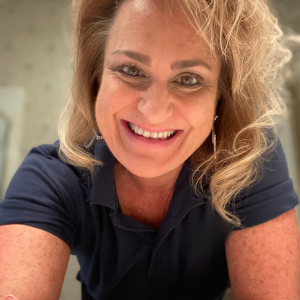
Kathie Owen is a consultant, speaker, author of Human Patterns Under Pressure, and The Truth Bubbles Up, and host of The Kathie Owen Perspective.
With a background spanning psychology, more than two decades in fitness and wellness, corporate leadership environments, and the study of human behavior under pressure, Kathie helps individuals, founders, executives, and organizations identify the patterns that quietly shape decisions, communication, leadership, and high-stakes transitions.
Her work brings together human pattern recognition, emotional regulation, non-attachment, radical responsibility, courage, and what she calls The Observer's Lens—learning to see what is happening before automatically reacting to it.
Before you leave, consider this:
What pattern becomes louder in you when the pressure rises?
Control?
Withdrawal?
Criticism?
People pleasing?
Over-responsibility?
Avoidance?
You don't have to fix it today.
Start by seeing it.
And if you're a founder, executive, leadership team, or organization moving through growth, succession, an acquisition, a merger, or another high-stakes transition, and you suspect the challenge underneath the obvious problem may be human, have a conversation with me.
You don't need to diagnose the problem before we talk.
That's part of my work.
We'll look at what's happening, get curious about what may be underneath it, and determine whether I can be of service.
#HumanPatterns #Leadership #RealityTransurfing
Read the related article on my LinkedIn. It speaks to Human Diligence in M&A and private equity directly.
Read More Articles from Kathie





Transcript
Kathie (2) 0:00
What if I handed the microphone to artificial intelligence and told it to interview me? Not give me questions I approved, not ask me how my day is going, Actually interview me. Ask me the things that people seem to wonder about. Why do I study human behavior? Why am I obsessed with what happens to people under pressure? What does fitness have to do with leadership? Why do I study professional athletes? Why do I talk about Reality Transurfing? How do I use AI in my own work? And maybe the biggest question of all, what exactly do I do? Because apparently, that one still requires some explaining. So today, we're doing something different. AI is asking the questions, I'm answering them, and I have absolutely no idea where some of these answers are gonna take us. Welcome to the Kathie Owen Perspective podcast. My name is Kathie Owen. I have spent more than two decades working with people through fitness, wellness, behavior, psychology, leadership, communication, and consulting. Today, much of my work centers around one thing: human patterns under pressure. What happens to us when certainty disappears? When something doesn't go according to plan, when the stakes rise, when our identity gets challenged, when somebody tells us no, when somebody doesn't respond, when the numbers change, when the company changes, when the body changes. Pressure reveals things, and I've spent a very long time watching. So AI, take it away.
Grace 1:45
Kathie, let's start with the question people probably ask most often. What exactly do you do?
Kathie (2) 1:50
Oh, we're starting with the easy one, okay? Except it's actually not the easy one. For years, I tried to put what I do into a neat little box. Fitness trainer, corporate wellness director, coach, consultant, speaker, writer, podcast host. And all those things are true, but none of them completely explain it. What I really do is notice patterns, especially patterns that become visible under pressure. I look at what is happening underneath the obvious problem, because the obvious problem is not always the real problem. A company might say, "Oh, we have a communication problem, Kathie." Maybe, but why? Is there one executive everybody is afraid to disagree with? Is the founder unable to release control? Is a high performer quietly holding an entire department together? Is everyone being polite in the meeting and angry in the hallway? Or the break room. That's different. The same thing happens individually. Someone might tell me, "I need more confidence, Kathie." Okay, but what happens right before your confidence disappears? What does your body do? What story do you tell yourself? What are you trying to control? What are you afraid will happen? That's the nuance point where I get curious. So my consulting is less about giving people generic answers. It's about helping them see what is actually happening. Because once you see the pattern, you have a choice, and choice changes everything.
Grace 3:47
How did you get so interested in patterns in the first place?
Kathie (2) 3:51
So honestly, I don't think there was one specific moment. I think I've been collecting pieces of this my entire life. I studied psychology. I've been working in fitness for more than two decades, and I spent years in corporate wellness. I've worked with leaders. I've watched teams. I've watched marriages. I've watched families. I've watched athletes. I've watched myself. And here's what became fascinating to me. People often tell you who they think they are, but pressure shows you something else. Not necessarily something bad either, just something real. Put someone under enough pressure and you start seeing the operating system. Do they control? Do they withdraw? Do they criticize? Do they over-function? Do they start people-pleasing everybody? Do they pretend everything is fine? Do they become rigid? Do they become curious? Do they become defensive? And I'm not standing outside of this either. I've s- had to see my own patterns too, sometimes painfully, sometimes hilariously. Sometimes I'm observing myself in real time thinking, "Oh my God, there she goes again." And that matters because I'm observing human behavior is very different from standing above human behavior. I'm in the experiment, too. So I, I like to talk about speaking on stages because, I am a seasoned speaker. I'm a Toastmaster. I'm an area director in Toastmasters, and often people ask me, you know, "Do you get nervous? You don't look nervous. You look very confident." I'm like, "Oh, no, I'm shaking in my shoes. I'm scared." But at the same time, it's like it's a pattern of mine. I've, I've observed myself under pressure enough to know that, yeah, this is excitement as opposed to anxiety. And anxiety can come in a- in another form, and I know the difference between excitement and anxiety. And it's interesting patterns that show up, and we'll talk about this more in a moment
Grace 6:09
You talk about sports a lot. Why are you so fascinated by athletes?
Kathie (2) 6:14
I love this question, and here's why. Because sports compress pressure. I mean, think about it. You can see an entire psylo- psychological pattern unfold in less than 30 seconds. A pitcher has the bases loaded, the crowd is screaming, the count is full, there are two outs. Now watch. Does he rush? Does he slow down? Does he look rattled? Does he breathe? Does he go back to his routine? Does he start trying to force the outcome? That's fascinating to me, because technically his job hasn't changed. He's still throwing a baseball, but psychologically, everything has changed. The same thing happens in business. It happens in relationships. It happens when you get an email you weren't expecting. The circumstances create pressure, and pressure starts revealing patterns. Sports just gives us a scoreboard. That's why I love studying. You don't have to guess whether the pitch worked, 'cause guess what? The ball will tell you.
Grace 7:21
What does fitness have to do with any of this?---
7:24
Almost everything. Fitness taught me to watch people before I ever called it pattern recognition. I've trained people at all different fitness levels, and the body gives you information constantly. Someone gets tired, now what? Someone loses their balance, now what? Someone can't perform the exercise they thought they should be able to perform. There's that dirty word, should. So what happens emotionally? Do they become embarrassed? Do they get angry? Do they push too hard? Do they give up? Do they compare themselves to the person next to them? Do they listen to their body? Fitness is physical, but human beings don't leave their psychology at the gym door. And as people age, this gets even more interesting. Strength changes, balance changes, recovery changes. Maybe your heart rate responds differently. Maybe your body requires a different kind of training than it did 20 years ago. Can you adapt without making that adaptation mean something terrible about you? That's psychology. That's emotional regulation. That's non-attachment. That's courage, and that's radical responsibility. And fitness taught me that the body is constantly communicating. Leadership isn't very different. Organizations communicate, too. You just have to know what you're looking at.
Grace 8:58
What did working in corporate wellness teach you that a psychology textbook couldn't?
9:03
Corporate wellness gave me access to real life, like real deadlines, real personalities, real hierarchy, real stress. And people didn't walk into my office as a case study. They walked in after a bad meeting, or not sleeping, or dealing with stress at home, or trying to lose weight, or trying to manage somebody difficult, or trying to manage themselves. And because I was inside an organization for years, I could observe patterns over time, and that's important. One incident can fool you. Patterns are different. Patterns repeat. They show up in different rooms, different situations, different people, and eventually you begin asking, "What's happening here?" And that question has shaped a tremendous amount of my work.
Grace 10:01
You've used the phrase "human patterns under pressure." What does that actually mean?
10:06
It means pressure doesn't always create the behavior. Sometimes pressure reveals the behavior. Let's say everything is going well. You're calm, you're generous, you're patient, you're collaborative. Wonderful. Now something goes wrong. Someone disagrees with you. A deal starts falling apart. A key employee leaves. The founder discovers that after the acquisition, they won't have complete control anymore. Now, who shows up? And I rub my hands together. That doesn't mean the calm version was fake either. It means we're seeing another layer of the person's pattern, and I think this matters enormously in business because during mergers, acquisitions, succession, scaling, or any major transition in life in general. Because, uh, financial diligence can tell you a lot. Legal diligence can tell you a lot. Operational diligence can tell you a lot, but sometimes the biggest risk isn't on the spreadsheet. It's human. Who is attached to being the person everybody needs? Who can't tolerate losing authority? Who privately distrusts the new leadership? Who holds information nobody else has? Who looks cooperative but is quietly resisting? And who does everybody go to when things fall apart? That is human diligence, and that is an area I'm deeply, deeply interested in.
Grace 11:44
Do you analyze everyone you meet?
11:47
Unfortunately, my brain does not always clock out. But here's where I've changed. Noticing something does not mean I have to do something about it. That distinction has been enormous for me. Observation does not create obligation. I can notice, "Oh, that's interesting," and leave it there. I don't have to explain the person, fix them, warn them, convince them, diagnose them, intervene, carry the information home with me. And frankly, I think better pattern recognition requires more humility, not less. Because seeing a pattern doesn't mean I always know someone's intention. Those are two different things. I can observe behavior, I can observe repetition, I can form a hypothesis, but curiosity has to remain, otherwise pattern recognition becomes certainty, and certainty can become ego very, very quickly, and this takes discipline. So I have a real-life observation that has happened to me, and as you might imagine, in my own personal life, this can get really difficult, because if I see someone really close to me getting deep into a situation that is high pattern recognition that I've seen, like let's say, um, I've been in a relationship with somebody for many, many years, and I know these patterns very, very well from all of the dynamics and systems that we're involved in. And it's taken discipline to just sit back and watch it because a, a pattern recognition can turn into certainty, like I said, and if it turns into certainty, that can really cause, wreak havoc on your emotional self as it is too. I have to emotionally regulate, I have to draw boundaries, I have to protect myself, and I have to, um, process what I'm seeing and pull myself and pull my ego out of it so that certainty doesn't exist, because when you do that, um, it, it changes the dynamic of what you're seeing. You see it more clearly, first of all. And second of all, you don't insert certainty into it, and that leaves it open for what life is a- naturally gonna unfold. It's not easy, but it is pretty simple.
Grace 14:35
Doesn't noticing that much get exhausting?
14:38
Yes, absolutely. Next question? It absolutely can, especially when observation starts turning into responsibility, as I said in that previous story. That was a big lesson for me because there is a difference between seeing something and carrying it, and I've become much more protective of where I place my attention. That's actually why I like things like being in nature, and that has become really important to me. I can watch ducks at the park. I can notice their patterns, where they gather, how they move, which ones disappear, how the groups change, and there's nothing for me to fix. That's incredibly restorative. Sports can do that, too. Movement and fitness can do that. Walking can do that, and sometimes my nervous system needs observation without responsibility, and that has been a surprising lesson for me.
Grace 15:39
You talk about Reality Transurfing. What is it, and why has it become part of your work?
15:44
Reality transurfing is a body of ideas from Vadim Zeland, and I studied those principles extensively. And one reason they resonate with me is because many of them intersect with the things I had already been observing around attachment, control, importance, choice, and uncertainty. One of the biggest ideas I've been exploring lately, and probably for many, many years, is non-attachment. People often thinking that non-attachment means I shouldn't want anything. No, that's not how I see it. You can want something deeply. You can have a desire. You can have goals. You can have preferences. But desire doesn't have to become certainty, and certainty doesn't have to become control, and that's where we often start suffering, right? We decide not only what we want, but exactly how it must happen, when it must happen, who must make it happen, what it must look like, and now we're gripping reality. And one of the things I'm practicing in my own life is allowing more space. I can move. I can choose. I can act. I can take responsibility, and I can leave room for something I haven't seen yet. And this is something I'm gonna talk about maybe even on my next video because I've had a realization since working on these questions about non-attachment. And let me add a little extra component in here. It's got to do with grief, but also, like, realizing that when we try to control what happens, we don't allow space for what reality could give us because I also talk about advantage a lot in reality transurfing and, and finding advantage in everything because when you find advantage even in the things that you're attached to that are not working out the way you want them to, that's where you can let reality come in and bring you the, the bigger thing that you'd never expected. And that's probably what my next episode is gonna be about because it's something I'm working on right now.
Grace 18:08
Is that what you mean when you talk about "the pause"?
18:12
Yes, exactly. The pause is fascinating to me because the pause is where the old response hasn't happened yet. Imagine you receive a message, Can we talk later?" Immediately your brain goes, "About what?" And now the stories start. They're upset. Something happened. I'm in trouble. They've changed their mind. It's bad news maybe, or maybe they wanna ask what you're having for dinner. You don't know yet, and the pause is that uncomfortable space before certainty arrives, and most of us hate it, so we manufacture certainty. Even bad certainty can feel safer than uncertainty. But the pause gives us something incredibly valuable: choice. I don't have to answer the story my nervous system invented. I can wait for information, and that sounds simple. It's not always easy, but it is powerful.
Grace 19:15
You also talk about dreams. Why?
19:17
Because I find dreams fascinating, and I don't treat them like fortune cookies. Seriously. I'm not waking up and saying, "I dreamed about a green chair, therefore Tuesday at 4:17 PM something will happen." That is not how I use them at all. I use dreams as another form of observation. What emotion was present? What role was I playing? Was I chasing something? Was I trying to rescue someone? Was I lost? Was I leaving? Was I waiting? Was I carrying something? And sometimes the dream gives me a picture of something I'm already processing but haven't put into words yet, and I find that incredibly useful not because the dream tells me what reality is, but because it may show me what my own mind is working through. So here's a short dream that I had recently that connected to a pattern, um, that I recognized in myself. I dreamed I was making cocktails for a bunch of friends, but the place I was making the cocktails was a very strange place. It was in the trunk of a car, and the trunk was open, and I was mixing ice and, you know, the cocktails together, and the different kinds of vodka, I think it was. And it was interesting because I was having trouble getting ice into one of the cups, and I said, "Just screw it and just put it in there," and whatever. But here's the most interesting part of the dream, is that I was making these cocktails in the trunk of a car, and everybody was sitting in, like, this car. It was kind of like an extended car, so people were having a party inside this car, and I was making the cocktails for them in the trunk. And this is my pattern. my whole life probably. I've always put myself in the backseat of a car, and to be in the trunk was even worse. I would not, like, um, talk about myself, talk about what I was doing in my relationships. Ever since I was a child, I always felt like I had to put that behind everybody else and make everybody else... Because I could observe all of their patterns, I was letting them shine instead of myself, and that was not helpful at all. And that's, that's another thing that happens with pattern recognition, is you can understand what other people may be kinda going through, and you can observe the patterns. And when you see the patterns, then you put yourself in the back and let everybody else shine. And that was affecting my pattern recognition. It was affecting my emotional regulation extremely. But this dream kind of helped me recognize that pattern in myself, so I could go, "Oh, okay, Kathie, you don't need to take responsibility for seeing that. Just make their cocktails and celebrate with them or whatever." I, I don't remember exactly what I ended up applying in my daily life. I just know that observation does not create obligation, and that has been a huge one for me. So that's pretty much where I got from or what I got from that dream specifically.
Grace 22:50
How do you come up with so much content?
22:53
This one might surprise people. I don't sit down and say, "Today I must create content." I used to a long time ago, but that sounds exhausting to me today. Most of my content starts with something I notice: a conversation, a baseball game, a dream, something a client says, a sentence from a book, an uncomfortable moment, a question somebody asked me, something that irritates me. And sometimes irritation is excellent material. I'm just saying. I capture the observation first, and then I get curious about it, and AI has become a huge part of how I explore that curiosity.
Grace 23:42
So how do you actually use ChatGPT?
23:45
I don't use ChatGPT simply to say, "Write me a post about leadership." I mean, you can, but that's not where it becomes interesting for me. I use it almost like a thinking partner. I bring in the raw material. Here's what happened. Here's what I noticed. Here's the sentence somebody said. Here's what bothered me. That's one of my favorites. Here's what I think I see. Tell me what I'm missing. Challenge this. I love to say that, too. Help me look at it from another angle. What pattern could be here? What evidence do I actually have? Where am I making an assumption? What other interpretations are possible? Then we go back and forth. That's where some of my best content comes from, not from AI replacing my thinking, from AI helping me examine my thinking. There's a big difference. And recently, my friend Melba actually demonstrated this in a speech. She talked about bringing an email into ChatGPT and asking for different ways to respond. That's a perfect example. Instead of reacting from your first emotional impulse, suddenly you have options, and options create choice. See? We're right back to the pause.
Grace 25:11
Does AI make people less creative?
25:14
Yes, it can, but so can a blank piece of paper. It kind of depends on how you use it. If I tell AI, "Think for me," that's very different from, "Think with me." I don't want AI to remove my voice. I want it to help me hear my voice more clearly. Sometimes I bring something into ChatGPT, and the response helps me see a connection I hadn't made. Then I go, "Oh. Oh, oh, oh, wait. That's not actually about the email. That's about control," or, "That's about uncertainty," or, "That's the same thing I watched happen in a baseball game last night." Now we have something, and I'm rubbing my hands together again. AI doesn't have my lived experience. It didn't spend decades training people. It didn't work inside my corporate environment. It didn't have my conversations. It doesn't have my body, and it doesn't have my intuition. I bring that. The tool helps me arrange the pieces. That's why this episode is kind of funny. I'm literally allowing AI to participate in an interview about how I use AI to think. That's very meta, Kathie. And yes, I'm talking about myself in third person.
Grace 26:40
You mentioned living with more ease. Has that always come naturally to you?
26:45
Absolutely not. Really. And this is where my friend and mentor, Cintia, comes into the story. I've interviewed Cintia on my YouTube channel, and she once called me to a life of ease as my mentor, and that phrase stayed with me. A life of ease. But ease doesn't mean doing nothing. It doesn't mean never working. It doesn't mean you become passive. Sometimes ease is simply stopping the unnecessary fight. Stop forcing. Stop the belief that everything valuable has to be difficult. And I've had to examine that in myself. Do I have to push this? Do I have to know right now? Do I have to build the whole thing before I even know what the next step requires? Or can I move toward what is opening? And I love the word opportunity. Cintia says it in a way I can practically hear in my head. Opportunity. She, she's from Spain, and she lives in Paris, and she's got that accent. So when she says opportunity, I can hear it. And sometimes that opportunity, I'm telling her, "Oh my God, this is going like this, and this is going like this." And then she goes, "It's an opportunity, Kathie." And I have become much more interested in seeing opportunities rather than forcing outcomes.
Grace 28:27
You've interviewed people like Cynthia and Joseph Rodriguez. What have those conversations taught you?
28:32
Those conversations taught me something that has lasted much longer than the interviews themselves. So I consider both Cintia and Joseph mentors of mine. And mentorship, at least for me, doesn't always require physically sitting across from someone and asking them a question. Sometimes I meet with them in what I call invisible counsel, and Napoleon Hill talked about invisible counsel in the book Think and Grow Rich. And I do invisible counsel with several people often. And this is actually a really important part of how I think, how I make decisions, and even how I create content. So I'll get quiet. I'll imagine sitting with the people whose thinking I respect, and I'll ask a question. What am I not seeing? What would you do here? Am I making this too difficult? What is the next move? And then I listen. Not in the sense that I'm claiming I know exactly where an answer is gonna come from. I don't, and I don't need to. For me, invisible counsel creates enough quiet that I can get outside of the noise of my own thinking, because our minds can run in 10,000 directions. Fear has an opinion. Ego has an opinion. Urgency has an opinion. Everybody's got an opinion. Man, I know. Invisible counsel helps me create another seat at the table, and Joseph is a really interesting example of this. I may bring a question into that practice, and then sometime later I'll listen to one of his YouTube videos, 'cause he does about several videos a week, and invariably there will be moments when he says something that speaks directly to the question I've been sitting with. Sometimes it's almost ridiculously simple. I'll have this giant complicated question going around in my head, and Joseph will basically say, "Do this." Sometimes he says, "Do nothing in this specific instance." It's... Seriously. And I'll think, "Okay, there it is." Now, do I know that Joseph somehow answered my invisible question, my invisible- Question, no, I can't know that. Maybe I'm simply more attuned to hearing the answer because I've already asked the question. Maybe my mind recognizes something it would've skipped over before. That's the reticular activating system at work. And maybe there's something more going on. I leave room for that. That's part of non-attachment too. I don't have to turn the experience into certainty for it to be valuable. Cintia has influenced me in a different way. There are phrases and ideas from her that have become part of the way I orient myself. Ease, opportunity, and allowing things to unfold without assuming that struggle makes something more worthy. Sometimes I'll make something far too complicated, and I can almost hear that lens. Where is the opportunity here? Or what would this look like with more ease? And suddenly I'm looking at the same situation differently. That's what great mentors do. They don't just give you answers. Eventually, their questions become part of the way you think, and I think that's what invisible counsel gives me. I'm not trying to hand my authority over to somebody else. I'm actually creating enough space to access more of my own discernment, and their perspective actually helps me interrupt my habitual perspective, and sometimes that interruption is all I need. That's also very connected to my content creation. I'll be sitting with one little observation, one sentence, one question, and I'll bring different lenses to it. What would Cintia notice here? What might Joseph question? What am I actually seeing? Then I'll bring it into ChatGPT, like we talked about before, and explore it from another direction, and suddenly one little thought becomes something much bigger. Not because somebody told me what to think, because I gave myself enough perspectives to see beyond my first thought, and that to me is the real value of mentorship. It's not creating followers. It's expanding the way someone learns to see.
Grace 33:16
What's something you believe now that an earlier version of you would have struggled to understand?
33:22
That I don't have to resolve everything, and that is a big one. I don't have to know what everything means. I don't have to know what someone is thinking. I don't have to finish every story. I don't have to force every conversation. I don't have to turn uncertainty into an emergency, and I don't have to use my ability to see patterns to save everyone from their own patterns. That earlier version of me would've struggled with that, and it caused me actually severe anxiety. I, I had severe anxiety, because of this very thing, because I did all of those things before. Because when you have high pattern recognition, it almost feels like you can predict what's gonna happen, and you wanna help everybody, and you wanna see what's going on. And action can feel like power, and sometimes restraint is power. Sometimes observation is enough, and sometimes the bravest thing you can say is, "I don't know yet."
Grace 34:36
What are you still trying to understand?
34:38
People. Seriously, seriously, people, myself included, and I think that's why I continue studying all of this. The moment I believe I completely understand human behavior, I probably stop paying attention. I'm curious about what happens between, get this, between the stimulus and the response. I'm curious about why one person experiences pressure and becomes more present, while someone else becomes more controlling. I'm curious about identity. I'm curious about attachment. I'm curious about what happens inside organizations when the person who built the company has to release all of it or part of it, and I'm curious about why athletes, I love studying professional athletes, how they can perform something perfectly ten thousand times and then suddenly struggle when the stakes change. I'm curious about the nervous system. I'm curious about consciousness. I'm curious about the stories we tell ourselves. I'm curious about the things we don't know we believe until pressure exposes them, and I don't think I'm going to run out of material. Just saying.
Grace 36:03
What do you think people misunderstand most about personal growth?
36:07
It's that growth is becoming a person who never gets triggered. I don't believe that. You can study all the books, meditate, journal, exercise, do breathwork, hold your fingers, walk through nature, study reality transurfing, understand your own patterns, and then somebody sends you one text message and your nervous system goes, "Hello." Growth isn't never having the reaction. Growth can be noticing the reaction sooner, creating a little bit more space, taking radical responsibility for what is yours, not carrying what isn't yours, and having the courage to see something you don't particularly want to see, and then choosing. That's growth to me, not perfection, awareness, and choice.
Grace 37:00
After everything you've studied—psychology, fitness, leadership, sports, human behavior, Reality Transurfing, artificial intelligence—what are you most curious about now?
37:11
The space I haven't seen yet. That's probably the best way I can answer it. I'm less interested than I used to be in forcing life to show me the whole map. I wanna see what the next piece reveals. Maybe that's a person, maybe it's a conversation, maybe it's something I read, maybe it's a business opportunity, maybe it's an idea I haven't encountered yet. Maybe it's a pattern I've been repeating for 40 years, and tomorrow I suddenly see it differently. That is really what excites me. There's always something outside the current frame, and I think curiosity gives us access to it. Not certainty, curiosity. Well, that was different, and I freaking loved it. If you're new here, this episode probably told you more about how my mind works than most anything else I've recorded, because the fitness matters, the psychology matters, the sports matters, reality tur- Transurfing matters, artificial intelligence matters, leadership matters, business matters. But underneath all of it is the same question. What happens to human beings when life applies pressure? What do we see? What do we miss? What do we repeat? And what becomes possible once we finally observe it? That's the work I do. And if you're a founder, executive, leadership team, or organization going through high-stakes transition, and you're beginning to suspect the real risk isn't only financial or operational, I consult with leaders around the human patterns that can quietly shape what happens next. You don't need to know exactly what kind of engagement you need before you contact me. That's actually part of my process. Really, really. We begin with a conversation, we look at what's happening, and we determine whether I can be of service. You can find more about my consulting work at www.kathieowen.com, and that's K-A-T-H-I-E O-W-E-N. And if you came here because of Reality Transurfing, fitness, leadership, psychology, sports, or maybe because you are simply curious about the woman who let artificial intelligence interview her, welcome. I have a feeling we're gonna have a lot more to talk about. My name is Kathie Owen, and this has been an episode of the Kathie Owen Perspective Podcast. I'll see you in the next episode. And thank you for being here.

Discover how resentment affects your nervous system and how forgiveness can help you release tension. Kathie Owen explores rumination, Reality Transurfing, and simple practices to redirect your attention, ease stress, and return to the present moment.
#Resentment #Forgiveness #NervousSystemRegulation #RealityTransurfing