
The Habits You Can't See - Pattern Recognition

The car is parked. The engine is off. You should be walking into the store. Instead, you sit with both hands on the wheel, trying to understand why a small moment has taken over your whole morning.
Someone questioned your idea at work. It was one question. Yet your mind has turned it into a verdict: They don’t trust me. I always get this wrong. Here we go again.
Now your chest feels tight. You replay the meeting. You prepare an answer to an argument no one has made. By the time you get out of the car, you have lived through a whole conflict that may never happen.
There is a habit at work here. It does not involve what time you wake up or how many steps you take. It is the habit of giving a familiar feeling a familiar meaning.
I have spent more than 25 years working in fitness, wellness, and leadership. I know the value of what we practice each day. But the more I study human patterns under pressure, the more interested I become in the habits we cannot see from the outside.
What are you practicing beneath the routine?
We often picture a habit as an action. We go for a walk. We make coffee. We reach for our phone. We follow a plan at the gym.
Those actions matter. Repetition helps build strength and skill. Books such as Tiny Habits, Atomic Habits, The Power of Habit, and The Slight Edge have helped many of us pay attention to the small things we do each day.
But what are we thinking while we do them?
Two people may follow the same workout plan. One thinks, I love feeling strong. I’m taking care of myself. The other thinks, I’m behind. I will never do enough. They may lift the same weights. They may spend the same hour in the gym. Inside, they are practicing very different ways of living.
That does not make one person good and the other bad. It gives each person something worth noticing.
The same thing happens at work and at home. We can make a phone call while assuming the other person wants to hear from us. Or we can make it while bracing for rejection. We can ask a question to learn something. Or we can ask it while already building a case.
Our actions are only part of the habit. The meaning we bring to those actions matters, too.

When a pattern becomes a conclusion
Pattern recognition is useful. You notice that traffic always backs up at the same exit. You leave earlier. You notice that a team grows quiet when a deadline changes. You pay attention. Patterns help us learn from experience.
The trouble begins when recognition turns into certainty before we have enough information.
Imagine you share an idea in a meeting. A colleague asks, “How would that work with our current schedule?” Your mind recognizes an old feeling. Perhaps you have been dismissed before. You hear doubt in the question, and your body gets ready to defend itself.
Maybe the colleague doubts the idea. Maybe they are trying to make it work. At this point, you do not know.
But once a strong feeling arrives, the story can move fast. They are against me. Then, I have to prove myself. Soon you are answering an attack that may not have happened.
This is one reason I return to the pause so often in my work. The pause gives us a chance to see the space between what happened and what we decided it meant.
It can be a very uncomfortable space. We want to know. We want the relief of an answer. Sometimes certainty feels safer than curiosity, even when the answer we have chosen hurts us.
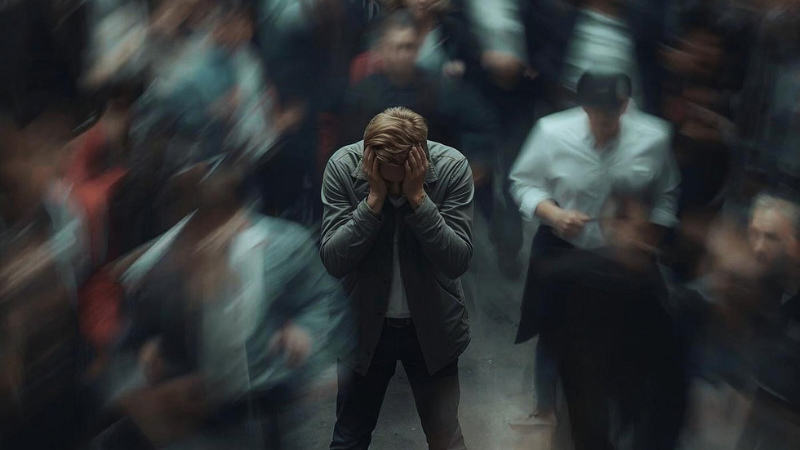
A feeling can make a moment look permanent
Under pressure, one moment can begin to look like our whole life. A hard day feels like proof that things will always be hard. A delay feels like the end of an opportunity. One mistake seems to erase years of effort.
The feeling is real. The fear, anger, or sadness may be strong. You do not have to pretend otherwise. But a feeling about this moment cannot tell you everything about tomorrow.
Neville Goddard’s work on assumptions invites me to ask a simple question:
What have I already decided is true?
It is a useful question when my mind has moved from “This happened” to “This always happens.”
Maybe you have decided that you must force every door open. Maybe you expect people to let you down. Maybe you assume that resting means falling behind. Those ideas can sit in the background for so long that you stop hearing them as ideas.
You do not need to blame yourself for learning them. Some beliefs grew during hard seasons. They may once have helped you get through the day. You can thank yourself for surviving and still ask whether an old assumption is helping you see this moment clearly.
No shame. No condemnation. Just a closer look.

The pause needs awareness
“Take a pause” sounds simple. It can also be misunderstood.
You can stay silent while your mind races. You can wait an hour to reply while spending that hour gathering evidence for your first conclusion. Time has passed, but you have not yet made room for a choice.
An aware pause begins when you notice what is happening inside you.
My shoulders are tight. I want to defend myself. I’m assuming that question was an attack. What do I actually know?
You may need more than a breath. You may need a walk. You may pray, meditate, hold a finger, or sit quietly until the first wave has passed. Emotional regulation is a practice. On some days, you will return to it several times before you can hear yourself think.
That is still the habit. You are practicing the return.
This is where David Hawkins’ distinction between power and force helps me think. I notice the difference between taking an action with a clear mind and taking it because I cannot bear the uncertainty. The action may look the same. The experience of taking it feels different.
You might still speak up in the meeting. You might still ask for a clearer answer. You might still make the next business call. The pause does not ask you to become passive. It helps you act from what you know, with room for what you have yet to learn.

You can miss the pause and return later
I wish I could tell you that awareness always arrives before the reaction. It does not.
Sometimes you send the message. Sometimes you withdraw. Sometimes you spend half a day trying to prove a story that began with very little evidence. Then, while washing dishes or driving home, you see it: Oh. I assumed I knew what that meant.
That moment matters. You have noticed a pattern that was hidden from you a few hours earlier. You can ask a new question. You can repair something if you need to. You can simply give yourself a little room before making the next choice.
The habit is not catching every thought at the perfect time. The habit is returning when you notice where your mind has gone.
I think of a driver who has taken the same road for years. One day, the road changes. There is a new lane, but the driver starts the old turn by habit. Seeing the new sign late does not mean the whole trip is lost. The driver can look around, slow down, and find the next safe turn.
We can do that with our assumptions, too.
Three questions for today
The next time a small event brings a big feeling, give yourself room to feel it. Then, when you are able, ask:
What happened? Name what you saw or heard without filling in the missing pieces.
What am I assuming it means? Listen for words like always, never, and everyone. Notice when a guess starts to sound like a fact.
What would help me see more clearly? You may need to ask someone a question. You may need more time. You may need to care for yourself before you decide what to do.
These questions will not make every situation easy. They can help you keep one hard moment from making every choice for you.
We have more ways to learn, connect, and create than many people before us could have imagined. Yet an old assumption can make a wide world feel very small. When we notice that assumption, another possibility can come into view. We can take one honest step toward it and let the next step reveal itself.
What familiar thought might show up for you today? When it does, see if you can notice it, feel what you feel, and stay in the pause long enough to choose what comes next.
Want to go deeper? Watch or listen to the companion episode of The Kathie Owen Perspective and explore the bonus resources linked with this article. If you would like to talk through a pattern showing up in your life, leadership, or work, you can contact me to book a private conversation.
About the Author

Kathie Owen is a private consultant, author, and speaker with more than 25 years of experience in fitness, wellness, and leadership.
She studies human patterns under pressure and helps people notice how those patterns shape decisions, relationships, and work.
She is the author of Human Patterns Under Pressure, The Truth Bubbles Up and host of The Kathie Owen Perspective Podcast.
Read More Articles from Kathie







Transcript
You get a message. It's only one sentence, maybe five words, but something in you drops. You read it again. You notice what they didn't say. You hear a tone that may or may not be there. But before you put the phone down, your mind has built an entire story. You know what this means. You know what comes next. You know how this ends. And now, your body is responding to a future that hasn't happened. Have you ever been there? I sure have, and the hardest part is that that story can feel so clear, it may even look like a pattern recognition. But somewhere between noticing what happened and deciding what it means, I missed something. I missed the pause. Welcome to the Kathie Owen Perspective Podcast. My name is Kathie Owen. I'm a private consultant, an author, and a speaker. I've spent more than 25 years working with people in fitness, wellness, and leadership. These days, much of my work is about what happens to us under pressure, the patterns we repeat, the meaning we give things, and the choices we make when we become aware of both. Today, I wanna talk about habits, but we're going a little deeper than the habits we can see. If you know my background in fitness, you know I believe in repetition. One workout does not build strength. One walk does not change your life. What you return to day after day matters. I've read Tiny Habits, Atomic Habits, The Power of Habit, and The Slight Edge. I've learned from all of them, but lately I'm looking at a habit that doesn't show up on a calendar or a fitness tracker. It's the habit of what we assume. What do you assume when a person is quiet, when an opportunity takes longer than you hoped, when money feels tight, when you make a mistake, when something feels familiar, but you don't have the whole picture? You may not hear the assumption as a sentence. You may feel it first. Your shoulders tighten, your stomach turns, you want to send a message right now, fix the problem right now, or shut the door before someone else can close it. The feeling is real. It deserves your attention. But the story attached to it may still be a story. That's a small distinction with a lot of power. Neville Goddard's work made me pay closer attention to assumptions. One question I keep bringing into my own life is this: What have I already decided is true? I might think that I'm simply responding to what is in front of me, yet I may be looking at it through an old belief. This always happens. People don't come through. I have to force things to work. If I relax, everything will fall apart. Those thoughts can become so familiar that they feel like facts. There's no shame in that. An assumption may have formed at a time when you were trying to protect yourself. It may have helped you make sense of something difficult. I'm not asking you to scold yourself for having it. You know I say no shame, no condemnation. I'm asking you to notice when it takes the wheel. Think about a driver on a road they know well. They've made the same turn hundreds of times. Then one day the road changes. There's a new lane and a different sign, but the driver is already turning before they see it. Our minds can do that too. We recognize something familiar, we make the old turn, and sometimes we don't see what's actually in front of us. That's why I don't find it useful to sort every thought into a good habit or a bad habit. I'd rather ask, "What happens when I keep following this one? Does it help me see clearly? Does it leave room for new information? Does it help me choose how I wanna respond, or does it lead me straight into a conclusion?" When pressure hits, this gets harder. Strong emotions can make one moment feel much bigger and much more permanent than it is. A hard morning can start to look like a hard life. A delayed answer can feel like a final answer. One setback can seem to explain your whole future. I know how convincing that can feel, and I don't think the answer is to slap a positive thought over it. If I'm scared, telling myself everything is wonderful usually does very little for me. I'm still scared, and now I'm trying to argue with myself. What helps me is coming back to what is happening right now. I'm feeling fear. My mind is telling me this will last forever. I don't actually know that. That is awareness, and awareness creates choice. The pause is where that choice begins, but the pause is more than waiting a few seconds before you speak. You can pause on the outside while the same story keeps racing on the inside. A useful pause has awareness in it. It gives you a chance to notice your body, your thought, and the assumption beneath the thought. You might still feel upset. You might not be ready to make a decision. That's okay. The pause is a place to stay for a little while, not a test you have to pass in 10 seconds. Sometimes I pray, sometimes I meditate, sometimes I hold a finger and give my body time to settle. Sometimes I go for a walk, and sometimes I have to come back to the same pause more than once. That last part matters. We tend to imagine a habit as something we do perfectly every day, but this habit may look like catching yourself after you've already reacted. You may think, "Oh, I decided I knew what that meant before I asked. I treated a feeling like a forecast." That moment still counts. You noticed you can return. If this gives you a new way to think about habits, share this episode. We talk a lot about what we do every day. I think it's time we talked about what we assume every day, too. So let's take another example. Say you're trying to grow a business. You send this note to someone and hear nothing back that day. What happened? You sent a note. You have not heard back yet. What might your mind add? "I said the wrong thing. They aren't interested. This will never work. I need to do more faster." You may feel that rush to push, explain, post three more things, or rethink your entire business by dinner. There may be useful next step to take, but can you see it clearly while you're trying to outrun that feeling? This is where David Hawkins' idea from the book Power Versus Force comes to mind for me. I think about the difference in how I act when I'm clear and how I act when I'm trying to make uncertainty go away. I may still send the next message or do the next piece of work. The action could look almost the same from the outside. Inside, it feels very different. Force says, "I have to make this turn out right, right now." Power says, "I can take the next honest step without deciding the whole story today." That doesn't mean sitting back and doing nothing. I care deeply about taking action, but I want my actions to come from a place where I can see what I'm doing. I've noticed this in fitness, too. You can follow a plan because you enjoy feeling strong and wanna care for yourself, or you can follow the very same plan while telling yourself you're never doing enough. From the outside, both people went to the gym. On the inside, they had two very different days. That's why the habit beneath the habit matters. What are you practicing while you do the thing? Are you practicing trust in your ability to respond? Are you practicing curiosity, or are you rehearsing the belief that every moment is a fight you must win? I'm asking myself these questions, too. I still miss the pause. Sometimes I see it much later, but I'm learning that I don't need to turn a missed pause into one more reason to be hard on myself. I can notice it now. That is the next pause. If this episode is helping you look at your own patterns with a little more room, please like it and subscribe to the channel. It helps more people find this conversation, and I'd love to have you back for the next episode. Before we finish, I wanna give you something simple to try today. You don't need a new morning routine. You don't need to catch every thought. Just notice one moment when your feelings make an answer seem certain. Then ask yourself three questions. What happened? What am I assuming it means? What would help me see more clearly before I choose what to do? You might need to breathe first. You might need to feel sad or angry. You might need to wait until tomorrow. The point is not to get the right answer on command. The point is to give yourself room for an answer you couldn't see when the emotion first hit. That room can change a conversation. It can change how you approach your work, and over time, it can change what you practice every day. I've written a article to go with this episode with bonus resources you can explore at your own pace. You'll find the link in the description or show notes below. The article also has a way to contact me if you'd like to book a conversation about the patterns showing up in your life, leadership, or work. And before you go, think about today. Where might a familiar assumption show up? If it does, see if you can notice it. Feel what you feel, and stay in the pause long enough to choose your next step. No shame, no condemnation, just awareness and the chance to return.

Explore the hidden habits of thought that shape emotional regulation, pattern recognition, and decisions under pressure. Kathie Owen explains how assumptions can make one difficult moment feel permanent, and how an aware pause helps you respond with more clarity at work, at home, and in leadership.
#EmotionalRegulation #PatternRecognition #Habits #LeadershipUnderPressure