
When the Future You Wanted Disappears

There is a strange moment that happens when reality stops cooperating with the story you wrote for it.
Nothing may have completely fallen apart.
But you know.
Something changed.
The deal doesn't feel the same.
The relationship doesn't feel the same.
The founder who was ready to sell suddenly isn't.
The executive who seemed confident starts controlling everything.
The future you could once see so clearly becomes blurry.
And almost immediately, the human mind gets to work.
How do I get this back to where it was supposed to go?
That's usually when we start pushing.
We analyze more.
We predict.
We replay conversations.
We look for explanations.
We try to change other people.
We search for certainty.
But there may be another question hiding underneath all of that effort:
What if the most valuable information is inside the thing I'm trying so hard to make go away?
Not because the painful thing is good.
Not because you should be grateful for it.
And not because everything needs an immediate spiritual lesson.
But because pressure reveals things.
And what pressure reveals can become incredibly useful.
A Dove, a Dream, and an Unexpected Grief
I recently had a dream that stayed with me.
I was watching hunters shoot doves.
It's dove season here in Texas. I have friends who hunt, and I had seen people talking about dove hunting. My mind had plenty of material to pull from.
But the dream affected me more deeply than I expected.
I felt grief.
When I woke up, I kept thinking about why.
Then I remembered something that has always touched me about doves.
They mate for life.
That changed the emotional meaning of the image for me.
I wasn't thinking about hunting anymore.
I was thinking about bonds.
Love.
Permanence.
Loss.
And especially the futures we quietly build around things we love.
I don't know what the dream "meant."
I don't need to.
That's an important distinction.
Observation does not require interpretation.
A dream can stir something without becoming evidence.
A person's behavior can reveal a pattern without telling us their intentions.
A business conflict can expose risk without telling us exactly how the story will end.
Sometimes the most useful thing we can do is notice what surfaced.
And what surfaced for me was grief.

Sometimes We Grieve Something That Never Happened
We usually think grief belongs to the past.
Someone died.
Something ended.
We lost something.
But there is another kind of grief that gets much less attention.
We can grieve the future.
More specifically, we can grieve a future we expected but never actually experienced.
You thought the marriage would become something.
You thought your children would remain close.
You thought the partnership would grow.
You thought the executive team would stay together.
You thought you would retire from that company.
You thought the buyer would protect the culture.
You thought the founder would step away gracefully.
You thought the promotion would finally make you feel secure.
The future existed vividly in your mind.
Then reality took another direction.
That can hurt tremendously.
And here's where attachment gets tricky.
We aren't always attached to what is.
Sometimes we're attached to what we decided would be.
That distinction matters.
Because you can spend years trying to repair something that never actually existed outside your expectations.
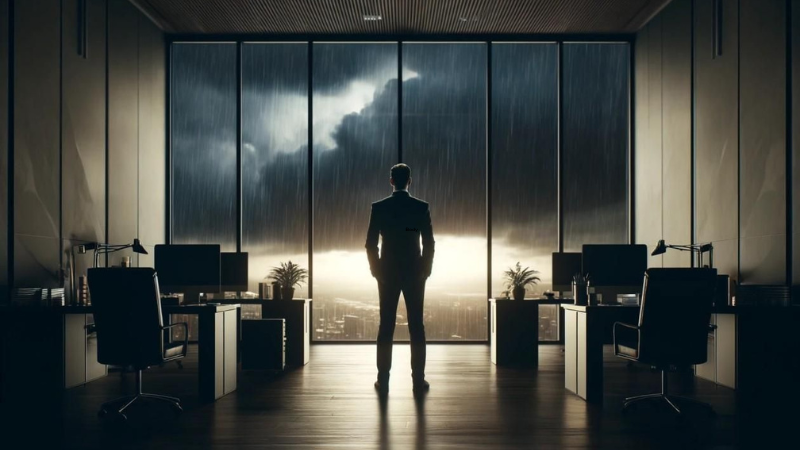
Attachment Can Distort Due Diligence
This becomes especially important in business.
Imagine an acquisition that looks excellent on paper.
Revenue is strong.
Margins look good.
Customer concentration is acceptable.
The legal diligence is clean.
The leadership team says all the right things.
Then the transaction gets closer to closing.
Something changes.
The founder starts challenging decisions that were settled weeks ago.
A senior executive becomes territorial.
A family member suddenly wants a larger role.
A key employee threatens to leave.
People begin forming camps.
Meetings become tense.
The financial model didn't predict any of this.
But the pressure revealed it.
This is where I become interested.
Because behavior under ordinary conditions tells us something.
Behavior under pressure tells us something else.
The founder may not simply be "difficult."
He may be experiencing the loss of identity.
The executive may not simply be "resistant to change."
She may recognize that the new structure threatens an informal power system nobody documented.
The employees may not simply be "afraid of integration."
They may have loyalty to the founder that is stronger than their loyalty to the company.
Those are different problems.
And they require different responses.
This is why human diligence matters.
Traditional diligence asks:
What does this company own, owe, earn, promise, and risk?
Human diligence adds another set of questions:
Who does this organization depend on emotionally?
Where does authority actually live?
What happens when identity is threatened?
Which relationships hold the company together?
Who becomes controlling, critical, avoidant, or silent under pressure?
Those patterns can remain nearly invisible during normal operations.
Then pressure enters the room.
And suddenly, they're everywhere.
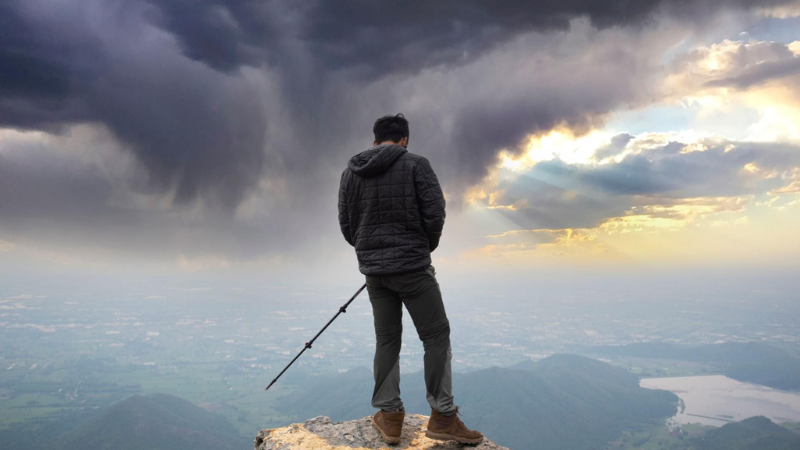
The Problem May Also Contain the Intelligence
This brings us to a principle from Reality Transurfing that I find especially useful:
Advantage.
Advantage can easily be misunderstood.
It does not mean pretending every painful event is wonderful.
A failed acquisition isn't automatically wonderful.
A betrayal isn't wonderful.
Losing a client isn't wonderful.
A relationship ending isn't wonderful.
You don't have to decorate pain with inspirational language.
Instead, I think of advantage as a change in position.
Something happened.
Now that it has happened, what information or possibility is available from this position that wasn't available from the previous one?
That's a very different question.
A deal falling apart may expose a weakness you would rather discover before closing than six months afterward.
A valued employee resigning may expose how much institutional knowledge lived inside one person's head.
A founder resisting succession may reveal that the succession plan was administrative, not psychological.
A relationship changing may expose how much effort you were spending maintaining connection by yourself.
A rejected proposal may force you to understand what your market actually wants.
The painful event doesn't become good.
But the information can become useful.
The problem may contain intelligence.
And that is where advantage begins.

Pressure Creates Data
Here's another way to think about it.
Imagine you are testing a bridge.
Looking at the bridge while nothing is happening tells you something.
But eventually, engineers need to understand what happens when the structure carries weight.
Human systems work in a similar way.
Pressure is weight.
A merger adds weight.
Rapid growth adds weight.
Succession adds weight.
Money problems add weight.
Family conflict adds weight.
Uncertainty adds weight.
Loss adds weight.
The pressure doesn't necessarily create every fracture.
Sometimes it reveals fractures that were already there.
That is one of the central ideas behind my work with Human Patterns Under Pressure.
Instead of immediately judging the behavior, get curious about what the behavior is revealing.
Control may be information.
Withdrawal may be information.
Criticism may be information.
Perfectionism may be information.
People-pleasing may be information.
Over-responsibility may be information.
Avoidance may be information.
The behavior still has consequences.
But curiosity gives us more options than condemnation.

Your Attention Is Part of the Equation
There was another scene in my dream.
Someone began talking about politics.
I stopped the conversation.
I wasn't interested in debating.
I didn't need to prove anything.
I simply didn't want to give my attention to it.
That scene became more interesting to me after I woke up.
Because attention is not passive.
Where attention goes, energy follows.
And under pressure, our attention can become incredibly expensive.
Think about what fear does.
You receive one uncomfortable email.
You read it five times.
Then you imagine why the person sent it.
Then you imagine what they're going to do next.
Then you imagine what you'll say.
Then you imagine what happens if they respond badly.
Thirty minutes later, one email has created an entire fictional future.
Your body may even be responding to that future as though it already happened.
Nothing new occurred.
But your attention kept feeding the story.
This is one reason I distinguish between observation and conclusion.
Observation:
"They haven't responded."
Conclusion:
"They're angry."
Observation:
"The founder questioned the integration plan."
Conclusion:
"He's going to sabotage the deal."
Observation:
"Revenue dropped this quarter."
Conclusion:
"The business is failing."
Those conclusions may eventually prove correct.
But right now?
They're predictions.
And when we confuse predictions with facts, we begin making decisions from realities that may not exist.

Getting Your Attention Back May Be the First Advantage
This may be one of the most useful ways to think about advantage.
Sometimes you cannot see a better opportunity yet.
There isn't another client waiting.
There isn't another buyer.
The relationship isn't magically healed.
You don't know what happens next.
So don't manufacture an advantage.
Start smaller.
Get your attention back.
Bring it back from the imaginary conversation.
Bring it back from six months from now.
Bring it back from what somebody else should be doing.
Bring it back from the outcome that already changed.
Then ask:
What do I actually know?
What is happening now?
What is mine to decide?
What information did this reveal?
What requires action today?
And what am I trying to solve that hasn't even happened?
That is a very different place from which to make a decision.

Non-Attachment Doesn't Mean Giving Up
This is another misunderstanding I see often.
Non-attachment does not require you to stop wanting something.
You can have preferences.
You can have goals.
You can pursue an acquisition.
Build a company.
Fight for a relationship.
Want the promotion.
Create the vision.
Non-attachment isn't the absence of desire.
It's refusing to turn desire into a demand that reality obey you.
I think of it this way:
Desire doesn't have to become certainty.
And certainty doesn't have to become control.
That leaves room.
Room for information.
Room for redirection.
Room for another conversation.
Room for something you hadn't considered.
In Reality Transurfing, the Space of Variations offers an interesting framework for thinking about possibilities.
The future you imagined was one variation.
Maybe it was a beautiful one.
But it was still one.
Attachment can make one possibility feel like the only acceptable possibility.
Non-attachment widens the field again.
The Three Questions I Would Ask Under Pressure
When something important changes, I return to three principles.
Radical Responsibility: What is actually here?
Remove the courtroom.
Remove the prediction.
Remove the story for a moment.
What do I know?
Non-Attachment: Can I allow this reality to exist without immediately forcing it to change?
That doesn't mean doing nothing.
It means seeing before reacting.
Courage: What is my next choice based on what I can actually see?
Not ten choices.
Not the whole future.
The next one.
These questions work in a boardroom.
They work during an acquisition.
They work in a founder transition.
They work in a relationship.
They work at two o'clock in the morning when your mind is trying to convince you that uncertainty is an emergency.
Human patterns under pressure are everywhere.
That's why I don't believe this conversation belongs only to leadership.
It belongs wherever humans encounter something they cannot completely control.

You Can Love the Dove
I keep returning to the dove.
Not because I know what the dream meant.
I don't.
But because I know what I felt.
I cared.
And that's important.
Non-attachment doesn't require me to become less sensitive.
It doesn't require me to stop loving.
It doesn't require me to pretend loss doesn't matter.
You can love the dove.
You can grieve what happened.
You can wish the story had gone differently.
And eventually, you can lift your eyes.
Not because you've decided what happened was good.
But because your life is still happening.
There are still choices.
There is still information.
There are still possibilities you cannot see yet.
You don't have to force yourself to find them today.
Sometimes the most grounded answer is:
I don't know what the advantage is yet.
That's okay.
Don't manufacture certainty.
Don't force meaning.
Don't make grief disappear so you can prove how evolved you are.
Notice what is here.
Protect your attention.
Stay curious.
And remain open.
Because the advantage may not be in what happened.
The advantage may be in what you can finally see because it happened.
Watch, Listen, and Explore More
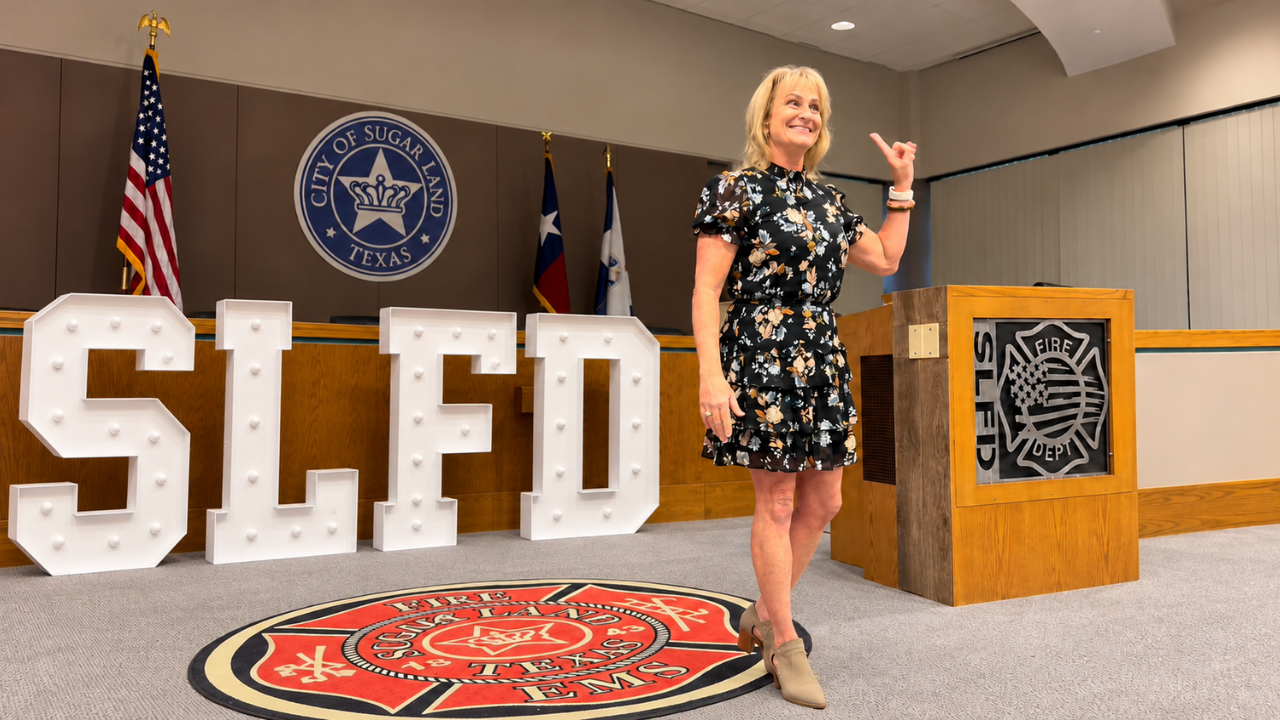
I've created a companion episode of The Kathie Owen Perspective that goes deeper into the dove dream, grief, non-attachment, attention, Reality Transurfing, and how these patterns show up in relationships and business.
You can watch the video or listen to the podcast episode linked here.
I've also included bonus resources to help you explore these ideas more deeply.
Start a Conversation With Kathie
Human patterns under pressure don't fit neatly into one category.
Neither does my consulting.
Sometimes someone comes to me because of a leadership problem.
Sometimes it's a founder or business transition.
Sometimes it's communication, executive presence, a relationship, a career decision, personal uncertainty, or something they cannot quite put into words yet.
That's why I begin with conversation.
You don't need to diagnose yourself before you contact me.
You don't need to decide which service you need.
If something is happening and you believe another set of eyes could help you see the patterns more clearly, start a conversation with me.
We'll look at what is happening.
We'll look at the pressure.
We'll look at the patterns.
And we'll determine whether I can be of service.
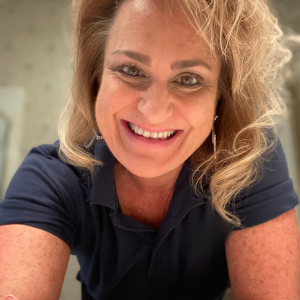
About Kathie Owen
Kathie Owen is a consultant, author, speaker, and host of The Kathie Owen Perspective.
Her work focuses on human patterns under pressure and the often-invisible behavioral dynamics that influence relationships, leadership, business decisions, founder transitions, mergers and acquisitions, and enterprise durability.
Kathie brings together decades of experience studying human behavior, psychology, emotional regulation, executive presence, and performance under pressure.
She is the author of Human Patterns Under Pressure and The Truth Bubbles Up and works with individuals, executives, founders, and organizations to identify patterns that traditional analysis can easily miss.
Her consulting is intentionally diagnostic rather than confined to a fixed menu of services.
The work often begins with a simple conversation: What is happening? What is the pressure revealing? And what becomes possible once you can see the pattern clearly?
View this article on Linkedin where I show this perspective in M&A and PE
Read More Articles from Kathie





Transcript
They were shooting doves in my dream, and I wanted them to stop. That's probably one of the strangest ways I've ever started an episode, but stay with me. It's dove season here in Texas. I have friends who hunt. I had seen people talking about dove hunting over the weekend, so my mind certainly had plenty of information to work with. But in my dream, I was actually watching the hunters shoot the doves, and I felt grief. Not fear, not anger, grief. I remember thinking, "Turn it off. I don't wanna watch this." And when I woke up, I kept wondering why had it affected me so deeply. And then I remembered something. Doves mate for life. Suddenly, I wasn't thinking about hunting anymore. I was thinking about love, attachment, loss. And the grief we experience when something we thought would last doesn't become what we imagined it would become. And that's where today's conversation begins. Welcome to the Kathie Owen Perspective podcast. My name is Kathie Owen. I study human patterns under pressure. My work sits at the intersection of human behavior, emotional regulation, leadership, relationships, business, and high stakes transition. I spent years observing what people do when pressure enters the room. Because pressure reveals things. It reveals what we're afraid of losing, it reveals what we're trying to control, it reveals where we're over responsible, and it reveals what we're avoiding. And very often it reveals what we are attached to. That's why I've been thinking so much lately about grief, non-attachment, and a principle from Reality Transurfing called advantage. Because I don't think grief and advantage cancel each other out. I think they can exist in the same room. Sometimes we aren't grieving only what happened, we're grieving what we thought was going to happen. Think about that. The relationship may still exist, the company may still exist, the job may still exist, the family may still exist, but something about the future you imagined has changed, and that can create very real grief. I've experienced this myself. There have been relationships in my life that did not become what I imagined they would become, and I can grieve that. I don't need to pretend it doesn't hurt. I don't need to turn it into a spiritual lesson before I'm ready, and I certainly don't need to call it good. That is non-attachment. Non-attachment is not indifference. It's not I don't care. It's I care deeply, but I'm no longer going to require reality to become what I expected it to become. That's very different because sometimes the thing we're most attached to isn't even the person. It's the future we built around the person, or the company, or the career, or the deal, or the opportunity. We created a picture, and somewhere along the way, that picture quietly became an expectation. Then expectation became certainty, and when reality didn't cooperate, we suffered, not only because something changed, but because reality violated the future we had already written. That's where non-attachment starts opening something. Not because it takes away the grief, because it widens the field again, and that's where advantage comes in. Advantage is something I learned through reality transurfing, but I wanna make a very important distinction. Finding advantage does not mean saying, "This terrible thing happened, so let me find something positive about it." That's not what I'm talking about. You don't have to call the painful thing good. You don't have to be grateful for betrayal. You don't have to celebrate a failed deal. You don't have to pretend losing something doesn't hurt. You don't even have to know what the advantage is yet. Advantage begins with something much simpler. This is what is here. Not what I wanted to be here, not what I thought would be here, not what should have been here. There's that word. And once I stop fighting that fact, I can ask, what can I see now that I couldn't have seen before? Because sometimes the advantage isn't in what happened. Sometimes the advantage is in what happened to your vision. Suddenly you can see. You see the pattern, you see the weakness, you see the relationship differently, you see the assumption you had been making. You see where you had been over-functioning. You see what you've been tolerating. You see what you value. You see what you don't want anymore. You see where your energy has been going. And that last one matters. Because where your attention goes, your energy follows. Pay attention to what happens when you're scared. Your mind starts scanning. What if this happens? What if that happens? What if I don't have enough money? What if the deal falls apart? What if they leave? What if they don't call? What if the company fails? What if I made the wrong decision? What if this never changes? And now look where your attention went. It left the present moment, it left the information you actually have, and it moved into a future your mind created. Then your body starts responding to that imagined future as though it's happening right now. That's one of the reasons attention matters so much to me. Your attention is valuable. I don't want to hand mine over casually, not to fear, not to someone else's drama, not to every headline, not to every opinion, not to uncertainty, and especially not to a story I cannot prove. That doesn't mean I refuse to look at difficult things. Quite the opposite. I want to look clearly. But looking clearly and staring compulsively are not the same thing. That's a distinction I've had to learn. I can acknowledge something without feeding it all day. I can notice fear without building my home inside of it. I can experience uncertainty without spending six hours predicting what uncertainty means. I can recognize someone's behavior without creating an entire courtroom in my mind about their intentions. I can grieve without making grief my identity. That's where attention becomes power, because when I take my attention back, I get some of my energy back too, and with that energy comes choice. There was another scene in that same dream. Someone started talking about politics, and I stopped her. I basically said, "This isn't the time or place." I didn't argue with her. I didn't need to convince her that I was right. I didn't need to hear enough of the story so I could form an opinion. I simply didn't want to participate. And when I thought about that scene later, I realized how closely it fit with the doves. In both scenes, something was asking for my attention, and I said no. That's a boundary, and I think sometimes we underestimate how important boundaries around attention really are. Not everything deserves access to your mind. Not every conversation needs your participation. Not every crisis requires your emotional energy. Not every opinion needs a response, and not every piece of information is useful simply because it's true. And not every uncomfortable thing needs to be studied for another three hours. We can acknowledge reality and still decide where we place our attention next. The question is, am I looking away because I don't wanna face reality? That's avoidance. Or have I faced what is here, and now I'm consciously choosing where my attention goes? That is discernment. There is a huge difference. Now, take that into business. Imagine a founder who has spent 30 or 40 years building a company. Everybody around the transaction sees financial statements, valuation, legal documents, integration plans, timelines, but the founder may see something completely different: identity, legacy, sacrifice, family, proof. Maybe her name is on the building. Maybe she built the company when nobody believed she could. Maybe she sacrificed birthdays and vacations and sleep to keep it alive. And now someone walks into a conference room and starts talking about what happens after closing. Leadership changes, governance changes, culture changes, maybe even the company name changes. Suddenly, she becomes difficult. She starts controlling things. She questions decisions she's already approved. She criticizes people. She withdraws. She micromanages. Everybody starts asking, "What is wrong with her?" I would ask a different question. "What is she grieving?" Because grief doesn't always look like sadness. Under pressure, grief can look like control. It can look like criticism. It can look like withdrawal. It can look like perfectionism. It can look like over-responsibility. It can look like people-pleasing. It can look like avoidance. That's human patterns under pressure, and those patterns don't stay contained inside one person. They move through the company. They affect trust. They affect communication. They affect decision-making. They affect integration, and eventually they can affect enterprise value. That's why human diligence matters. Financial diligence can tell you what happened inside the company. Human diligence helps you understand what may happen when these people are placed under a kind of pressure they'd never experienced before. And here's the advantage question. What is this behavior revealing? Maybe we're discovering that the company depends far more heavily on the founder than anyone realized. Maybe we're discovering hidden loyalty structures. Maybe two executives who looked aligned have never trusted each other. Maybe nobody knows how to make a decision without one person in the room. Maybe the culture everybody thought was strong was actually being held together by one personality. The conflict isn't necessarily the advantage. The information is. Now we can see something, and once we can see it, we have choices we didn't have before. Relationships are no different. Something changes, someone pulls away, a dynamic becomes clearer. Something you hoped would eventually happen never happens, and the mind immediately wants to repair the original picture. How do I get this back? How do I make them understand? How do I get them to change? How do I make this become what I always believed it would become? And sometimes we spend years trying to repair an imagined future instead of observing the relationship that's actually in front of us. That's painful to admit. I've had to admit it myself. Sometimes we are not grieving the relationship we lost. We're grieving the relationship we kept waiting for, and that's where my three principles become very practical. Radical responsibility asks, "Can I see what is actually here?" Not what I wish were here, not what someone could become, not what might happen someday. What is here. Non-attachment asks, "Can I allow what is here to exist without trying to control it into something else?" And courage asks, "Can I make my next choice based on what I can actually see?" That's where things begin to change, because now I'm not spending all my energy trying to move someone else's chess piece. I'm looking at my own, and maybe that's what affected me so much about those doves. I knew doves mate for life. There was something about seeing that bond interrupted that touched something in me. I don't know exactly what the dream meant, and I don't need to know. That's important. I'm not gonna take a dream and turn it into evidence. I'm simply observing what it brought up in me. It brought up grief, it brought up attachment, it brought up love, and strangely enough, it brought up choice. Because in the dream, I didn't stop caring about the dove. I simply said, "I don't want to keep watching this." That's not indifference. That's not denial. That's not pretending something painful didn't happen. Sometimes non-attachment sounds like, "This hurts me, I care deeply, and I still get to decide where my attention goes next." Maybe that's the first advantage, not the lesson, not the replacement, not the better outcome, just getting your attention back. Because when your attention is trapped in what should have happened, there's that word, you have very little attention left for what is actually happening, and when your attention is trapped in fear about what might happen, you have very little attention left for what you can do right now. This is why I love the idea of the space of variations in reality transurfing. The future you imagine was one possibility. One. Maybe it was beautiful. Maybe you wanted it badly. Maybe you still wish it had happened. You don't have to amputate that desire. But desire doesn't have to become certainty, and certainty doesn't have to become control because the moment you decide it has to happen this way, your field of vision starts shrinking. You stare at outcome A, meanwhile B is over here, C is over there, there's D, there's E. There's an opportunity you haven't noticed. There's information you haven't considered. There's a conversation you haven't had. There's a door you did not know existed. There's a version of your life you couldn't imagine because you were too busy trying to save the one you had already written. Non-attachment widens the field, and advantage asks you to look around, not necessarily today, not while you're on the floor grieving. There's no deadline. Sometimes the most powerful thing you can say is, "I don't know what the advantage is yet. I don't know what happens next. I don't know what this means, but I'm not gonna force the old outcome back into place simply because uncertainty makes me uncomfortable. I'm gonna stay awake. I'm gonna pay attention. I'm gonna notice what this reveals, and I'm going to be careful about where I send my energy because my attention is one of the most valuable things I have." And that's really why people come to me for so many different kinds of consulting. Human patterns under pressure are everywhere. They're in mergers and acquisitions. They're in founder transitions. They're in leadership teams. They are in careers. They are in business decisions. They are in relationships. They are in families. They are in personal transitions. They're in the moments when you know something has changed, but you don't know what you're supposed to do next. Sometimes you don't need someone to hand you an answer. Sometimes you need another observer, someone who isn't inside the emotional weather with you, someone c- who can help you notice your attention keeps going over here. You keep trying to solve this person's behavior. You keep predicting something you cannot know. You keep trying to resurrect an outcome that reality may be asking you to release. What happens if we pull your attention back? What do you actually know? What pattern is here? What becomes available from this position? That's often where my consulting begins, with a conversation. So if you're listening to this and something came to mind, a business situation, a transition, a relationship, a leadership problem, a decision, or something you can't quite name, I invite you to have a conversation with me. You don't need to figure out which box you fit into first. That's the point of the conversation. We'll look at what's happening. We'll look at the patterns. We'll look at where the pressure is. We'll look at where your attention and energy are going, and we'll determine whether I can be of service. I've also created a companion blog post for this episode. I always do that. This article includes the video, the podcast episode, bonus resources to help you explore reality transurfing, non-attachment, emotional regulation, and human patterns under pressure more deeply. You'll find that link with this episode. And I'll leave you with this. You can grieve the future you wanted. You can wish things had happened differently. You can love the dove. You can hate what happened to it, and you can still lift your eyes because the advantage may not be in what happened. The advantage may be in what you can finally see because it happened. And sometimes the very first thing you see is where you want your attention to go next. All right. Thank you for listening to The Kathie Owen Perspective podcast. My name is Kathie Owen. I trust you found it helpful. And I'll see you in the next episode.

Discover how resentment affects your nervous system and how forgiveness can help you release tension. Kathie Owen explores rumination, Reality Transurfing, and simple practices to redirect your attention, ease stress, and return to the present moment.
#Resentment #Forgiveness #NervousSystemRegulation #RealityTransurfing