
What If You Don't Need to Know Yet? Uncertainty Just Hit
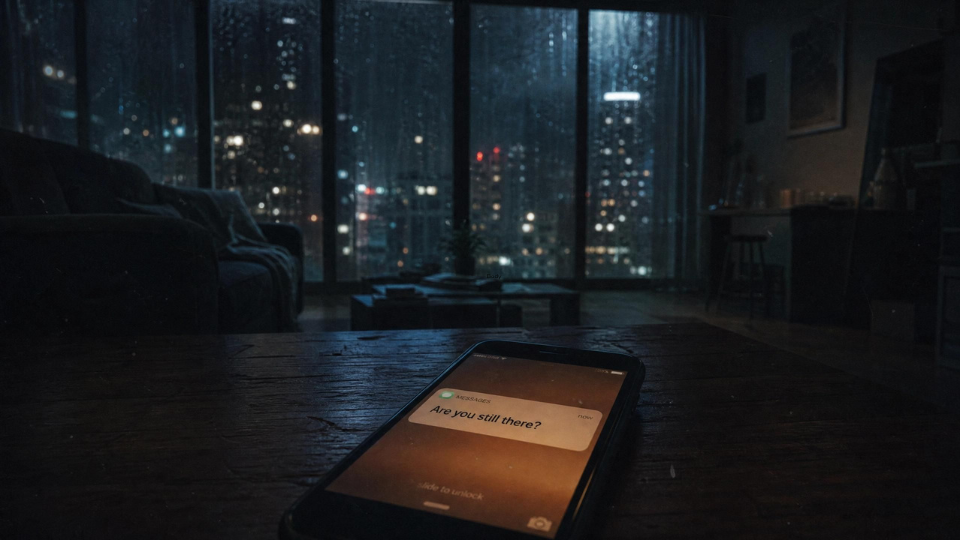
You Don't Know. Now What?
I once heard someone say something that stopped me:
“You are trying to solve a problem that doesn't exist yet.”
Ouch.
Think about how often we do that.
Nothing has actually happened.
But we are already preparing for it.
We rehearse the conversation.
We plan our response.
We decide what someone's silence means.
We figure out what we will do if they say no.
Then we figure out what we'll do after that.
Before long, we are solving problems three steps ahead of reality.
And the strangest part?
We call this being prepared.
Sometimes it is.
But sometimes it is something else entirely.
Sometimes we are trying to escape the discomfort of uncertainty.
We don't know.
And we really don't like not knowing.
So we fill in the blank.
But lately I've been wondering:
What if the blank is supposed to stay blank for a little while?
What if reality simply hasn't given us enough information yet?
And what if the most powerful thing we can do in that moment is something incredibly simple?
Pause.
Uncertainty Has Entered the Room
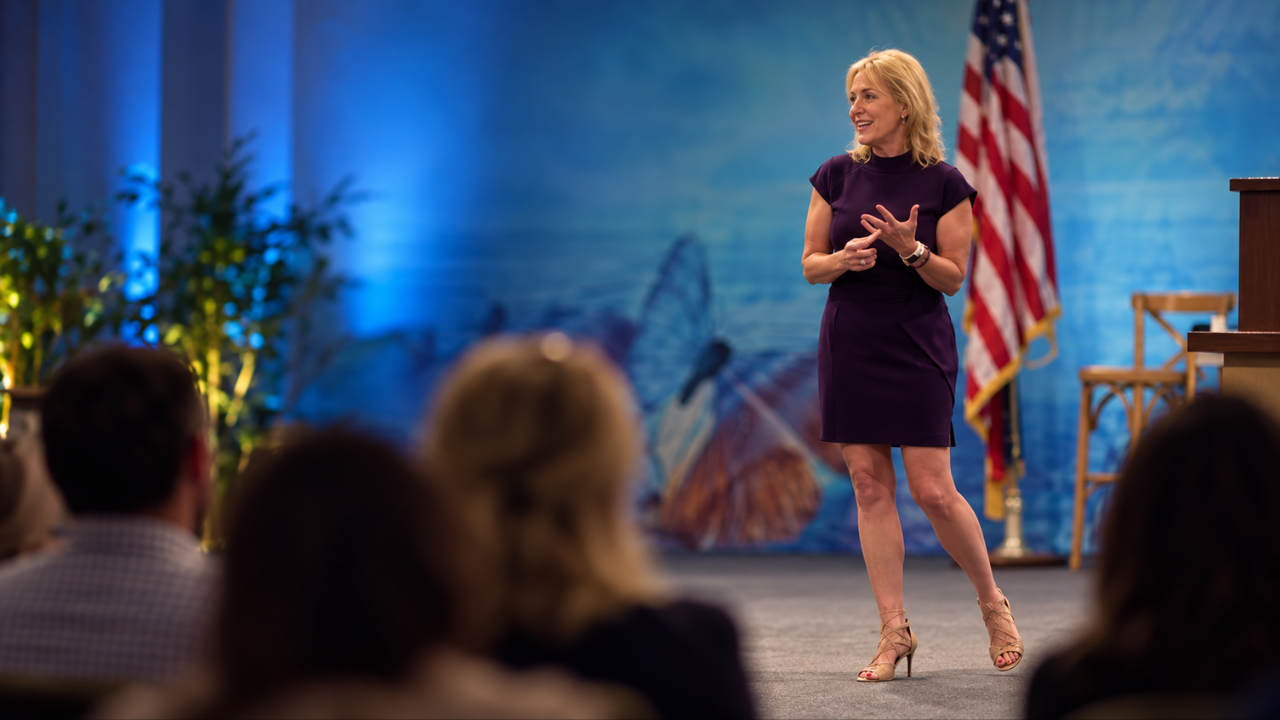
When I speak to groups about human patterns under pressure, I often tell the audience:
“Uncertainty just entered the room. What do you do?”
Then I stop talking.
I pause.
People usually start answering.
“I worry.”
“I overthink.”
“I try to fix it.”
“I take control.”
“I shut down.”
“I start planning.”
“I imagine everything that could go wrong.”
Exactly.
But I'm interested in the tiny moment that happens before all of that.
Something changes.
You don't know what happens next.
And there it is.
A gap.
We can barely tolerate it.
So the mind rushes in.
Fix it.
Predict it.
Explain it.
Control it.
Google it.
Call somebody.
Do something.
Anything.
Just don't stand here without an answer.
But that tiny gap may be one of the most powerful places we ever learn to stand.
That's the pause.

The Pause Doesn't Always Give You an Answer
This is an important distinction.
We sometimes use the pause as another strategy for getting certainty.
I'll breathe.
I'll meditate.
I'll take a walk.
I'll journal.
I'll sit quietly.
Then surely I'll know what to do.
Maybe.
But what happens if you don't?
What if you meditate and still don't know?
What if you sleep on it and wake up without an answer?
What if you take the walk and nothing becomes clear?
Perhaps nothing has gone wrong.
Maybe the information isn't available yet.
That's an entirely different way of experiencing uncertainty.
The pause isn't always where the answer appears.
Sometimes the pause is where we develop the ability to live without one.
For now.

Michael Singer and the Practice of Surrender
This is one reason the work of Michael A. Singer has influenced me so deeply.
Singer is the author of The Untethered Soul, The Surrender Experiment, and Living Untethered. His work explores consciousness, resistance, acceptance, and what happens when we stop insisting that life conform to the personal preferences of the mind.
His idea of surrender can easily be misunderstood.
Surrender doesn't mean lying down and letting life run over you.
It doesn't mean having no boundaries.
It doesn't mean refusing to make decisions.
And it certainly doesn't mean becoming passive.
Singer's premise in The Surrender Experiment begins with a simple reality: life rarely unfolds exactly the way we want it to. An enormous number of forces existed before we arrived and continue moving beyond our control. Yet we often spend tremendous energy trying to make the world conform to what our minds have decided should happen.
That creates an interesting question.
What happens when reality and my preferred reality are different?
That's where resistance begins.
In Living Untethered, Singer describes acceptance as nonresistance to reality. Acceptance doesn't mean we cannot work to change circumstances. It means reality, as it exists in this moment, becomes our starting point rather than something we mentally argue should not be happening.
That's powerful.
Because I can't respond clearly to reality while simultaneously fighting the fact that reality exists.
Something happened.
Okay.
Now what?
Something hasn't happened yet.
Okay.
Now what?
Sometimes the answer is:
I don't know yet.
And surrender may mean allowing that to be true.
Reality Transurfing Looks at This Differently
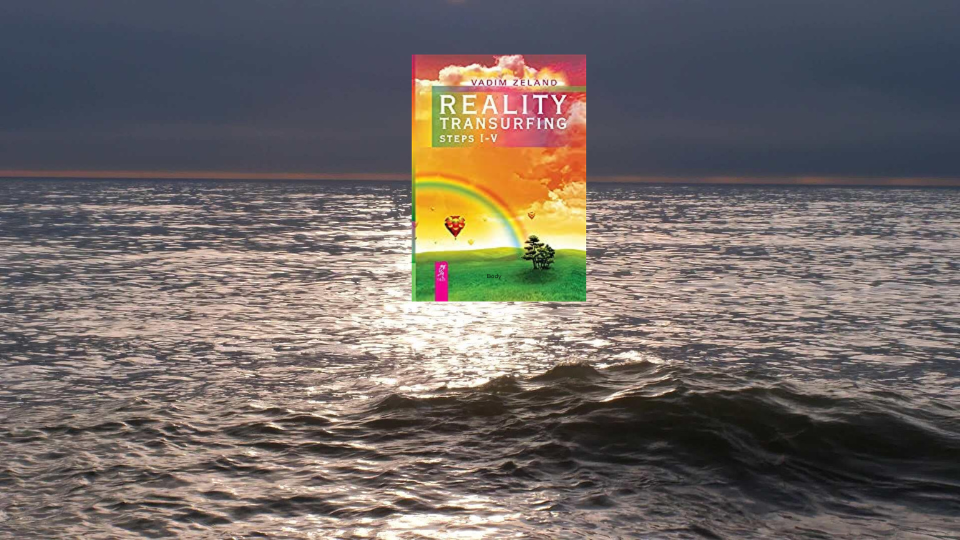
Another philosophy that has strongly influenced my thinking is Reality Transurfing, developed by Vadim Zeland.
If you've never heard of it, Reality Transurfing is a philosophical and esoteric system about attention, intention, choice, and our relationship with the reality we experience. Its official materials describe Transurfing as a method for working with goals and events by deliberately directing attention and exercising choice.
Some of its claims are metaphysical.
You don't have to accept every metaphysical claim to find the framework interesting.
One of the concepts I find especially useful is the distinction between inner intention and outer intention.
I simplify it for myself like this:
Inner intention is my intention.
Outer intention is the universe's intention.
In Transurfing teachings, internal intention focuses attention on the process of moving toward the goal, while outer intention focuses on the goal manifesting beyond that direct effort.
My interpretation is very practical.
I have a role.
But I am not the only thing moving.

You Are Not the Only Participant
Let's say you want a new job.
Inner intention matters.
Update the résumé.
Make the phone call.
Apply for the position.
Prepare for the interview.
Ask the question.
Follow up.
Those things belong to you.
But look at everything that doesn't.
You don't know who else applied.
You don't know what conversation the hiring manager had yesterday.
You don't know whether the company is about to restructure.
You don't know whether another position is going to open next week.
You don't know whether somebody you met three years ago is about to mention your name in a room you don't even know exists.
There are variables moving outside your field of vision.
This is why I love thinking about inner and outer intention together.
Inner intention asks me to participate.
Outer intention reminds me I'm not the only participant.
That's surrender without helplessness.
I do my part.
Then I stop pretending my part is the whole field.
Think About the Pitcher
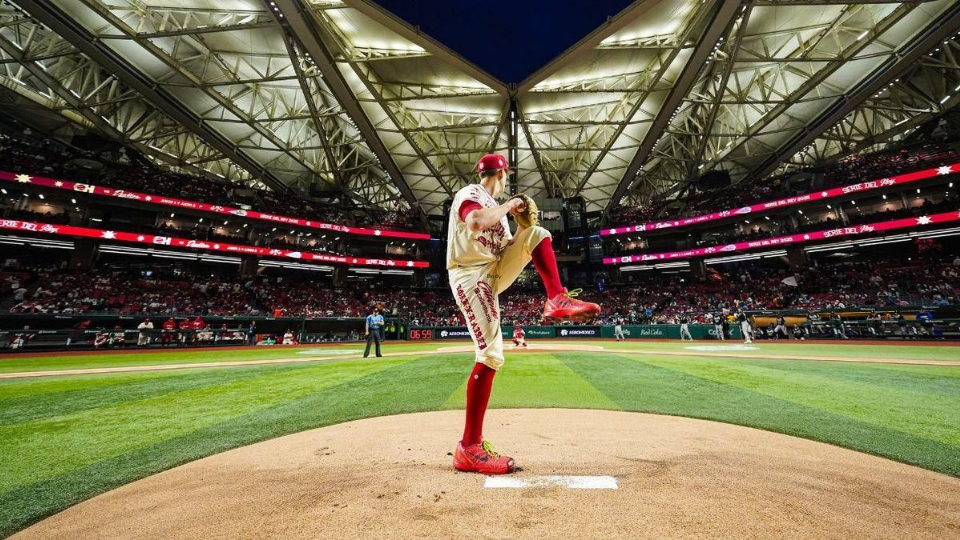
Imagine a pitcher standing on the mound.
The game is on the line.
Everyone is watching.
Pressure has entered the room.
He has a job to do.
But before he throws...
he pauses.
Breath.
Set.
Pitch.
That's his part.
He cannot climb into the future and guarantee what happens when the ball leaves his hand.
He can only throw this pitch.
And then reality gives him another piece of information.
That's a beautiful picture of radical responsibility.
Do what is yours.
Then let the ball leave your hand.

Surrender Is Not the Same as Giving Up
This distinction matters.
Sometimes people hear surrender and think:
“So I'm supposed to do nothing?”
No.
That's not surrender.
That may simply be avoidance wearing spiritual clothing.
Surrender asks something harder.
Participate fully without demanding control over every consequence of your participation.
Make the call.
Then surrender the response.
Tell the truth.
Then surrender the reaction.
Create the work.
Then surrender how people receive it.
Set the boundary.
Then surrender the other person's opinion of your boundary.
Throw the pitch.
Then let the ball leave your hand.
That's not weakness.
It takes enormous courage.

Non-Attachment Doesn't Require Amputating Desire
This is another distinction I care deeply about.
Sometimes spiritual teachings make people believe they shouldn't want things.
I disagree.
Desire is part of being human.
You can want the relationship.
You can want the business.
You can want the opportunity.
You can want someone you love to heal.
You can want the answer to be yes.
You can want something with your whole heart.
Non-Attachment doesn't require amputating desire.
The trouble begins when:
I want this
quietly becomes:
This must happen this way.
Now we've moved from desire into demand.
And often we don't even notice it.
We start writing the script.
This person must say yes.
The opportunity must come from here.
This relationship must look like this.
The money must arrive this way.
This problem must be resolved on my timeline.
But remember:
Your mind does not possess every variable.
You've written an ending while reality is still writing the story.

Three Principles Inside the Pause
This is where three principles guide almost everything I teach:
Non-Attachment. Radical Responsibility. Courage.
They aren't separate from the pause.
They live inside it.
Non-Attachment says:
I can want deeply without demanding that reality follow my script.
Radical Responsibility asks:
What is actually mine to do?
Not what belongs to everybody else.
Not what might happen six months from now.
What's mine now?
And Courage may be the hardest one.
Courage allows me to stay present after I've done what is mine and before I know what happens next.
Think about that.
You said what needed to be said.
Now you don't know.
You submitted the proposal.
Now you don't know.
You apologized.
Now you don't know.
You set the boundary.
Now you don't know.
You threw the pitch.
Now you don't know.
We often think courage is the action.
Sometimes courage is what comes after the action.
It's standing in the space before the outcome without abandoning yourself.

Our Patterns Want to Rescue Us From Uncertainty
This is also where Human Patterns Under Pressure becomes fascinating.
Control gets louder.
Perfectionism appears.
People pleasing shows up.
Over-responsibility says, “I'll take care of everything.”
Criticism starts searching for what's wrong.
Withdrawal wants out.
Avoidance wants relief.
Different strategies.
But underneath many of them is the same uncomfortable sentence:
I don't know what's going to happen.
Our patterns promise to solve that.
They can't.
They may temporarily make us feel more certain.
But reality is still moving.
Maybe Life Isn't Moving Toward Certainty
Here's the part I'm thinking about differently now.
We imagine the process looks like this:
Uncertainty.
Pause.
Answer.
Certainty.
Finally.
But life doesn't seem to work that way.
It looks more like:
Uncertainty.
Pause.
Information.
Choice.
More uncertainty.
Another pause.
More information.
Another choice.
Again.
And again.
And again.
Perhaps we're not failing to reach certainty.
Maybe certainty was never the destination.
Maybe we're learning to participate intelligently in a reality that continues to move.
Singer calls us toward surrender.
Reality Transurfing gives us the language of inner and outer intention.
I use the language of the pause.
Different lenses.
But there is an interesting place where they meet.
Do what is yours.
Stay present.
Stop demanding information reality hasn't given you yet.
And when something new appears?
Look again.
Don't Turn the Next Piece of Information Into the Final Answer
There's one last trap.
Eventually, the thing you've been waiting for happens.
You get an answer.
The client says no.
The person calls.
The opportunity disappears.
Someone surprises you.
Something opens.
Something closes.
And immediately the mind says:
There. Now I know what this means.
Do you?
Or do you simply know more than you knew yesterday?
That's different.
A rejection is information.
A yes is information.
Silence is information.
A change is information.
Even a surprising opportunity is information.
Don't turn the next piece of information into the final answer.
Observe.
Respond.
Pause.
Let reality move again.
Because there may be something else happening outside your field of vision.
And perhaps that's one of the deepest practices of surrender:
Not knowing what happens next...
and discovering that you can still be okay enough to meet it when it arrives.
About the Author
Kathie Owen is a private consultant, author, speaker, and creator of Human Patterns Under Pressure. Her work explores what happens to human behavior when pressure, uncertainty, identity, and emotion enter the room.
She works with leaders, founders, executives, and organizations to identify the human patterns that can quietly distort communication, decision-making, trust, and enterprise durability—particularly during periods of growth, transition, and high stakes.
Kathie's work is grounded in three principles: Non-Attachment, Radical Responsibility, and Courage, along with her Power–Presence–Peace framework and the Observer's Lens.
She is the author of Human Patterns Under Pressure and The Truth Bubbles Up and shares her work through writing, speaking, private consulting, The Kathie Owen Perspective podcast, and her video content on consciousness, leadership, emotional regulation, Reality Transurfing, and the patterns that emerge when life doesn't go according to plan.
At the center of her work is one simple idea:
Pressure reveals patterns. Awareness creates choice.
And sometimes the most powerful choice available to us is to pause before deciding what happens next.
Hello, World!
Read More Articles from Kathie







Transcript
Can we talk later?" Four words. That's all the text says. "Can we talk later?" And suddenly your mind is off to the races. Why? What's wrong? Are they mad at me? Did I say something? Did I do something? You start scrolling backward through your texts. Wait, yesterday they said, "Okay," instead of, "Sounds good." Was that weird? They didn't put a heart on my last message either. Oh my God, something is definitely wrong. Except you don't know that. You have four words: "Can we talk later?" That's the information. Everything else, you filled in the blank. And here's what I've been thinking about lately. Maybe the problem isn't uncertainty. Maybe the problem is what we do the moment uncertainty hits the room, because we don't like a blank. We want to fill it. We want an answer. We want to know what happens next, and sometimes we would rather invent an answer than sit inside a question. So what if you didn't? What if you paused? And what if, just for a moment, you allowed reality to remain unfinished? Welcome to the Kathie Owen Perspective podcast. My name is Kathie Owen, and I study human patterns under pressure. My work sits at the intersection of psychology, consciousness, emotional regulation, and leadership. And lately, I've become fascinated with one particular moment. It's the moment when uncertainty hits the room, because that's when our patterns get loud, and that's also where we have a choice. When I speak about this on stage, I'll often ask the audience, "Uncertainty just hit the room. What do you do?" And then I stop. I don't answer the question. I pause, and you can almost feel what happens in the room. People start thinking. Somebody eventually says, "I try to fix it." Someone else says, "I overthink. I worry. I take control. I shut down. I try to figure out what's going to happen." Exactly. But there's something happening before all of those things. There's a tiny space, a pause, and most of us move through it so quickly that we don't even know it's there. Something happens, uncertainty hits, and go. Fix it. Predict it. Control it. Explain it. Google it. Text somebody. Replay the conversation. Do something, anything. Just don't sit here and not know. But what if that tiny space is where your power actually is? I've talked about the pause many times, but I'm starting to see another layer of it. The pause isn't necessarily where we find the answer. Sometimes the answer isn't available yet. That's important because I've spent plenty of time pausing while secretly trying to solve everything. Maybe you've done that, too. We call it pausing, but inside our head, we're holding a board meeting. What does this mean? What should I do? What happens if they say this? What will I say if they do that? Maybe this means dot, dot, dot. Maybe this, that means dot, dot, dot. That's not really a pause. That's prediction with our eyes closed. The pause I'm talking about is different. It's the moment where I can recognize, "I don't know yet." And instead of treating that as a problem, I leave it alone, not forever, just for now, because maybe reality hasn't finished giving me the information. So think about a pitcher standing on the mound, game on the line, pressure everywhere, thousands of people watching. He gets the ball, and what does he do before he throws it? He pauses. Maybe he adjusts his hat, takes a breath, looks at the catcher, sets his feet. Just for a moment, everything gets quiet. Now, imagine if instead his mind took off. "What if I miss? What if he hits it? What if we lose control? What if we lose the game? What if I screw this up? What happens tomorrow? What are people gonna say?" Now he's not throwing one pitch. He's throwing 20 imaginary pitches into 20 imaginary futures. The pause brings him back. This pitch, that's all. He doesn't need to know how the game ends. He needs to be present enough to participate in what is happening now. Throw the pitch, then reality gives him more information. And that brings me to something in reality transurfing that has changed the way I think about uncertainty. Vadim Zeland talks about something called inner intention and outer intention, and I've developed a very simple way of understanding it in my own life. Inner intention is my intention. Outer intention is the universe's intention. Now, stay with me here because I don't mean do nothing and let the universe handle it. Actually, I think that's the opposite of what I'm talking about. Inner intention matters. I participate. I make the call. I have the conversation. I create the thing. I set the boundary. I ask the question. I throw the pitch. But here's the problem. My intention only knows what I know. My mind doesn't know what somebody else is going to decide tomorrow. I don't know what conversation is happening somewhere else. I don't know what opportunity has not appeared yet. I don't know what somebody is thinking. I don't know what will change next week. I don't know every variable moving around me. And yet, how often do I decide that I already know how everything needs to happen? That's where I get into trouble because inner intention starts trying to do the universe's job too. And I love this distinction. Inner intention asks me to participate. Outer intention reminds me that I'm not the only participant. There are things moving outside my field of vision, and I don't have to control them. I couldn't control them if I tried. This does not mean I stop wanting things. I think this gets misunderstood sometimes. Non-attachment does not require amputating desire. I'm gonna repeat that because it's important. Non-attachment does not require amputating desire. I can want the relationship to work. I can want the opportunity. I can want someone I love to be okay. I can want the client to say yes. I can want the pitch to be a strike. I can want something with my whole dang heart. That's human. The shift happens when I really want this quietly becomes this is how it needs to happen, because now inner intention has taken over the entire field. I've already written the ending, and reality hasn't finished the sentence. That's where the pause comes back in. Wait, what do I actually know? What is mine right now? And what am I trying to know that simply isn't available to me yet? This is where the three principles have become incredibly important in my own work, and those three principles are non-attachment, radical responsibility, and courage. And I do not see these as nice ideas. I see them as something I practice inside the pause. Non-attachment says, "I can want this without deciding exactly how it must unfold." Radical responsibility says, "What is actually mine to do? Maybe I need to make the call. Maybe I need to apologize. Maybe I need to ask the uncomfortable question. Maybe I need to set the boundary. Maybe I need to do absolutely nothing yet because I don't possess enough information, but I take responsibility for my part." Not everybody's part. Not everybody's part. And then there's courage, and I think sometimes we imagine courage as taking massive action. But I'm beginning to think some of the most difficult courage happens after I've done what's mine and before I know what happens next. That's uncomfortable. I made the call. Now I wait. I told the truth. Now I don't know how they'll respond. I submitted the proposal. Now I don't know. I set the boundary. Now I don't know what happens to the relationship. I threw the pitch. Now the ball has left my hand. That's the pause. I've done what is mine, and now I don't know. Can I stay here without abandoning myself? Can I stay present without reaching for a pattern just to make the uncertainty disappear? That is courage. And maybe this is why our human patterns get so loud when uncertainty hits. We have control, perfectionism, over-responsibility, people pleasing, criticism, withdrawal, avoidance. Different strategies, same discomfort. I don't know what's going to happen, and every pattern whispers some version of, "Let me fix that for you." I see it like the little devil on your shoulder. "Let me fix that for you." But it can't, because the future has not happened. So maybe the goal isn't to become better at predicting it. Maybe it's becoming better at staying present before it arrives. That is a very different kind of power. And there's another piece of this that I've been noticing. Eventually, reality does give us more information. The phone rings, the person responds, the client decides, something changes, the pitch crosses the plate, and we think, "There. Now I know." But do we? Maybe we know more. That's different. Sometimes the next piece of information is just that. The next piece, not the final answer. Someone says no. Information. Someone pulls away. Information. Something falls apart. Information. Something unexpectedly opens. Information. None of those things require me to immediately write the rest of the story. I can observe, choose, and then pause again, because maybe the pause isn't one moment. Maybe life is uncertainty. Pause, information, choice, uncertainty, pause, more information, another choice. Again and again and again. Maybe we're not supposed to finally escape uncertainty. Maybe we're learning how to move with it. If you wanna explore this idea more deeply, I wrote a companion blog post for this episode, like I always do. I'll link it in the YouTube description and the show notes below. And if you're watching on YouTube, it'll be in the first comment, so it's easy to find. There are additional resources in this companion blog post, too. But I don't wanna finish this episode here, because there's something else I want you to notice. Go back to those four words: can we talk later? Imagine receiving them today. Notice what your mind wants to do. Notice how quickly it wants to fill the blank, and then pause. Don't solve it. Don't tell yourself everything is gonna be okay, because you don't know that either. Don't tell yourself something terrible is coming. You don't know that. Just notice, "I don't know yet." And maybe that's enough, because there's something very interesting that happens when reality finally gives us the information we've been waiting for. We take that one piece of information, and almost immediately we start building another story. And if we're not careful, we call that story reality. It is not. And that's a conversation I think we need to have. We'll get there. Until next time.

Explore human patterns under pressure with private consultant Kathie Owen. Learn how a pause, nervous system regulation, non-attachment, radical responsibility, and courage can support clearer choices at work and at home. Watch the keynote and book a conversation.
#HumanPatternsUnderPressure #KathieOwenKeynote