
Your Pattern Recognition Is Powerful—Until It Becomes a Courtroom
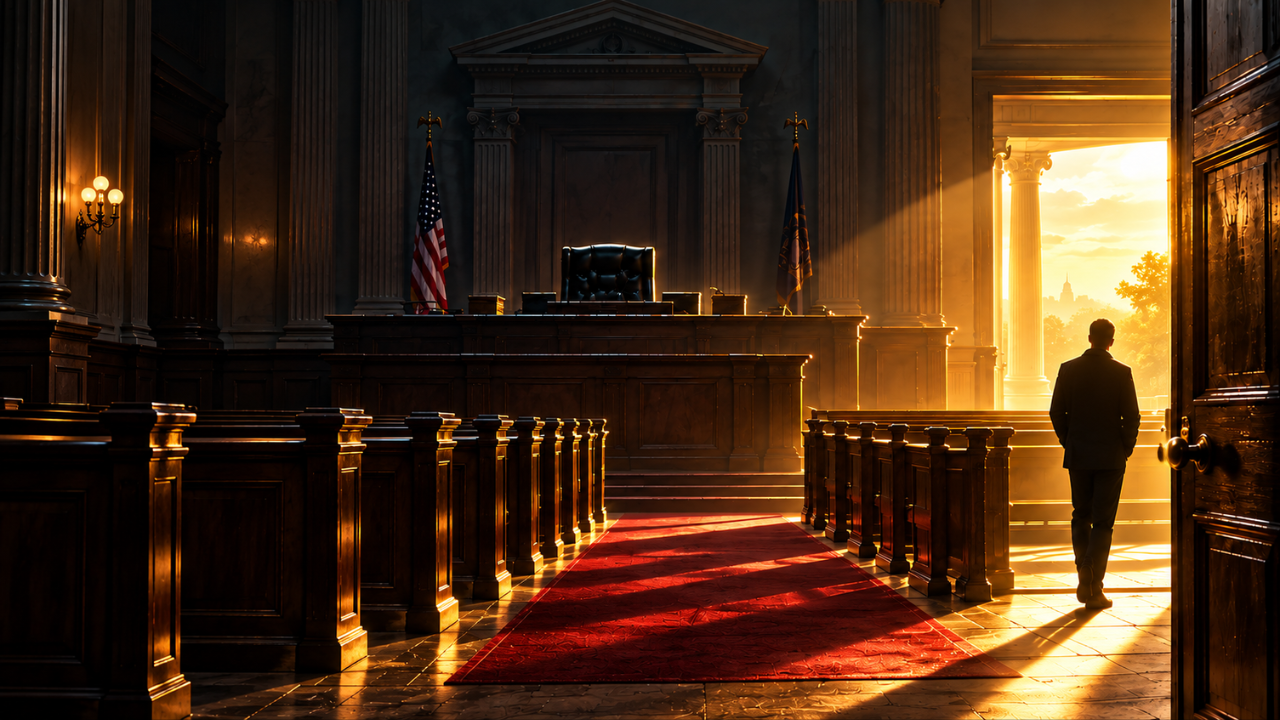
You Saw the Pattern—Then Your Mind Put Everyone on Trial
At one o’clock in the morning, I can turn a quiet bedroom into a crowded courtroom.
No one else has to be awake.
I can prosecute the entire case by myself.
Exhibit A: what someone said three weeks ago.
Exhibit B: the look on their face.
Exhibit C: the invitation that never came.
Before long, I have witnesses, motives, closing arguments, and a verdict. I know what happened. I know why it happened. I know what everyone will do next.
There is only one problem.
Most of the trial is happening in my imagination.
The observation may be real. The pattern may be familiar. My concern may even be valid. But somewhere between noticing the pattern and predicting the ending, I stopped observing and started prosecuting.
That is what I call entering the courtroom.
Lately, I have discovered that some of my greatest peace comes from catching myself at the door and deciding not to enter.
I Don’t Have Trust Issues. I Have Pattern Recognition.
I recently posted a short video that said:
I don’t have trust issues. I have high pattern recognition.
People understood it immediately.
@kathieowen Pattern recognition. #HumanPatterns #Observer ♬ оригинальный звук - banzai
One man commented that he can often sense when someone has bad intentions. He described meeting a person who worked for a longtime friend. Something felt wrong from the beginning, but he did not say anything. A few months later, that person stole thousands of dollars in tools and belongings from his friend.
After an experience like that, it makes sense to trust what you notice.
Some people recognize subtle patterns quickly. They hear an inconsistency, see a shift in behavior, or notice when the words and the energy do not match. Their conscious mind may not have an explanation yet, but their nervous system is collecting information.
But one accurate observation can create a dangerous conclusion:
I knew then. Therefore, I always know.
That is where pattern recognition becomes certainty. And certainty can turn observation into a courtroom.

The Pattern May Be Real
Staying out of the courtroom does not mean ignoring your instincts, denying history, or giving everyone unlimited access to you.
It means separating three things:
What I observed.
What I am choosing.
What I claim to know.
Imagine you recognize a pattern of disrespect. You can say:
I am not participating in that.
That is a boundary.
You do not have to add:
They will never change. I know why they are doing this. This will always end the same way.
That is a verdict.
The boundary belongs to you. The verdict claims knowledge you may not have.
Right now, you may choose not to attend, respond, explain, or participate. If circumstances change later, you can decide then. You take responsibility for your participation without making yourself responsible for proving another person’s character.

You Can Leave the Room and Keep Arguing
There is another layer to this.
I can refuse to participate in disrespect in reality while continuing to participate in it through my imagination.
I can decline an invitation, then spend six hours imagining what everyone is saying about me. I can end a conversation and keep arguing with the person while I drive, shower, and try to sleep.
Physically, I left the room.
Mentally, court is still in session.
Freedom is recognizing that observation does not create obligation.
I do not have to confront every pattern, persuade everyone else to see it, or keep replaying the disrespect to prove that it happened.
I can see the pattern, draw the boundary, and leave the ending unwritten.

What DARE Taught Me About Floating
Barry McDonagh’s book DARE: The New Way to End Anxiety and Stop Panic Attacks teaches a different relationship with anxious sensations.
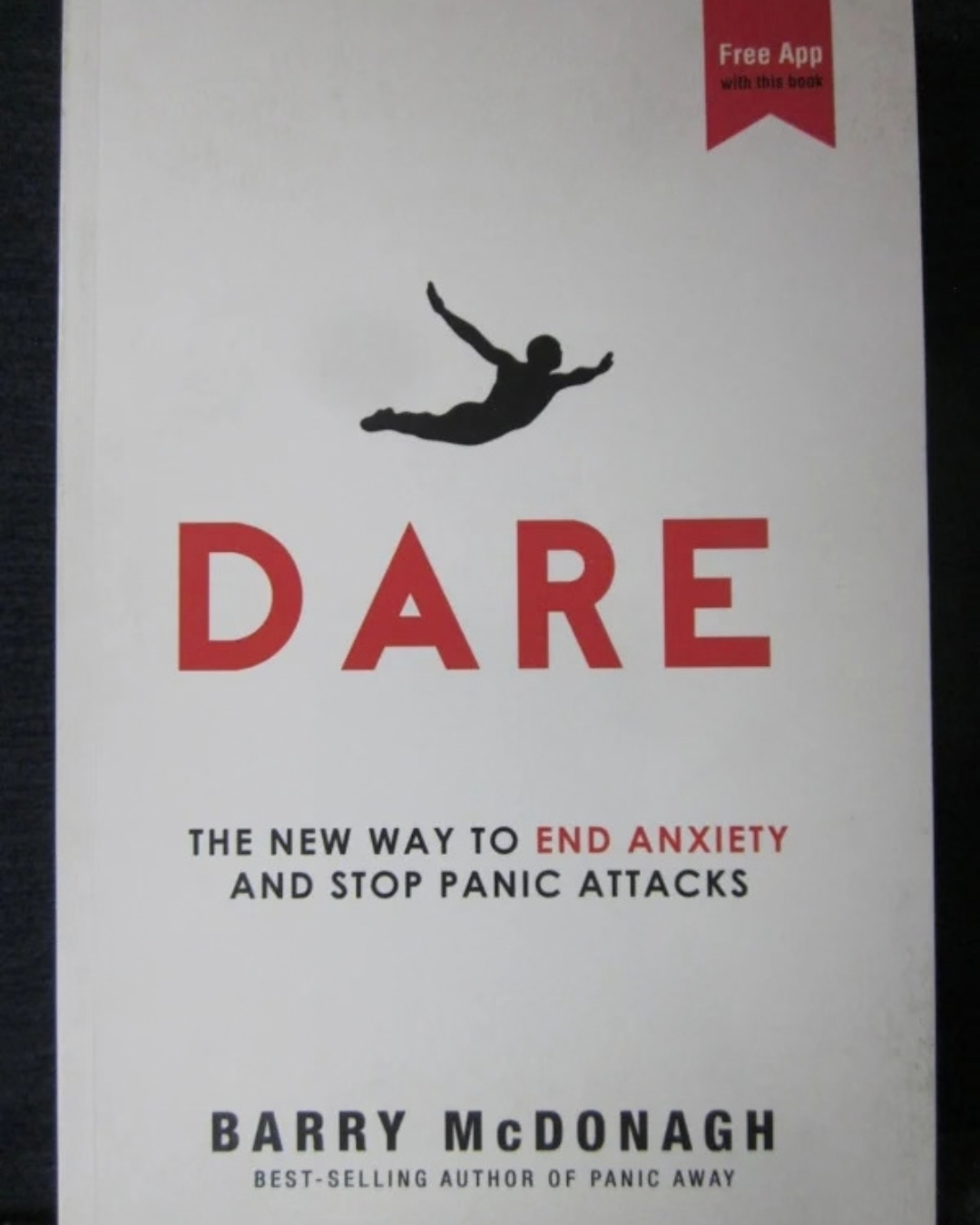
Instead of treating the feeling like an emergency that must be fought or escaped, the DARE approach encourages allowing the feeling to move through. I think of it as floating.
When you fight water, you exhaust yourself. When you float, the water can move beneath you without becoming a war.
I use that same picture when I catch myself entering the courtroom.
The thought appears:
I know what this means.
I do not have to fight the thought or follow it. Fighting only creates another trial where I must prove my own mind wrong.
I can notice:
There is the case beginning.
Then I let it float past me.
No shame. No condemnation.
My mind recognized something familiar and tried to predict what would happen next. I can appreciate the warning without handing it the judge’s robe.

When Productivity Becomes the Prosecutor
Not every courtroom is about another person.
Sometimes the person on trial is you.
You sit down to rest, and the prosecution begins.
You should be working. You should be producing. You should have the answer by now.
I experienced this recently. I felt the pressure to keep working and figure everything out. Instead, I lay down and listened to Neville Goddard.
I did not do it to force an outcome. I did not expect life to reward me for resting. I simply interrupted the pattern of urgency.
While I was there, a meaningful message arrived from a client.
The meditation did not cause the message. That is not the lesson.
The lesson is that life continued moving while I stopped trying to control every moment of it.
Something meaningful happened while I was no longer demanding that something meaningful happen.
That is trust without prediction.

Neville Goddard Gave My Imagination Somewhere Else to Land
Neville Goddard taught about living from the end. To me, that does not mean using imagination to control another person or dictate every detail of the future.
It means experiencing the inner posture of the person I am becoming.
The courtroom is also imagination—but imagination used to accuse, predict, rehearse, and defend. Neville’s work reminds me that I can use that same capacity differently.
What does peace feel like before I receive an explanation?
What does self-respect feel like without an argument?
How would I carry myself if I trusted that I could handle whatever becomes true?
I am not replacing a negative prediction with a positive demand. I am taking my attention off the prosecution and placing it on the life I choose to inhabit.
The courtroom narrows the future to one ending.
Intentional imagination reminds me that other doors may exist.

High Pattern Recognition Requires Restraint
This matters in leadership and consulting, too.
A leader notices resistance and decides an employee is disloyal. A founder notices hesitation and decides the team does not believe in the vision. An investor notices tension and decides one person must go.
The observation may matter. But the explanation has not necessarily earned its place.
In my consulting work, I study human patterns under pressure. I notice what changes when a decision becomes uncomfortable and how urgency affects communication, trust, and judgment. But noticing a pattern does not give me permission to decide the entire story.
Sometimes my most important job is to ask another question. A detail that appeared central may become a distraction. The answer may arrive only after we stop forcing the first explanation to fit.
That is not passive observation. It is disciplined observation.
Sometimes expertise is knowing what not to interrupt.

Interrupt the Expected Ending
Once you recognize that you are repeating a familiar mental trial, introduce something the pattern did not expect.
I call that an anomalous challenge.
If you normally explain yourself immediately, pause. If you decide what someone meant, ask a question. If you rehearse the conversation for two hours, take a walk without finishing the script.
The purpose is not to manipulate the outcome. It is to stop acting as though the old pattern is the only possibility available.
I explore this more deeply in What If the Pattern Is Keeping You Stuck?.
The pattern may describe what happened before.
It does not get to dictate what must happen next.
Five Ways to Leave the Courtroom
When you notice yourself building a case:
1. Name it
I am entering the courtroom.
That sentence turns unconscious momentum into awareness.
2. Separate observation from interpretation
Ask: What did I observe? What story did my mind add?
3. Choose the present boundary
Ask: What is mine to do right now?
You do not need a permanent verdict to make a present decision.
4. Let the thought float
You do not have to complete every argument your mind begins. Let the next wave be boring.
5. Redirect your imagination
Return to your vision. Meditate. Pray. Move your body. Take an anomalous action. Ask a better question.
Do not redirect your attention to deny reality. Redirect it because the imaginary trial is no longer giving you useful information.

Your Peace Does Not Need a Verdict
You do not need to become less perceptive, ignore your intuition, or trust people who have not earned your trust.
You can recognize the pattern. You can honor what you notice. You can draw the boundary.
And you can refuse to spend another day prosecuting a case that life has not finished presenting.
Pattern recognition gives you information.
The courtroom demands certainty.
Curiosity creates space.
A boundary protects your participation.
Intentional imagination restores possibility.
My peace does not come from proving that I read the pattern correctly. My peace comes from knowing that I can choose whether I participate in it.
I can see the pattern and leave the ending unwritten.
Because my peace does not need a verdict.
About the Author
Kathie Owen is a private consultant, author, speaker, and host of The Kathie Owen Perspective.
For more than 25 years, she has studied human performance and the patterns that emerge when pressure, uncertainty, conflict, and change enter the room.

Her background spans psychology, fitness, corporate leadership, emotional regulation, communication, and behavioral change.
Kathie is the author of Human Patterns Under Pressure, which explores how pressure affects perspective and quietly shapes leadership, relationships, and decisions. She is also the author of The Truth Bubbles Up, a personal exploration of what becomes visible when we stop fighting what life is trying to reveal.
Through private consulting, Kathie works with individuals, leaders, founders, executives, and organizations to identify the pattern beneath the presenting problem. Her speaking and advisory work explores leadership presence, emotional regulation, human risk, and the unseen dynamics that influence performance when the stakes are high.
If you are navigating a repeating pattern, leadership challenge, transition, or situation that has become difficult to see from the inside, begin with a private strategic conversation.
Hello, World!
Read More Articles from Kathie




Transcript
Pattern recognition can protect you. It can also imprison you. Because once you have been right enough times, you start believing every pattern you recognize comes with a guaranteed ending. You notice the pause, you hear the change in someone's voice, you see what suddenly disappeared from the calendar. You recognize the behavior because you have seen it before, and within seconds, you are no longer observing what is happening. You are building a case. You have entered the courtroom. You have exhibit A, exhibit B, exhibit C, D, and E, and if you are anything like me, you've already gone through the alphabet three freaking times. You have assigned motives, you have called imaginary witnesses, you have rehearsed conversations that have never happened, and you are absolutely certain you know how this is going to end. But what if freedom does not come from proving that you can read the pattern correctly? What if freedom comes from refusing to prosecute it? Welcome to the Kathie Owen Perspective podcast. My name is Kathie Owen. I am a private consultant, author, speaker, and certified fitness professional. For more than 25 years, I have studied human patterns under pressure. I look at what happens when fear enters the room, when urgency takes over, when people become so certain about what something means that they can no longer see what else might be possible. And trust me, I'm not teaching this because I have mastered it. I am teaching it because I have spent hundreds of years in that damn courtroom. Today, we are talking about the discipline it takes to stay out of it If you appreciate conversations like this, you can quietly like this video and subscribe to the channel. It helps more people find this work. Not long ago, I posted a short TikTok that said, "I don't have trust issues. I have high pattern recognition." That video started taking off because a lot of people recognize themselves in that statement. One person left a comment explaining that he sees things most people miss. He said he can sometimes sense whether someone has good or bad intentions almost instantly. He shared a story about visiting a longtime friend. His friend had a man working for him, and the commenter immediately felt that this man had bad intentions. He did not say anything at the time. A few months later, that man stole about $10,000 worth of tools and other belongings from his friend. Now the commenter says that if he gets that feeling again, he will speak up. His friend says that he knows he can sense things other people cannot. I understand why that experience would strengthen his trust in his perception. Sometimes we do notice things before other people do. Our conscious mind may not be able to explain what we are seeing, but our nervous system is collecting information. We may notice a pause that lasts a little too long, a smile that does not match the words, a sudden change in behavior, an inconsistency in someone's story, a pattern that looks very familiar. Pattern recognition is real, and it is valuable, and it can help protect us. In business, it can help us identify human risk before the numbers reveal it. In relationships, it can help us notice when something has changed. In leadership, it can help us recognize tension before it becomes a larger fracture. But there is a hidden trap inside of it. One accurate observation can quietly become, "I knew," then therefore, "I always know." That is when pattern recognition stops being information and starts becoming a verdict. You do not say, "Something feels off." You say, "I know exactly what this person is doing." You do not say, "I recognize this behavior." You say, "I know where this is going." You do not say, "This reminds me of something I experienced before." You say, "This is exactly the same thing, and it will end exactly the same way." That is the courtroom. The courtroom is where pattern recognition goes to become certainty. And let me tell you something, I can build one hell of a case. I can sit there and explain why someone did what they did. I can explain what they are going to do next. I can rehearse what I will say when they do it. I can sit in an empty room for hours and hold entire imaginary conversations. How am I going to explain this? How am I going to make this person understand? How am I going to teach them what is happening? How am I going to show them that I am right? Meanwhile, the other person is not even in the room. I am the attorney. I am the witness. I am the judge. I am the jury, and I am the person losing her freaking peace. Here is what I'm learning. I can recognize a pattern without sentencing my future to it. I can notice something without deciding what it means. I can honor what my nervous system is telling me without treating every sensation as absolute truth, and I can make a decision without condemning another person This is especially important when it comes to boundaries. There are situations in my life that I can observe and say, "I am not participating in that," and that is a complete sentence. I do not need to build a case around it. I do not need to prove that someone is disrespectful. I do not need to convince another person to agree with me. I do not need to decide what I will do six months from now. I can look at what is happening today and say, "Right now, I'm not participating in that." If I receive an invitation in the future, I can decide then. If the circumstances change, I can observe what is present then. A boundary does not have to become a life sentence. It is simply a decision about what I will and what I will not participate in right now. That distinction has given me so much freedom, and that's why I'm doing this episode today, because I am learning to refuse disrespect in two different places. I refuse to participate it in reality, but I also refuse to keep participating In it through my imagination. Think about that for a second. You can remove yourself from a situation physically and continue fighting with everyone mentally. You can decline the invitation and then spend the entire evening imagining what those people are saying about you. You can stop answering someone's messages and still carry an imaginary co- argument with them while you are driving, exercising, working, showering, and trying to sleep. You left the physical room, but you are still in the courtroom. I know because I have done it. I have replayed what happened. I have added new evidence. I have made my argument stronger. I have proven my case to an imaginary jury that never asked to hear it. And do you know what I received when I finally won? Nothing. Nobody handed me a trophy. Nobody's arrived to announce that I had been right all along. I was just exhausted, freaking exhausted. This is why staying out of the courtroom takes discipline. It is not something you decide once. You may catch yourself walking back into it 20 times in one day. You may suddenly notice, oh, I'm assigning motives again. I am rehearsing a conversation. I am trying to make someone else understand. I'm gathering more evidence. I am predicting the end. That moment is not failure. That moment is awareness, and awareness creates choice. You can stop at the courtroom door and say, "Nope, we are not doing this today. We are doing something different." You do not have to fight the thought. You do not have to prove it wrong. You do not have to replace it with forced positive thinking. You can simply allow it to pass. There is a practice in the book Dare that teaches people to float with anxiety instead of fighting it. You allow the feeling to move through you without turning it into an emergency. I think we can do something similar with the courtroom. You can notice the thought, you can notice the case beginning to form, and instead of fighting with it or following it, you let it float past you. You relax. You allow more information to arrive. You remind yourself, "I do not need to solve my life to feel safe. I can handle what shows up." Then you place your attention somewhere else. You might get curious. You might meditate. You might use your imagination intentionally. You might take an anomalous challenge and do something outside your usual pattern. You might ask, "Where am I so set in my ways that I can no longer see what is really here?" That question can open an entirely different door. This matters in my consulting work too. When I work with a leader or a private client, I am often observing human patterns under pressure. I may notice how someone responds when a decision becomes uncomfortable. I may hear a contradiction in the way that problem is described. I may see where urgency is narrowing a person's thinking. I may recognize a pattern they cannot see yet. But recognizing a pattern does not give me permission to decide the entire story for them. I could jump in immediately. I could name everything I see. I could tell them exactly what I think it means. I could create a solution before we fully understand the problem. That might make me appear very smart. It might also cause me to interrupt something important that has not had time to reveal itself. So I have to stay curious. I ask another question. I listen to how they tell the story. I notice what they emphasize. I notice what they avoid. I leave room for new information. Sometimes a detail that looked very important at the beginning turns out to be a distraction. Sometimes the first solution is not the real solution. Sometimes the person uncovers an answer that neither one of us could have predicted at the start. That is why my work is not about diagnosing people. I optimize. I do not diagnose. I help people see what pressure may be hiding from them, but I do not need to trap them inside my first interpretation of what I see. Sometimes expertise is knowing what not to interrupt. That does not mean I am passive. I am observing. I am asking questions. I am testing what appears to be true. I am helping the person see the pattern. But I'm not forcing the pattern to declare its final meaning before enough information has arrived. I do not leave the person alone, I leave the conclusion alone, and that is key. That also takes discipline because high pattern recognition can look a lot like certainty. You see three dots and immediately know how to connect them. Sometimes you are right, but sometimes you connect them too quickly. You create a picture before all the dots have arrived. Then you become attached to the picture you created. This can happen in consulting, it can happen in leadership, it can happen in relationships, and it can even happen with productivity. The other day, I could feel that familiar belief telling me I should be working, I should be producing, I should be figuring something out. There's that dirty word, should. My mind already had a case prepared. "You need to get up. You need to go be productive. You are wasting time." That was another courtroom. The case was not about another person this time. The defendant was me. Instead of continuing the prosecution, I lay down and listened to Neville Goddard. It was not my usual meditation practice. I was not trying to manifest a message or force an answer to arrive. I simply stepped outside the productivity pattern. I relaxed into the feeling of my vision. While I was laying there, I received a beautiful message from a client. Meditation did not magically cause that person to send the message. That is not my point. I did not lie down expecting something to happen. I did not use meditation as a transaction, and I did not say, "If I relax for 20 minutes, life must reward me." I simply stopped insisting on what the next moment needed to look like, and life continued to move without my interference. Something meaningful happened while I was no longer trying to make something meaningful happen. That's funny. I could not have predicted it, and that is where imagination becomes so powerful. Imagination is not another courtroom. It is not a place where we decide exactly what another person will do. It is not a tool for forcing people to behave the way we want them to. Intentional imagination is where we experience the posture of the person we are becoming. Neville Goddard called it living from the end. You do not have to dictate every detail between here and there. You experience the peace. You experience the freedom. You experience the internal decision. Then you allow the path to reveal itself. This is difficult when you have high pattern recognition because your mind wants to say, "No, no, no, no, no. I know how this works. I know what this means. I know what happened next." But do you? Maybe you recognize a familiar pattern. Maybe your interpretation is accurate. Maybe it is not. Maybe something is changing. Maybe new information is still arriving. Maybe you are being shown one piece of the picture that is not finished. The pattern can describe what has happened without dictating what must happen next. That is why anomalous challenges can be so powerful, and I talked about these the other day in a recent video. I will link to that in the show notes and description below. But an anomalous challenge is a small interruption to your usual pattern. It gives you the opportunity to make a different choice without demanding a specific result. Recently, a friend of mine challenged me to wear a dress to an event where I normally would have worn my usual leggings, sneakers, and perhaps a blazer, and my first response was clear: "No, no, no. That is not how I dress. This is my brand." Do you hear the certainty in that? I already knew who I was. I already knew what I wore. I already knew what fit my identity, but I accepted the challenge, and I wore the dress. The dress did not magically change my life. That is not the point. The experience interrupted my certainty. It showed me that my usual choice was not my only available choice. It allowed me to experience another version of myself without requiring me to abandon who I was. The anomalous challenge opened a possibility I could not see while I was defending my old pattern, and that is what happens when we leave the courtroom. We regain access to options. In the courtroom, everything becomes narrow. There is right and there is wrong, guilty and innocent, good and bad, trustworthy and untrustworthy, stay or leave, speak or remain silent. But life is often far more nuanced than that. You may notice disrespect and choose not to participate. You may notice a change in someone's behavior without claiming to know why it changed. You may see a business possibility without rushing to build an entire strategy around it. You may sense that something is wrong without accusing anyone. You may experience a healthier connection without demanding to know where it is going. You may trust yourself without insisting that every interpretation you have is true. That is not about becoming less perceptive. It is about becoming responsible enough to carry your perception without letting it carry you. Pattern recognition gives you information. The courtroom demands a verdict. Curiosity keeps the possibilities open. A boundary decides what you will participate in. Imagination gives your mind somewhere new to land, and non-attachment allows life to keep revealing itself. So the next time you catch yourself walking into that courtroom, pause at the door. Ask yourself, "What have I actually observed? What am I assuming? What decision belongs to me right now? Where have I become so certain that I can no longer see another possibility?" Then choose your exit. Your exit may sound like, "I am not participating in that." "I do not know what this means yet." "I can decide when the moment arrives." "I do not need to make anyone else understand." "I can let more information come." Or simply, "Maybe, maybe not." You do not need to throw away your pattern recognition. That's such good news. And you do not need to ignore your intuition. That's good news, too. You do not need to trust people who have not earned your trust. Yay! And you simply stop turning every observation into a prosecution. My peace does not come from proving that I read the pattern correctly. My peace comes from knowing that I can choose whether I participate in it or not. I can see the pattern, I can draw the boundary, and I can leave the ending unwritten, and I can walk out of the courtroom before I lose another day arguing a case that life is not even finished presenting. I wrote a companion article to go with this episode, as I always do, and inside it, I explore this idea more deeply and include additional resources to help you recognize when observation is quietly turned into prosecution. You can find that article linked in the show notes or description below. And if you're watching on YouTube, I also placed it in the first comment. Go read it, and then ask yourself one final question: "What possibility could I see if I were no longer trying to prove my case?" All right. Thank you for joining me on the Kathie Owen Perspective podcast. I trust that you found today's episode helpful. And if you know someone who could benefit from this, please share it with them. And remember, observe the pattern, honor what you notice, draw the boundary when you need to. But before you enter that courtroom, pause. Your peace does not need a verdict.

High pattern recognition can become a mental courtroom where observations turn into accusations and false certainty. Learn how boundaries, the DARE approach, Neville Goddard’s intentional imagination, anomalous challenges, and curiosity restore peace, choice, and leadership clarity.
#PatternRecognition #HumanPatterns #Leadership #NevilleGoddard