
You Can Want It Without Needing It

When Wanting Becomes Gripping
There is a strange moment that happens when we want something badly enough.
We stop simply wanting it.
We begin negotiating with reality.
I've worked this hard. This should work.
I've been good to this person. They should treat me well.
I've done everything right. I should get the opportunity.
I've raised my child well. They should make the right decision.
I've prepared for this. I should succeed.
And without realizing it, a preference becomes a demand.
We don't just want the outcome anymore.
We need reality to cooperate.
That's when attachment becomes painful.
And here's the part that makes non-attachment so confusing:
The answer isn't to stop caring.
You don't have to stop loving your child.
You don't have to stop caring about your business.
You don't have to pretend you don't want the relationship.
You don't have to stop hoping for the diagnosis you want.
You don't have to stop wanting the house, the client, the promotion, the money or the dream.
Non-attachment isn't about wanting less.
It's about learning how to want without gripping.
And that sounds simple.
It is simple.
It is not easy.
The Question I Hear All the Time
Whenever I talk about non-attachment, one question comes up again and again:
"How do I not attach to the result when I really want something?"
It's a good question.
Because it's easy to practice non-attachment when we don't care very much.
Don't get the restaurant reservation you wanted?
Fine.
Go somewhere else.
Your favorite shirt isn't available in your size?
Annoying. But probably survivable.
But what about the big things?
Your marriage.
Your child.
Your health.
Your financial security.
The company you've spent decades building.
Someone you love.
A dream you've worked toward for years.
Now we're talking about something very different.
Telling someone to "just let go" can become another one of those spiritual phrases that sounds wonderful until real life shows up.
I often return to a simple idea:
All truths are half-truths.
"Let go."
Half-truth.
"Fight for what you want."
Half-truth.
"Trust the flow."
Half-truth.
"Take responsibility."
Half-truth.
Wisdom often lives in understanding when each truth applies.

Non-Attachment Is Not Indifference
This is the distinction we have to make first.
Non-attachment doesn't mean:
"I don't care what happens."
It means:
"I have a preference, but my peace does not depend on getting my preferred outcome."
Those are completely different things.
Imagine a basketball player standing at the free-throw line.
The game is tied.
Two seconds remain.
Thousands of people are watching.
Does he want to make the shot?
Of course.
He has trained for this.
He has practiced this shot thousands of times.
His team wants him to make it.
He wants to make it.
Non-attachment doesn't require him to shrug his shoulders and think:
Whatever.
He can want the shot with everything he's got.
But compare these two thoughts:
I want to make this shot.
And:
I have to make this shot.
Can you feel the difference?
One is preference.
The other is pressure.

Your Body Knows the Difference
The words may sound similar.
Your nervous system doesn't experience them the same way.
When something becomes:
I HAVE TO HAVE THIS,
our behavior can change.
We tighten.
We rush.
We overthink.
We check.
We predict.
We replay conversations.
We look for signs.
We try to control other people.
We take actions that aren't necessary.
We create stories about things that haven't happened.
Sometimes we don't even realize we're doing it.
Our mind is simply trying to make uncertainty go away.
And ironically, our attachment to the outcome can make us less present for the very action that might influence it.
The basketball player knows how to shoot.
His body has practiced the movement.
But now his mind starts:
Don't miss.
Everyone is watching.
What happens if I blow this?
What will people say tomorrow?
His body is standing on the court.
His mind is already reading tomorrow's headlines.
He's left the present moment.

Reality Transurfing and Excess Importance
One reason I find Reality Transurfing so useful is its discussion of importance.
When we assign enormous importance to something, we create what Reality Transurfing describes as excess potential.
You can see this without making it complicated.
Compare:
I'd really like this client.
with:
I need this client or I'm in trouble.
Compare:
I hope this person chooses me.
with:
I need this person to choose me so I know I'm worthy.
Or:
I'd love for this video to reach thousands of people.
versus:
This video needs to perform well or something is wrong.
The external situation may be exactly the same.
But internally?
Completely different experience.
We have made the outcome responsible for something it was never designed to carry.
Our safety.
Our worth.
Our identity.
Our peace.
And that's when we grip.

When Preference Quietly Becomes Entitlement
This is where the conversation becomes even more interesting.
There is nothing wrong with wanting something.
But sometimes wanting quietly becomes:
This should happen because I want it.
That's a very different statement.
We can do this in relationships.
I love you, so you should behave this way.
We can do it with children.
I raised you, so you should make the decisions I think are right.
We can do it at work.
I've given this company twenty years, so this transaction should happen the way I want.
We can do it with audiences.
I created something valuable, so people should watch it.
We can even do it spiritually.
I've surrendered. So now the universe should give me what I want.
Watch that last one.
That's not surrender.
That's a transaction.
We aren't releasing the outcome.
We're trying to use surrender as another way to control it.
And that's incredibly human.
It's also worth observing.

The Space We Keep Trying to Escape
I think one of the deepest practices behind non-attachment is learning how to tolerate uncertainty.
You send the proposal.
Now what?
You wait.
You have the difficult conversation.
Now what?
You wait.
You go through the interview.
You wait.
You launch the business.
You wait.
You tell someone how you feel.
You wait.
You take the shot.
And for one tiny moment, the ball is suspended between your hand and the basket.
You don't know.
That's the space we keep trying to escape.
And I think that's where some of our most important work happens.
Because uncertainty is uncomfortable.
But:
Uncertainty is not automatically danger.
Sometimes nothing needs to be done yet.
Sometimes we simply don't know.
That can feel awful.
So we try to create certainty.
Another text.
Another email.
Another conversation.
Another Google search.
Another look at the analytics.
Another attempt to interpret someone's behavior.
Another prediction.
Another story.
We aren't always solving the problem.
Sometimes we're simply trying to escape the feeling of not knowing.
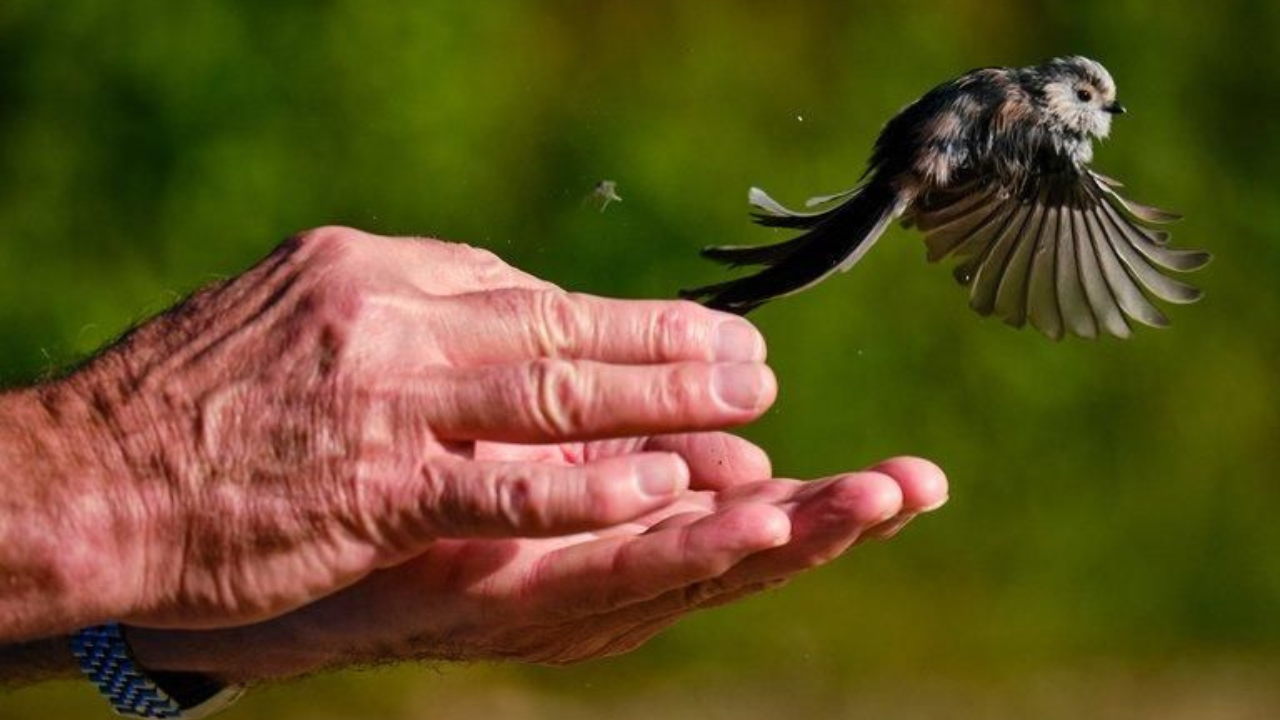
What If You Stayed There?
This is something I've been practicing in my own life.
Instead of immediately trying to resolve uncertainty, I have learned to spend more time inside it.
Not forever.
Not when action is genuinely needed.
But long enough to ask:
Does something actually need to happen right now?
That's a powerful question.
Because sometimes the answer is yes.
Make the call.
Set the boundary.
Ask the question.
Send the proposal.
Take the shot.
But sometimes the answer is:
No.
You've already done your part.
Now reality gets to respond.
And this is often where something unexpected happens.
New information arrives.
Someone reveals themselves.
An opportunity appears.
Your own feelings change.
You notice something you couldn't see while you were trying to control the situation.
The answer may even turn out to be something you wouldn't have chosen.
That's important.
Non-attachment does not guarantee that surrender will produce your preferred outcome.
Otherwise we'd just turn non-attachment into another control strategy.
The practice is being willing to say:
I don't know what happens next, and I can remain present anyway.

Peace. Power. Presence.
This is why I connect non-attachment to three things I teach often:
Peace. Power. Presence.
Attachment can take them away in that exact order.
First, we lose our peace.
We start worrying about the outcome.
Then we lose our power.
We begin trying to control things outside of us.
Then we lose our presence.
We're no longer here.
We're living in tomorrow.
We're imagining the conversation.
We're predicting the result.
We're mentally rehearsing disasters that may never happen.
Non-attachment brings us back.
Not because we suddenly know everything will work out exactly as we want.
But because we remember where our power actually lives.
Here.

Three Questions to Ask When You're Gripping
When you notice yourself becoming attached to an outcome, try asking yourself three questions.
What belongs to me?
That's radical responsibility.
My preparation?
Mine.
My behavior?
Mine.
My integrity?
Mine.
My decision?
Mine.
Someone else's response?
Not mine.
Then ask:
What would courage look like here?
Maybe courage means taking action.
Maybe it means telling the truth.
Maybe it means making the offer.
Maybe it means walking away.
And sometimes courage means doing absolutely nothing for another 24 hours.
Then ask:
Can I allow reality to answer?
That's non-attachment.
You've done what belongs to you.
Can you release what doesn't?
Bonus Resources: Practice Non-Attachment
Here are a few simple practices to experiment with when you notice yourself gripping an outcome.
1. Change "need" to "prefer."
Listen to your language.
Instead of:
I need this to work.
Try:
I'd strongly prefer this to work.
It may sound like a tiny change.
It isn't.
2. Separate action from outcome.
Write two columns:
What I control.
What I don't control.
Then stop assigning yourself responsibility for the second list.
3. Practice the pause.
When you feel the urge to check, chase, fix or predict, wait.
Even five minutes matters.
Notice what happens inside your body.
You are building your capacity for uncertainty.
4. Regulate before you interpret.
Breathe.
Walk.
Exercise.
Meditate.
Hold your fingers.
Take some space.
Regulation is not necessarily avoidance.
Sometimes settling your nervous system allows you to see reality more clearly.
5. Ask: "Am I taking action or trying to escape uncertainty?"
That question can expose a lot.
Both may look like action from the outside.
Internally, they are very different.

The Ball Eventually Leaves Your Hands
Maybe this is the simplest way I know to think about non-attachment.
There is a moment when the basketball belongs to the player.
He prepares.
He positions his body.
He focuses.
He shoots.
Those things belong to him.
Then the ball leaves his fingertips.
There is nothing left to grip.
And for one moment, nobody knows what happens next.
That's life.
We prepare.
We love.
We work.
We choose.
We speak.
We build.
We hope.
We pray.
We take responsibility.
And eventually...
the ball leaves our hands.
Non-attachment isn't refusing to take the shot.
And it isn't pretending you don't care whether it goes in.
It's knowing what belongs to you while the ball is in your hands...
and recognizing the moment when it doesn't anymore.
Care deeply.
Take the shot.
And allow reality to answer.
About the Author
Kathie Owen is an author, speaker, and private consultant who studies human behavior under pressure.
With a background in psychology, coaching, fitness, leadership development, and more than two decades of work with human behavior and performance, Kathie explores the patterns that emerge when uncertainty, emotion, identity, and pressure enter the room.

She is the author of Human Patterns Under Pressureand The Truth Bubbles Up and the creator of frameworks centered on Non-Attachment, Radical Responsibility, Courage, and Peace–Power–Presence.
Through The Kathie Owen Perspective podcast, YouTube channel, and her writing, Kathie brings together psychology, emotional regulation, leadership, Reality Transurfing, and real-life observations to help people recognize their patterns before those patterns begin making decisions for them.
Every podcast episode includes a companion article with additional insights and practical resources designed to take the conversation deeper.
Read More Articles from Kathie







Transcript
What if the thing you want most is the very thing you need to loosen your grip on? Not give up on, not stop loving, not pretending you don't care about. Just stop gripping. Because whenever I talk about non-attachment, there is one question I get asked more than almost any other. But Kathie, how am I supposed to not be attached to the result when I really, really want it?" And I understand the question. Maybe you really want the relationship to work. Maybe you desperately want your child to be okay. Maybe you spent 20 years building a business and you're preparing to sell it. Maybe you're waiting for the phone call, the diagnosis, the job, the client, the money, the answer. Maybe there is something in your life right now that you want so badly that the idea of "letting go" almost sounds ridiculous. So what are you supposed to do? Stop caring? Convince yourself that you don't want it? Repeat, "I'm detached. I'm detached. I'm detached," while checking your phone every four minutes? That's not non-attachment. That's attachment wearing a spiritual costume, and today I want to talk about the difference. Welcome to the Kathie Owen Perspective Podcast. My name is Kathie Owen. I study human patterns under pressure. I spent years studying psychology, human behavior, emotional regulation, leadership, reality transurfing, and the patterns we fall into when life does not go the way we expected. I'm also the author of Human Patterns Under Pressure and The Truth Bubbles Up, and one of the ideas I come back to over and over again is non-attachment, because non-attachment sounds simple, and it is simple, but simple does not mean easy, especially when you really care. Imagine you're standing at the free throw line. I've used this example before because I think it explains non-attachment better than almost anything. Imagine a basketball player standing at a free throw line. There are two seconds left on the clock. The game is tied. He has one shot. The crowd is screaming. His teammates are watching. The other team is watching. Thousands of people in the arena are watching. Maybe millions more are watching on television. Does he wanna make the shot? Of course he does. Non-attachment does not require him to walk up to that free throw line and say, "Uh, whatever. It doesn't matter." It matters. He practiced for this. He trained for this. He has probably shot that exact shot thousands and thousands of times. He absolutely prefers that that ball to go through the basket. But there is a huge difference between I want to make this shot and I have to make this shot. Listen to those two sentences again. I want to make this shot. I have to make this shot. They may sound similar, but your nervous system knows the difference. The second I tell myself something has to happen, I have made my peace conditional. It'll be okay if... I'll be okay if the shot goes in. I'll be okay if the... if they say yes. I'll be okay if the deal closes. I'll be okay if my child makes the choice I want them to make. I'll be okay if this person stays. I'll be okay if my business succeeds. I'll be okay if the test result comes back the way I want. I'll be okay when I know. And now we have a problem, because I handed my peace to an outcome I cannot completely control. Wanting is not the problem. This is where I think discussions about non-attachment can become confusing. People start believing they're not supposed to want anything. I don't believe that's the point at all. You are allowed to have preferences. You are allowed to want the shot to go in. You are allowed to want your business to succeed. You are allowed to want someone to love you. You are allowed to want more money. You are allowed to want your marriage to work. You are allowed to want the house. You are allowed to want the opportunity. You are allowed to want someone you love to be safe. Non-attachment does not ask you to become numb. It asks a much harder question: Can you deeply prefer an outcome without requiring that outcome in order to be okay? That's different, and that's where this gets uncomfortable because sometimes we aren't holding a preference anymore. We're holding a demand. This needs to happen. They need to choose me. They need to understand. My business needs to work. The video needs to perform well. My investment needs to pay off. My child needs to listen to me, and somewhere along the way, our preferences quietly became a contract with reality. I did this, therefore, reality owes me that. But reality never signed that contract Reality transurfing calls this importance. This is one of the ideas in reality transurfing that has fascinated me for so long. Reality transurfing talks a lot about importance and what it calls excess potential. In very simple terms, we can give something so much importance that we create enormous pressure around it. I don't just want it anymore, I need it. And the higher the importance becomes, the harder it can become for us to move naturally. Think about our basketball player. He knows how to shoot a free throw. His body knows what to do. Breathe, set, focus, shoot. But then the mind comes in. "Don't miss. Oh my God, don't miss. Everyone is watching. If I miss this, we're going to lose. What will people say? Don't screw this up." And suddenly he's not shooting a basketball anymore. He's trying to manage an imaginary future. His body is standing at the free throw line, but his mind is already tomorrow morning reading the headlines. That is attachment. He's left the present moment. And here's the strange paradox. The more desperately we try to control the outcome, the less present we become for the action that could actually influence it. This is where my own framework comes in. I talk a lot about three things: peace, power, and presence. Under pressure, I've noticed something interesting. Peace often goes first, then power, then presence. Think about what happens when you're attached to an outcome. First, you lose your peace. You're checking, watching, predicting, replaying, trying to figure out what everything means. Then you begin giving away your power because you're trying to control things that may not belong to you. Someone else's decision, someone else's feelings, the economy, the algorithm, the market, the diagnosis, the buyer, the audience, and eventually you lose your presence because you're not here anymore. You're living inside a future that hasn't happened, and this is why non-attachment is not passive. Quite the opposite. Non-attachment can bring you back to the one place where you actually have power. Here. Now. So how does the basketball player get there? This is the part people want to know. "Okay, Kathie, great. Don't attach, but how?" I get asked this all the time. How does that basketball player stand at the line and truly think, "I can make this shot, I can miss this shot, and I can handle either reality"? Practice. And I don't just mean practicing basketball, I mean practicing uncertainty. This is where non-attachment connects directly to something I've been talking about a lot lately, the pause, the uncomfortable space between what you do and finding out what happens. You send the email, pause. You make the offer, pause. You apply for the position, pause. You tell someone the truth, pause. You make the investment, pause. You go to the doctor, pause. You launch the business, pause. You take the shot, and the ball leaves your hands, pause. We hate that space because we don't know yet, and the human mind loves certainty. So what do we do? We try to fill the pause. We check, we chase, we text, we call, we analyze, we predict, we Google, we refresh the screen, we ask 10 people what they think. We create stories. Sometimes we even take action that wasn't necessary simply because action temporarily makes uncertainty feel more tolerable. And that's where I think the real practice of non-attachment begins, not with getting rid of desire, with learning to remain present after the ball has left your hands. This is where the magic happens. I can tell you this from my own experience. This is not easy. I've had to learn to sit in spaces where I didn't know what was going to happen, and everything in me wanted an answer. I wanted to move, I wanted to predict, I wanted to solve, I wanted to know, and slowly I've learned something. Uncertainty is uncomfortable. But uncomfortable does not automatically mean dangerous. And when I can stay there, when I don't immediately grab for certainty, when I don't force the next thing, something interesting starts happening. I begin to see things I couldn't see while I was gripping. Sometimes new information appears. Sometimes another opportunity appears. Sometimes the thing I thought I needed turns out not to be what I wanted at all. Sometimes I realize I was trying to force an answer before reality had finished showing me the question. That's what I mean when I say the magic often happens in the uncertainty. Not because uncertainty magically guarantees you'll get what you want. That would just be another form of attachment. I'll surrender because surrender will make the universe give it to me. Nope. That's a transaction. The practice is being willing to say, "I don't know what happens next," and remaining present anyway. Non-attachment is not indifference. This distinction matters so much. Non-attachment is not indifference. Acceptance is not approval. Surrender is not passivity. Regulation is not avoidance. Flow is not doing nothing, and uncertainty is not danger. These are half-truths, and I think we have to examine them. People say, "Let go," half-truth. People say, "Fight for what you want," half-truth. People say, "Trust the flow," half-truth. People say, "Take responsibility," half-truth. Sometimes you need to act. Sometimes you need to stop acting. Sometimes courage means speaking. Sometimes courage means not sending the text. Sometimes responsibility means stepping in. Sometimes responsibility means realizing this is not mine. Wisdom lives in learning the difference. Radical responsibility, courage, and non-attachment. These three principles work together. Radical responsibility asks what belongs to me. My preparation belongs to me. My behavior belongs to me. My decisions belongs to me. My integrity belongs to me. My shot belongs to me. Then comes courage. Can I take the shot knowing I cannot guarantee what happens? Can I tell the truth without controlling the response? Can I make the offer without demanding a yes? Can I love someone without owning their choices? Can I build something without requiring the world to validate it immediately? And then comes non-attachment. Can I allow reality to answer? That's the hard one, because eventually the ball has to leave your hands. And maybe that's the image I want you to carry with you today. The basketball player stands at the line. He breathes. He looks at the basket. He has practiced. He is prepared. He wants to make it. He isn't pretending otherwise, and then he takes the shot. At that moment, his job changes. There was a moment when the ball belonged to him, and then there is a moment when it doesn't. Maybe that's non-attachment. Knowing when the ball is yours to hold, and knowing when it's time to let it fly. My name is Kathie Owen. I'm the author of Human Patterns Under Pressure and The Truth Bubbles Up, and my work explores what happens to us when pressure, uncertainty, fear, and emotion enter the room, and how awareness can give us another choice. If this episode resonated with you, I've created a companion article that goes deeper into this conversation, and it includes bonus resources to help you explore these ideas in your own life. You'll find that article linked in the show notes and description below. And if you're watching on YouTube, I'll put it in the first comment, so it's easy to find. Because non-attachment isn't about learning how to care less. Maybe it's learning how to care deeply without requiring life to obey you.

Learn how to practice non-attachment, let go of expectations, and stop carrying workplace stress into your personal life. Kathie Owen shares personal stories, Reality Transurfing insights, and simple ways to create space through meditation, hobbies, and nature walks.
#NonAttachment #LettingGo #RealityTransurfing #WorkplaceStress