
What If the Pattern Is Keeping You Stuck?

Your Brain Already Wrote the Ending
You saw the pattern.
You recognized what was happening.
And before the next thing even happened, your brain said:
I know how this ends.
That's the strange thing about becoming good at pattern recognition.
The better you get at seeing patterns, the easier it can become to stop looking.
You recognize the behavior. You remember what happened last time. You connect the dots. And your brain moves quickly from:
I've seen this before.
to:
I know what this means.
to:
I know what happens next.
But those are three very different statements.
I have been experimenting with something lately that has changed the way I think about my own patterns. It comes from a concept I first encountered years ago through Reality Transurfing.
It's called an anomalous challenge.
But I'm using it differently than I once understood it.
I'm not doing something unusual simply for the sake of getting outside my comfort zone.
I'm introducing anomalies into patterns I think I already understand.
And what I've discovered has been fascinating.
Sometimes you don't need to break the pattern. You need to interrupt the prediction.
🎥 Watch: Interrupting the Prediction
In the video above, I explain how I've been experimenting with anomalous challenges and why they have changed the way I use pattern recognition.
But there's more to this.
Because once you understand what your mind is doing with familiar patterns, you can begin experimenting with them deliberately.
Hello, World!
Pattern Recognition Is Not the Problem
Pattern recognition is incredibly useful.
We use it constantly.
You recognize a friend's voice before you see their face.
You notice when someone's behavior changes.
An experienced leader can walk into a meeting and sense that something in the room is different.
A skilled professional may notice a problem long before it appears on a report.
Patterns give us information.
And when you've spent years studying human behavior, you can become very good at spotting them.
But there is a trap.
A pattern is evidence. It is not necessarily a conclusion.
Imagine that you have repeatedly experienced this:
A happens.
Then B happens.
Then C happens.
After enough repetitions, your mind gets efficient.
The next time A happens and B follows, you don't wait for C.
You predict it.
Sometimes you'll be right.
But something subtle has happened.
You are no longer observing the pattern.
You are completing it.

Your Brain Loves to Finish the Story
Think about how often this happens in ordinary life.
Someone doesn't respond to your message.
You know what that means.
A person uses a certain tone.
You've heard that tone before.
A meeting starts going in a familiar direction.
Here we go again.
A business problem resembles one you've handled before.
You already know what needs to happen.
Maybe.
Maybe not.
That phrase has become incredibly useful to me.
Not because it tells me my pattern recognition is wrong.
It doesn't.
It simply creates a tiny opening between what I observed and what I concluded.
Maybe my hypothesis is correct.
Maybe there is another variable I haven't seen.
Maybe something has changed.
Maybe this situation only resembles the old pattern.
I don't have to decide yet.
And that's where the anomalous challenge gets interesting.

What Is an Anomalous Challenge?
I first encountered this idea through the Reality Transurfing community years ago.
The examples I remember were simple.
Do something differently.
Go somewhere new.
Change your routine.
Try a different restaurant.
Film your video somewhere other than your usual location.
There is value in that.
Novelty interrupts routine.
But lately I've been experimenting with something much more specific.
Instead of introducing an anomaly into my day, I'm introducing an anomaly into a pattern.
That's different.
Let's say you have a familiar behavioral sequence:
Something happens.
You react.
The other person responds.
You react again.
You've done this enough times that the whole thing can begin to feel inevitable.
So don't blow it up.
Don't declare that you'll never behave that way again.
Don't force yourself into some shiny new identity.
Change one variable.
Then observe.

The Anomaly Is an Experiment
Let's use a simple example.
Imagine that whenever someone misunderstands you, you immediately explain yourself.
You provide context.
Then more context.
Then you explain the context. 😂
You've done it for years.
Perhaps you've even concluded:
This is what I have to do when someone misunderstands me.
An anomalous challenge might be very small.
This time, you don't immediately explain.
You wait.
That's it.
You haven't decided never to explain yourself again.
You haven't decided that explaining is bad.
You're running an experiment.
What happens?
Maybe the person asks you a question.
Maybe they figure it out themselves.
Maybe they continue misunderstanding you.
Maybe you decide an explanation really is necessary.
Or perhaps the most interesting information isn't about them at all.
Maybe you notice how uncomfortable you become when you don't immediately correct the misunderstanding.
Now you have information you couldn't collect while automatically repeating the old sequence.
That is what makes this version of an anomalous challenge so useful.
The goal isn't a better outcome. The goal is new information.

I Went Back to Reality Transurfing
Once I started thinking about anomalous challenges this way, I became curious about where the idea originated.
I remembered the word anomalous from my years of studying Reality Transurfing, so I searched the book for it.
And I found something interesting.
Vadim Zeland describes an “anomalous burst of energy” as opening the conscious mind toward distant areas of what Reality Transurfing calls the alternatives space.
That stopped me.
Reality Transurfing uses the alternatives space as part of a much larger metaphysical framework.
But I started looking at that passage through the lens of human patterns.
And a different question occurred to me:
What possibilities have become invisible because I am so accustomed to the pattern I already know?
That question is powerful.
Because we don't usually walk around saying:
“There are no other possibilities.”
We simply stop looking for them.
We've seen enough.
We've gathered the evidence.
We've reached the verdict.
Case closed.
Except...
what if we changed one variable?

An Anomaly Can Make Pattern Recognition Better
This has been one of the biggest surprises for me.
Experimenting with anomalies has not made me trust pattern recognition less.
It has made me more precise with it.
Now I can notice:
There is the observation.
There is the pattern.
There is my hypothesis about the pattern.
And there is my prediction about what happens next.
Those things can happen so quickly that they feel like one thought.
They're not.
That distinction matters tremendously in human behavior.
It matters in relationships.
It matters in leadership.
It matters in organizations.
It matters anytime we're making decisions based on what we believe we already understand.
Sometimes experience gives us wisdom.
Sometimes experience gives us assumptions.
Often, it gives us some of both.
The skill is learning to tell the difference.

This Is Also How Identity Quietly Gets Built
We tend to think of identity in big terms.
I'm confident.
I'm shy.
I'm a leader.
I'm independent.
I'm good at this.
I'm terrible at that.
But identity also gets built through tiny repeated behaviors.
This is how I respond.
This is what I do.
This is how people treat me.
This is what happens when I speak up.
This is what happens when I don't.
Repeat something long enough and eventually it can stop feeling like a behavior.
It starts feeling like you.
That's another reason an anomalous challenge can be so interesting.
You don't have to stand in front of a mirror and convince yourself that you're a completely different person.
You can simply have an experience outside the familiar pattern.
Then another.
Then another.
You begin collecting evidence of your own range.
Oh. I can respond differently here.
Oh. I don't have to decide immediately.
Oh. That didn't happen the way I expected.
Oh. I have another choice.
That is a very different kind of identity shift.

Don't Use the Anomaly to Create Another Rule
There is one caution here that I think matters.
The anomalous challenge can become another pattern if we're not careful.
If you discover that staying quiet worked once, the lesson isn't:
I should always stay quiet.
If saying yes produced something wonderful, the lesson isn't:
I need to start saying yes to everything.
If changing your routine gave you an insight, you don't need to spend the rest of your life deliberately disrupting every routine.
That's not freedom.
That's another formula.
The point is not to replace one certainty with another.
The point is to become a better observer.
Maybe. Maybe not.
Try something.
Collect information.
Pay attention.
Let reality give you data you couldn't receive while you were busy predicting it.
Try Your Own Anomalous Challenge
Here's where I would begin.
Find one place in your life where you regularly hear yourself say something like:
I already know how this goes.
They always do this.
This never works.
That's just how I am.
I know what they're going to say.
I know what happens next.
Don't argue with yourself.
Don't shame yourself for having the thought.
And don't force yourself to believe the opposite.
Simply notice:
There's the pattern.
Then:
There's my prediction.
Now ask:
What is one small variable I could change that would give me new information?
Not a dramatic change.
Not a reckless one.
Not something designed to force the outcome you want.
An experiment.
Then observe.
Because the anomaly doesn't tell you which possibility is correct.
It reminds you that there may be possibilities you haven't considered.
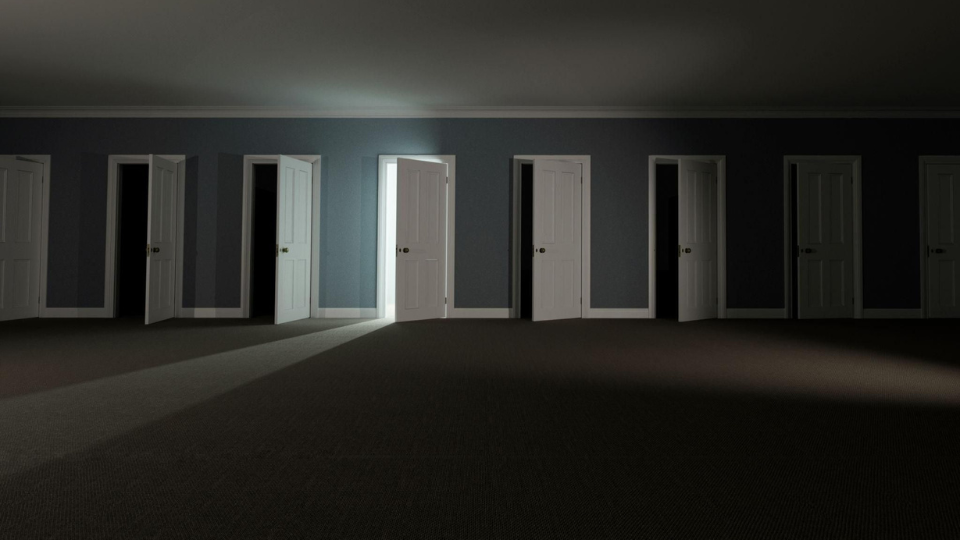
Maybe That's Where Possibility Begins
I used to think an anomalous challenge meant doing something unusual.
Now I see it differently.
The most interesting anomaly may not be doing something your routine doesn't expect.
It may be doing something your prediction doesn't expect.
That's much more powerful.
Pattern recognition says:
I've seen this before.
Awareness says:
I notice what I'm predicting.
Non-attachment says:
Maybe. Maybe not.
The anomalous challenge says:
Let's introduce one new variable.
Observation says:
Let's see what actually happens.
And choice says:
Now what do I want to do with what I've learned?
You don't have to destroy your patterns to change your life.
Sometimes you simply need enough new information that an old prediction can no longer pretend to be the only possibility.
Go Deeper
If this article helped you recognize a pattern you've been living inside, spend some time exploring the additional resources on this page, including the video above and my work with Reality Transurfing, non-attachment, pattern recognition, and human behavior under pressure.
And if you're seeing patterns in your leadership, business, team, or life that you're simply too close to see clearly, that is where my private consulting work begins.
Not with a predetermined answer.
With observation.
Because sometimes the most valuable shift starts by seeing what has been there all along.
About Kathie Owen
Kathie Owen is a private consultant, author, and speaker specializing in human patterns under pressure. Her work explores the intersection of pattern recognition, leadership psychology, emotional regulation, human risk, and the subtle behaviors that influence decisions when the stakes are high.

She works privately with founders, executives, leaders, and individuals who want greater clarity around patterns that can be difficult to recognize from inside the system. Her approach is grounded in Non-Attachment, Radical Responsibility, and Courage, with an emphasis on observation before conclusion and awareness before action.
Kathie is the author of Human Patterns Under Pressure, which explores what pressure reveals about leadership, workplace behavior, decision-making, culture, and human risk.
She is also the author of The Truth Bubbles Up, a deeply personal exploration of awareness, responsibility, patterns, and what can happen when we become willing to see our lives more clearly.
She is the host of The Kathie Owen Perspective, where she explores human behavior, Reality Transurfing, leadership, emotional regulation, pattern recognition, and the everyday moments that reveal far more than we initially realize.
To learn more about Kathie's private consulting, books, videos, and resources, explore the links on this page.
Read this perspective on Human Diligence on Kathie’s LinkedIn Page:
Read More Articles from Kathie










Transcript
The most dangerous thing about being good at recognizing patterns is that eventually you can become so good at it that you stop looking. You already know what happens next. You know how this person is going to respond. You know how the situation is gonna play out. You know what works for you. You know what doesn't. And the really tricky part, you may be right. You've seen the pattern before. You have evidence, and your brain is not making this up. But what if being right about the pattern is the very thing preventing you from seeing what else is possible? I've been experimenting with something this week that has changed the way I think about pattern recognition. What? Yes. It's called an anomalous challenge. I've known about anomalous challenges for years through reality transurfing, but I don't think I understood how powerful they could be until I stopped using them simply to do something different and started using them to interrupt my own predictions. That distinction changed everything, and today I'm going to show you how. Welcome to the Kathie Owen Perspective podcast. My name is Kathie Owen. I study human patterns under pressure. I work with leaders, individuals, and organizations to notice the patterns that become difficult to see when we're standing inside of them. And here's something I've learned about patterns. The better you become at recognizing them, the easier it becomes to confuse recognition with certainty. I talked about this in my last episode. You see something you've seen before, and your brain goes, "Oh, I know this," and then, "I know what this means," and finally, "I know what's gonna happen." Those are three very different statements, and recently I've been practicing a simple response when I notice myself jumping from observation to conclusion, and that response is, "Maybe, maybe not." That little sentence creates space. But this week I took it one step further. Instead of only questioning my prediction, I started experimenting with the pattern itself. That's where the anomalous challenge comes in, and I want to explain this differently than I've ever heard it explained before. What is an anomalous challenge, Kathie? I first heard about anomalous challenges years ago in the Reality Transurfing community. The examples were usually pretty simple. Do something outside your normal routine. Go to a different restaurant. Take a different route. If you normally make your video in your office, go make it in the park. Wear something different. Order something you've never ordered before. And there's nothing wrong with those examples. They are anomalies. They introduce novelty. But this week, I realized there's another way to use this idea, and I rubbed my hands together. And for someone like me, who spends a tremendous amount of time recognizing patterns, this version became much more interesting. Instead of changing something simply because it's different, what if you changed one variable inside a pattern you think you already understand? Now we're doing something else entirely. We are creating an experiment. When pattern recognition becomes prediction, and here is how easily this happens. Imagine you've experienced this sequence repeatedly. A happens, then B happens, then C happens, and you've seen it 20 times, maybe even more. And eventually, when A happens and B happens, you don't wait around for C anymore. You say, "Oh, I know what's happening here." And maybe you're right. That is important. I'm not interested in teaching people to distrust their pattern recognition. Pattern recognition is incredibly valuable. It's part of what I do professionally. But recognizing a pattern gives us a hypothesis. It doesn't necessarily give us the ending, and I have caught myself doing this. I see A, I see B, and before C ever arrives, I've already written C. Sometimes I've written D, E, F in the sequel. I am five chapters ahead of reality. That's when I started using maybe, maybe not. Maybe this pattern recognition continues exactly as it has before, and maybe it doesn't. I do not know yet. And here's where the anomalous challenge gets fascinating. What happens if I change one variable? This is the distinction I want you to remember. You don't necessarily need to break your patterns. You don't need to decide that they're bad. You don't even need to prove your original conclusion is wrong. Interrupt the prediction. Let's say you tend to explain yourself when somebody misunderstands you. Something happens, you feel misunderstood, and immediately you explain, then you explain the explanation, and then you add context to the explanation. That is the pattern. An anomalous challenge might be, what happens if I don't explain this time? Not forever. This isn't your new personality. You're not making a rule that says, "I never explain myself anymore." This is just another rigid pattern. You're conducting an experiment. What happens? Maybe the person asks a question. Maybe they don't. Maybe they understand you without the explanation. Maybe they misunderstand you. Maybe you notice that the most uncomfortable part isn't their response at all. Maybe the discomfort happens inside of you because you're accustomed to fixing the misunderstanding. Now, we have new information, and that is the point. The anomalous challenge isn't designed to give you a better outcome. It's designed to give you information your existing pattern couldn't give you. I went back to the book Reality Transurfing, and this realization made me curious. I remember that the word anomalous came from my years of studying Reality Transurfing, so I went back to the book. I actually searched the text for the word anomalous because I wanted to find the original context, and I found a passage that made me stop. Vadim Zeland writes about an "anomalous burst of energy," opening the conscious mind to areas of what he calls the alternative space that are far removed from what is currently being realized. Now, Reality Transurfing has its own framework around the alternative space, but I read that passage through the lens of pattern recognition, and suddenly I thought, "Oh my goodness, that is it." What possibilities have become invisible to me because I'm so accustomed to the pattern I'm currently experiencing? That's a different question because most of us aren't walking around thinking there's no other possibilities. We simply stop looking for them. We've seen the pattern. We've made the prediction. Case closed. And if you've become very good at pattern recognition, you can build one heck of a case. Trust me. But introduce an anomaly, suddenly there's information your original model did not contain. And this is where I think people can make this concept harder than it has to be. An anomalous challenge doesn't require you to blow up your life. Please don't quit your job tomorrow and tell everybody Kathie Owen told you to conduct an experiment. That's not what I'm saying, and I trust you understand that. Small anomalies can be incredibly revealing. If you normally answer immediately, pause. If you automatically say no to an idea, explore it for five minutes before dismissing it. If you normally prepare 10 steps ahead, prepare for the next step and see what happens. If you always lead, let somebody else lead. If you're already constructing an answer while somebody else is talking, listen until they're completely finished. If you automatically assume you know why somebody did something, don't fill in the blank. Observe what actually happens. That's the anomalous challenge because now you're changing your participation in the pattern, and that can reveal things you couldn't see while repeating it. I love this. There's another reason I find this so powerful. So we tend to think about identity in these giant statements. I am confident. I am shy. I am successful. I am anxious. I am a leader. I'm spontaneous. But identity also exists in tiny patterns. This is how I do things. This is what I wear. This is how I respond. This is what people expect from me. This is what happens when I speak up. This is what happens when I do not, and this is what I'm good at, and this does not work for me. Do something long enough, and eventually it can stop feeling like a behavior. It starts feeling like who you are. An anomalous challenge doesn't require you to affirm some new identity. You simply give yourself an experience outside the old pattern, then another, then perhaps another, and suddenly you have evidence, "Oh, I can behave differently here." That's much more interesting to me than trying to convince yourself you're somebody different. You're experiencing your own range. And guess what? Your pattern recognition gets better. And this was probably my favorite realization from experimenting with this. The anomalous challenge didn't make me trust my pattern recognition less. It made my pattern recognition better because now I'm looking for more variables. I'm less interested in immediately being right. I'm more interested in seeing what is there. That's a very different way to observe instead of, "I recognize this. I know what happens next." It's, "I recognize this. Here's my hypothesis. Maybe, maybe not. Let's see." And sometimes my original hypothesis is right. Great. That's data, too. But sometimes something happens that I never considered. Now my model gets bigger, and that's where I think this connects beautifully with the alternative space in Reality Transurfing. You aren't forcing yourself into another reality. You aren't demanding a particular outcome. You're loosening your attachment to the idea that reality you've already predicted is the only one available. That opens possibility. So here's my challenge for you. Don't go looking for something crazy to do. Look for something predictable. Find one place in your life where you hear yourself thinking, "I know how this goes. This always happens. I already know what they're going to say. I know how I'll respond. That won't work. I'm not that kind of person." And there, you have found the pattern. Now, don't argue with it. Don't tell yourself it's wrong. Don't replace it with positive thinking. Just say, "Maybe, maybe not." And ask yourself one question: What is one small variable I could change here that would give me new information? Hmm. Then change it and watch. No judgment, no predetermined outcome, no requirement that anything magical happen. Just observe, because observation gives you awareness, and awareness gives you choice, and choice opens possibility. You know, I used to think an anomalous challenge was about doing something unusual. Now I see it differently. It's not about doing something your routine doesn't expect. It's about doing something your prediction doesn't expect, and that's the difference, because you don't have to destroy your patterns to change your life. Sometimes you simply need to introduce enough new information that the old prediction can no longer pretend to be the only possibility. And maybe that's what opens the alternative space. Maybe that's what shifts identity. Maybe that's what changes the direction of your life. Maybe, maybe not. Go find out. If you enjoyed this episode, I've created an accompanying article where I go deeper into the anomalous challenge, pattern recognition, reality transurfing, and some additional resources you can use to experiment with this yourself. You'll find the link in the description. And if you're recognizing patterns in your own life, leadership, or organization that you're too close to see clearly, that's also the work I do through private consulting. You can learn more about working with me through the links in this article as well. They will be in the show notes and description below, and on YouTube, they will be in the first comment pinned below so that it's easy to find. And until next time, keep observing because sometimes the smallest interruption reveals a possibility you could not see before.

An anomalous challenge can do more than break a routine. Learn how interrupting predictions can reveal hidden patterns, improve pattern recognition, expand choices, and open new possibilities through Reality Transurfing, awareness, and non-attachment. #RealityTransurfing #PatternRecognition #SelfAwareness #HumanBehavior