
What If You Don't Need the Answer Yet?

Are You Stuck—or Simply in the Pause?
What if the thing making you uncomfortable isn't actually a problem?
Nothing has gone terribly wrong.
There's no emergency.
You don't even have a decision that clearly needs to be made.
You simply...
don't know yet.
And that can be surprisingly difficult.
We are remarkably good at turning uncertainty into evidence.
The relationship feels different, so something must be wrong.
The client hasn't responded, so they must have changed their mind.
The numbers shifted, so the strategy must be failing.
The acquisition has entered a difficult stage, so somebody must be responsible.
The leader becomes quiet, so the team starts guessing.
Something changes.
We don't have enough information.
And instead of allowing the blank space to remain blank, the human mind grabs a marker and starts filling it in.
That's where things get interesting.
Because sometimes the greatest source of pressure isn't what happened.
It's our inability to leave the next part of the story unwritten.
Pressure Hits Before We Have Time to Think
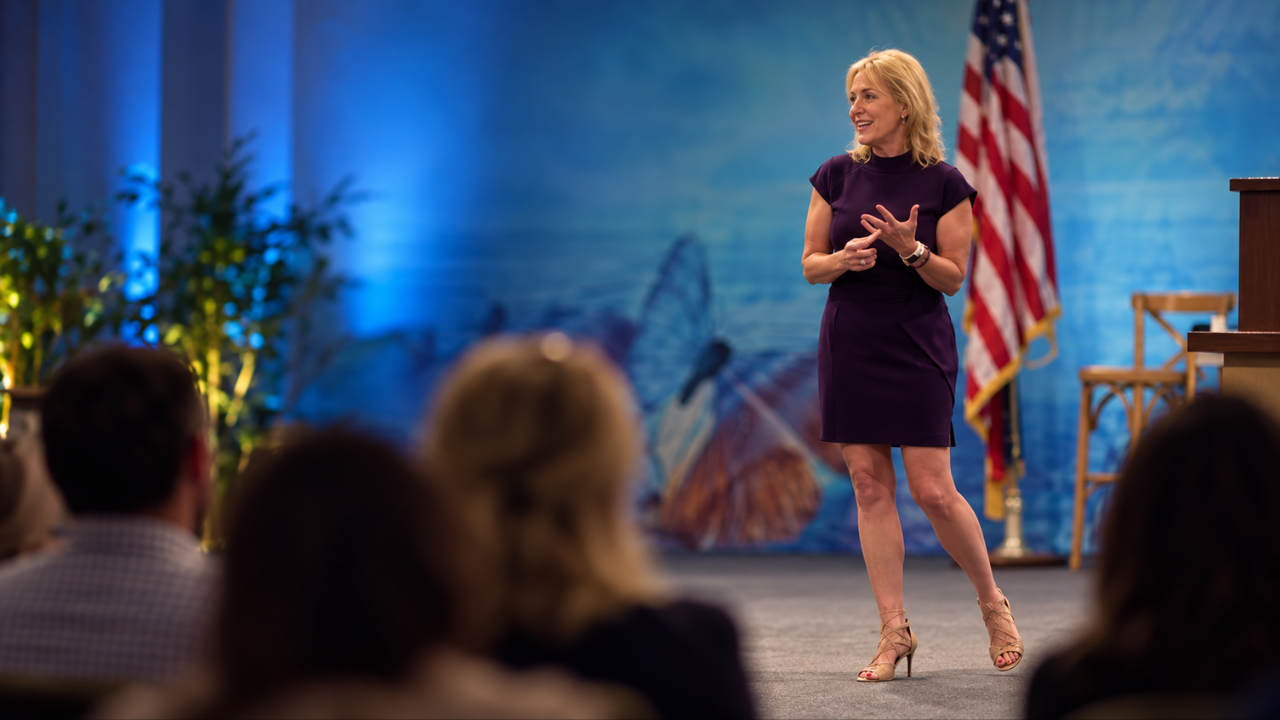
When I speak about Human Patterns Under Pressure, I often begin with a simple statement:
Pressure just hit the room. Who do you become in that moment?
Not five minutes later.
Not after you've had time to calm down.
Not after you've called your friend, talked to your spouse, taken a walk, or thought everything through.
That first moment.
Someone challenges you.
An employee resigns.
Your child says something unexpected.
Your partner becomes distant.
A deal changes.
A number comes in differently than expected.
An executive questions the strategy.
You receive an email you weren't expecting.
Pressure hits.
Your body often responds before your rational mind has caught up.
Then the mind gets involved.
It wants an explanation.
And it wants one now.
That's where our patterns begin to appear.
Peace Goes First
I've spent years studying what happens to people under pressure.
One pattern I've noticed is that we tend to lose three things:
Peace. Power. Presence.
Usually, peace goes first.
Something happens and our internal state changes.
Then we may lose our power.
Not because someone takes it from us, but because we hand it over to our reaction.
We start defending.
Controlling.
Predicting.
Fixing.
Blaming.
Pleasing.
Withdrawing.
Overthinking.
And once we're caught inside the reaction, we begin losing presence.
We're no longer responding to what is actually happening.
We're responding to what we think it means.
That's a very different thing.
This is why I teach the pause.

The Pause Interrupts the Pattern
Pause.
Observe.
What actually happened?
What am I feeling?
What story did my mind just create?
What do I know for certain?
That small interruption creates something incredibly valuable:
Awareness.
And awareness creates choice.
If I don't recognize my pattern, the pattern chooses for me.
If I recognize it, I have options.
But recently, I started thinking about something I hadn't considered quite this deeply before.
What happens when you've paused...
you've observed...
you have awareness...
and you still don't know what to do?
Welcome to the deeper pause.
When Awareness Doesn't Produce an Answer
We talk about self-awareness as though awareness automatically produces clarity.
It doesn't.
Sometimes awareness does something much less satisfying.
It shows us that we don't know yet.
That's an uncomfortable place for the human mind.
We like categories.
Right or wrong.
Good or bad.
Stay or leave.
Act or wait.
Hot or cold.
But life doesn't always exist at the ends of the spectrum.
Sometimes we're somewhere in warm.
And there are a surprising number of temperatures inside warm.
That's where nuance lives.
It's also where wisdom becomes harder.
Because simple rules stop working.

All Truths Are Half-Truths
One of the principles I've spent considerable time contemplating through my study of Hermetic philosophy is:
All truths are half-truths.
Consider some of our favorite advice.
Let go.
Good advice.
Unless you're using “letting go” to avoid something you need to face.
Take responsibility.
Absolutely.
Unless you're taking responsibility for something that never belonged to you.
Trust yourself.
Yes.
But our perceptions can be distorted under pressure.
Take action.
Sometimes.
Other times, frantic action is anxiety trying to make uncertainty disappear.
Never give up.
Inspiring.
Until courage requires you to walk away.
Two apparently opposite things can contain truth.
That's why awareness is so important.
We don't need another rule to follow blindly.
We need enough presence to recognize what this particular moment requires.
And sometimes the answer is:
I don't know yet.

Human Patterns Hate “I Don't Know Yet”
This is where Human Patterns Under Pressure becomes especially useful.
Watch what happens when uncertainty enters a room.
Control wants action.
Do something.
Perfectionism wants certainty.
Figure out the right answer.
Over-responsibility wants a job.
What am I supposed to fix?
People pleasing may look outside itself.
Tell me what you think I should do.
Criticism can search for fault.
Who caused this?
Emotional avoidance may simply want the discomfort to disappear.
Different strategies.
Same underlying problem.
Uncertainty is uncomfortable.
So we try to escape it.
But uncertainty doesn't always require escape.
Sometimes it simply requires more information.

Reality Transurfing and Alternative Flow
This is where one of the concepts I've studied in Reality Transurfing, the series of books by Russian author Vadim Zeland, becomes especially interesting.
Zeland describes something called alternative flow.
We often create a mental map of how something is supposed to happen.
First this.
Then that.
Then this person responds.
Then the opportunity appears.
Then we make the decision.
We create an internal sequence.
And without realizing it, we start expecting reality to cooperate with our map.
When it does, we feel great.
When it doesn't, we assume something has gone wrong.
Then we start pushing.
We force conversations.
We manufacture decisions.
We chase answers.
We increase pressure.
We become attached to a specific route.
Alternative flow offers a different possibility.
Pay attention to what reality is actually presenting.
This doesn't mean becoming passive.
It doesn't mean refusing to make decisions.
It doesn't mean waiting for the universe to run your life.
It means releasing the assumption that your mind already knows the only acceptable route forward.
There's a big difference.

You Can't Ride a Wave That Isn't There
I like thinking about this as surfing.
Sometimes life has obvious movement.
One conversation leads to another.
An opportunity appears.
Something unexpectedly falls away.
A new person enters your world.
Information arrives.
A door opens.
You move.
You respond.
You participate.
You're riding the wave.
I've come to think of those periods as riding the wave of success.
And they're wonderful.
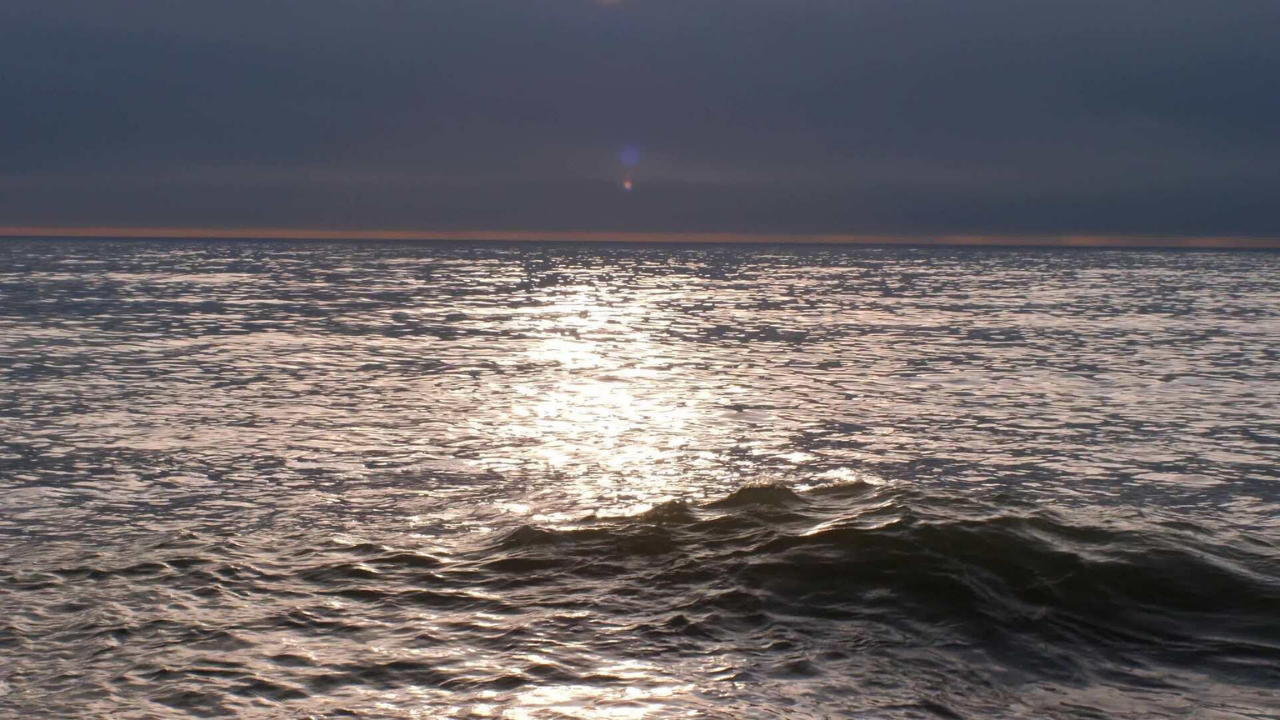
But what happens when there's no wave?
That's where we tend to get ourselves into trouble.
We paddle harder.
We search for signs.
We overanalyze.
We make something happen just so something is happening.
Stillness begins to feel like failure.
But think about the absurdity of a surfer becoming angry with the ocean because the next wave hasn't arrived.
The ocean isn't broken.
There's simply no wave yet.
Sometimes the wisest thing the surfer can do is float.
Stay awake.
Watch the horizon.
Remain ready.
And wait.
Waiting and Avoidance Are Not the Same Thing
There's an important distinction here.
Waiting can absolutely become avoidance.
“I'm trusting the flow” can be a beautiful spiritual explanation for:
I'm terrified to make the decision.
“I've surrendered it” can mean:
I don't want to have the conversation.
“I'm practicing non-attachment” can mean:
I'm afraid to acknowledge how much I care.
That's why radical responsibility matters.
Ask yourself:
Do I genuinely need more information, or do I dislike the information I already have?
Those are very different pauses.
If you know the conversation needs to happen and you're hiding from it, that's not alternative flow.
If a boundary has clearly been crossed and you refuse to acknowledge it, that's not non-attachment.
If the facts are sitting directly in front of you and you're waiting for reality to give you different facts, that's not patience.
That's why courage belongs alongside non-attachment.
We have to be willing to face reality as it is.

Peace Doesn't Require Certainty
This brings me back to Peace, Power, and Presence.
I've started seeing them differently.
Peace doesn't require certainty.
You can have unanswered questions and remain peaceful.
Power doesn't always require action.
Sometimes refusing to make an unnecessary decision is power.
And presence doesn't require knowing what happens next.
Presence means remaining with what is actually happening now.
That's harder than it sounds.
Because the mind loves to leave the present and travel into an imaginary future.
What if this happens?
What if they do that?
What if I lose this?
What if this never works?
What if?
What if?
What if?
Before long, we've sacrificed today's peace to a future that doesn't even exist.
The pause brings us back.

This Happens Inside Companies Too
The deeper pause isn't just personal.
I see versions of it inside organizations all the time.
And it becomes especially important during periods of significant change.
Scaling.
Succession.
Leadership transitions.
Restructuring.
Mergers and acquisitions.
Imagine a company entering an acquisition.
The announcement happens.
Employees don't have all the information yet.
Executives may not have all the information yet.
Roles could change.
Reporting structures may shift.
People wonder whether they'll still have jobs.
Founders wonder what control they'll retain.
Leadership teams wonder what the new organization will look like.
Pressure just hit the room.
And uncertainty creates a vacuum.
Human patterns rush to fill it.
Control tightens.
People begin protecting territory.
Rumors spread.
Some employees withdraw.
Others become overly helpful.
Executives may begin making promises before they actually have answers.
Founders may struggle to release decisions they've controlled for decades.
People start responding to what they think is going to happen instead of what has actually happened.
This is one reason human diligence matters.
Financial diligence can examine the numbers.
Legal diligence can examine contracts and liabilities.
Operational diligence can examine systems and processes.
But somebody also needs to pay attention to what uncertainty is doing to the humans inside the system.
Because their patterns don't wait for the deal to close.

The Leader Doesn't Have to Fill Every Silence
This is particularly important for leaders.
Leadership presence does not require pretending you know things you don't know.
Sometimes one of the most stabilizing things a leader can say is:
“We don't know that yet.”
Then explain what is known.
Here's what we know.
Here's what we don't.
Here's what we're doing next.
Here's when we'll communicate again.
That's presence.
Compare that with a leader who becomes uncomfortable with uncertainty and begins filling the vacuum with premature promises.
People feel the difference.
Your team feels your leadership before they believe it.
A regulated leader can remain present inside uncertainty without manufacturing certainty for everyone else.
That's a form of power.

Awareness Creates Choice, Not Certainty
This may be the distinction I find most important.
I still believe deeply:
Awareness creates choice.
But awareness does not guarantee certainty.
Sometimes awareness allows you to see:
I'm trying to control this.
I'm creating a story.
I'm predicting.
I'm carrying something that doesn't belong to me.
I'm avoiding something.
I'm trying to force the wave.
And sometimes awareness simply tells you:
I don't know yet.
That is information too.
Maybe you act.
Maybe you wait.
Maybe you ask a question.
Maybe you establish a boundary.
Maybe you gather more information.
Maybe you take a walk and allow your nervous system to settle before making a decision.
Maybe you do nothing for twenty-four hours.
The power isn't in always knowing the perfect answer.
The power is in being aware enough that your pattern doesn't automatically choose for you.

Maybe You're Not Stuck
So if something in your life feels unresolved right now, consider this before you decide you're stuck.
Maybe you're simply in the pause.
You've become aware of the pattern.
You've stopped reacting.
You've separated fact from story.
And clarity hasn't arrived yet.
That's okay.
Look around.
Is there actually a decision that needs to be made?
Is there an action reality is asking you to take?
Are you avoiding something you already know?
Or are you simply uncomfortable because the next piece of information hasn't arrived?
Those questions matter.
Because sometimes courage means moving.
Sometimes responsibility means acting.
Sometimes non-attachment means releasing your grip on the outcome.
And sometimes alternative flow means recognizing:
There is no wave right now.
Don't manufacture one.
Protect your peace.
Keep your power.
Stay present.
Watch the horizon.
And when the wave arrives...
ride it.
About Kathie Owen
Kathie Owen is a consultant, author, and longtime student of human behavior who specializes in recognizing the subtle patterns that emerge when people and organizations come under pressure.
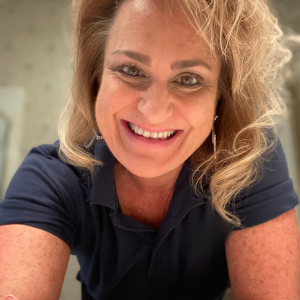
She is the author of Human Patterns Under Pressure and The Truth Bubbles Up. Through more than two decades of studying psychology, leadership, emotional regulation, pattern recognition, and human behavior, Kathie developed a distinctive observational lens for identifying what often goes unseen beneath conflict, uncertainty, and change.
Today, she brings that perspective to leaders, founders, executives, and organizations navigating moments when the human dynamics beneath the numbers matter most.
Human Patterns Under Pressure at Work
Uncertainty affects more than our personal lives. In workplaces, founder-led businesses, leadership transitions, private equity environments, and mergers and acquisitions, pressure can quickly activate patterns of control, perfectionism, withdrawal, over-responsibility, people pleasing, criticism, and emotional avoidance. Human diligence helps leaders recognize these behavioral patterns before they quietly affect trust, communication, decision-making, culture, and enterprise value. By combining pattern recognition, emotional regulation, leadership psychology, and the principles of Peace, Power, and Presence, we can respond to uncertainty with greater awareness instead of automatic reaction.
#HumanPatternsUnderPressure #LeadershipUnderPressure #HumanDiligence #MergersAndAcquisitions
Read More Articles from Kathie





Transcript
Pressure just hit the room. Who do you become in that moment? Not five minutes later, not after you've had time to think about it. I'm talking about that very first moment. Someone criticizes you, someone doesn't respond the way you expected, the meeting suddenly changes direction, you get the email, you see the number, you hear the news. Something happens and pressure enters the room. What happens inside of you? Because I've spent years studying that very moment, and here's what I've noticed. We lose our peace first, then we lose our power, and eventually, we lose our presence. Sometimes all three disappear so quickly that we don't even realize they're gone. That's why I teach people to pause. Pause before you react, pause before you fix, pause before you defend, pause before you create a story about what just happened. Because when you pause, something very important becomes possible: awareness. And awareness creates choice, and that's something I have taught for years. But recently, I've discovered something I hadn't thought about quite this way before. What happens when you pause? You become aware, and you still don't know what to choose. What happens when there isn't a clear answer? I found myself there recently, and I started calling it stuck in the pause. Welcome to the Kathie Owen Perspective podcast. My name is Kathie Owen. I'm the author of Human Patterns Under Pressure and The Truth Bubbles Up, and I'm a consultant who studies what happens to people, leaders, relationships, and organizations when pressure rises. For more than two decades, I've studied psychology, human behavior, leadership, emotional regulation, and the subtle patterns that show up under stress and uncertainty. I've also spent years studying philosophies and consciousness-based frameworks, including the works of Michael Singer, Hermetic Principles, and Reality Transurfing, which is a series of books by Russian author Vadim Zeland, and I've studied intensively and applied it to my own life. And lately, I've become especially interested in what happens when these ideas intersect, because that's where things get interesting. So let's talk about the pause Let's go back to that first moment when pressure just hit. Pressure hits, maybe somebody says something you don't like, your nervous system noticed something. Before your logical mind catches up, something changes. Your breathing, your shoulders, your stomach, your thoughts, your attention narrows, and then the mind gets involved and wants to know, "What does this mean?" That's the dangerous little question, because sometimes we don't actually know, so the mind fills in the blank. "They're angry with me. I'm gonna lose this. This isn't gonna work. I need to fix this. Something is wrong." And now we are no longer responding only to what happened. We're responding to the story about what happened. That's why the pause matters. The pause gives you your power back. When you pause, you interrupt the pattern. Instead of immediately reacting, you can observe, "What actually happened? What am I feeling? What story am I telling myself? What do I know for certain?" That awareness creates space, and inside that space, choice returns. That's why I believe peace, power, and presence are connected. Pressure can take your peace first. Once peace disappears, you may give away your power by becoming reactive or even resistant. And once you're reactive, you're no longer fully present with what is actually happening. You're inside the story. The pause gives you an opportunity to interrupt that sequence. And here's what I hadn't considered deeply enough. We tend to assume that once awareness arrives, clarity will follow. Sometimes it doesn't. What happens when you still don't know? This happened to me recently. I had paused. I was aware. I wasn't spiraling. I wasn't creating something dramatic story. I could observe what was happening inside of me, and yet I couldn't identify the next move. That's when I realized I was stuck in the pause, not because I didn't have awareness. I had plenty of awareness, maybe too much. I could see several possibilities at once. Was it time to act? Maybe. Was it time to wait? Maybe. Was I supposed to surrender? Possibly. Was there something I needed to take responsibility for? Maybe that, too. Nothing was obviously hot, and nothing was obviously cold. I was somewhere in warm. And when you become very aware of your own patterns, you start noticing just how many temperatures exist inside warm. That's where another principle I've studied came to mind. All truths are half-truths. There's a Hermetic philosophy, all truths are half-truths, and I spend a lot of time thinking about that because human beings love absolute answers. Let's go. Take responsibility. Trust yourself. Take action. Be patient. Follow your intuition. Don't let emotions control you. Every one of those can be true, and every one can become terrible advice in the wrong situation. Take responsibility? Absolutely. But responsibility doesn't mean everything is yours to carry. Let go? Absolutely. But letting go isn't the same thing as avoiding a conversation you need to have. Take action? Yes. Except sometimes taking action is simply anxiety trying to escape uncertainty. That's the warm. That's the place between the easy answers, and sometimes awareness allows us to see both sides so clearly that we can no longer pretend one simple rule applies to everything. This is where human patterns under pressure comes into the conversation because uncertainty is uncomfortable, and our patterns are very good at trying to get us out of it. Control says, "Do something." Perfectionism says, "Figure out the right answer." Over-responsibility says, "Surely there's something you should be handling." There's that word should. People-pleasing says, "Ask somebody else what they think." Avoidance says, "Get away from the discomfort." Different strategies, same objective. Get me out of uncertainty. But what if uncertainty isn't the problem? What if there simply isn't enough information yet? That's where Reality Transurfing entered the picture for me. Reality Transurfing is a series of books by Russian author Vadim Zeland that I have studied intensively and spoken about often on my channel. One concept I find especially useful is what Zeland calls the alternatives flow. We have a tendency to decide how life is supposed to unfold. This should happen. There's that word should. Then that. Then I'll know what to do. And when reality doesn't follow our plan, we start pushing. We force. We overthink. We try to manufacture movement. Alternative flow offers another possibility. Pay attention to what reality is actually presenting. That doesn't mean doing nothing. It doesn't mean giving up responsibility, and it certainly doesn't mean avoiding reality. It means we stop assuming that our mind already knows the correct route forward. Sometimes the next step becomes obvious because something changes. Sometimes a door opens. Sometimes a door closes. Sometimes new information arrives. Sometimes a conversation changes everything, and sometimes nothing happens yet. You don't have to create the wave. I've started thinking about this like, like riding a wave. There are times in life when you can feel movement. Things start connecting. One conversation leads to another. An opportunity appears. Something falls away. Something else takes its place, and you move with it. I call that riding the wave of success. But here's what I hadn't considered. What if there isn't a wave right now? What if the water is simply still? We can exhaust ourselves trying to manufacture movement because stillness feels wrong. We paddle harder. We analyze harder. We look for signs. We make decisions that don't need to be made yet. We turn uncertainty into an emergency. But you can't ride a wave that hasn't arrived. Sometimes you have to float, stay awake, stay aware, stay present, and watch. This brought me back to peace, power, and presence because maybe I had misunderstood something. Peace doesn't require an answer. I can be uncertain and still have peace. Power doesn't always require action. Sometimes remaining still when every pattern inside me wants to react is an extraordinary act of personal power. Trust me. And presence, presence doesn't require knowing what happens next. Presence asks me to stay with what is happening now. Not tomorrow, not the story I'm creating about next month, not the outcome I'm trying to guarantee. Now. Maybe that's the deeper purpose of the pause. It doesn't always give us the answer. Sometimes it simply keeps us present long enough for reality to give us more information. And this is where I want to refine something I've taught for a long time. I still believe awareness creates choice, but awareness doesn't create certainty. That's an important distinction. Awareness may simply allow me to recognize I don't know yet. And instead of experiencing that as a problem, I can recognize it as information. I don't know yet. Four words, no catastrophe, no prediction, no story, just reality. And now I have a choice. Maybe I act. Maybe I wait. Maybe I ask a question. Maybe I set a boundary. Maybe I regulate myself. Maybe I do absolutely nothing for the moment. The power isn't in always choosing correctly. The power is that I'm choosing instead of automatically reacting. So the next time pressure hits the room, notice what happens. Where does your peace go? Where does your power go? Where does your presence go? Then pause, observe, become aware, and if the answer doesn't immediately appear, don't panic. You may not be stuck. You may simply be standing in that strange space between awareness and clarity, the warm, the place where two things can be true. The place where you don't have enough information yet. The place where the wave hasn't arrived. And maybe the practice isn't figuring out how to escape that place. Maybe the practice is learning how to remain peaceful, powerful, and present while you're there. Because awareness creates choice, but sometimes the choice is to wait. If this conversation resonated with you, I've created a companion blog post that goes deeper into what we discussed today, including additional insights and bonus resources around human patterns under pressure, reality transurfing, alternatives flow, awareness, and uncertainty. You'll find that article linked in the show notes and description below. And if you're watching on YouTube, I'll put it in the first comment so it's easy to find. And we're going to keep exploring this intersection on the Kathie Owen Perspective Podcast. Human patterns under pressure, reality transurfing, psychology, emotional regulation, non-attachment, and some of the contradictions that appear when these ideas leave the pages of a book and meet real life. Because there's another question sitting beside this one that people ask me all the time. I mean, all the time. "Kathie, how do you practice non-attachment when you deeply care about the outcome, especially when that outcome involves someone you love?" That's a conversation we're gonna have. But for today, when pressure hits, pause. When you pause, observe. Let awareness create choice. And if you still don't know what comes next, don't create a wave just because the water is still.

Learn how to practice non-attachment, let go of expectations, and stop carrying workplace stress into your personal life. Kathie Owen shares personal stories, Reality Transurfing insights, and simple ways to create space through meditation, hobbies, and nature walks.
#NonAttachment #LettingGo #RealityTransurfing #WorkplaceStress