
Every Workplace Has a Nervous System

Different Building. Same Pattern.
Have you ever looked back on your life and realized that what felt like separate experiences were actually telling the same story?
Most of us think of our lives as a collection of unrelated chapters. Childhood. Relationships. Careers. Successes. Failures. Wins. Losses.
But sometimes, after enough time has passed, the dots begin to connect.
That is exactly what happened to me.
For years I believed I had lived through a series of disconnected experiences. It wasn't until I stepped back that I realized I had been studying the same thing all along:
Human behavior under pressure.
Pressure Doesn't Create Character
One of the biggest misconceptions about pressure is that it changes people.
It doesn't.
Pressure reveals what is already there.
Think about squeezing a tube of toothpaste. Whatever is inside eventually comes out. The pressure didn't create the toothpaste. It simply exposed it.
Organizations work the same way.
Families work the same way.
Leadership works the same way.
People work the same way.
When uncertainty enters a workplace, hidden patterns become easier to see. Communication changes. Trust shifts. Fear grows. People begin protecting their positions instead of solving problems.
It isn't because the pressure created those behaviors.
The pressure simply made them visible.
Every Workplace Has a Nervous System
One of the biggest insights from this chapter is the idea that every workplace develops its own nervous system.
Healthy organizations respond differently to uncertainty than fearful ones.
In psychologically safe environments, people ask questions. They share concerns. Leaders welcome different perspectives because they know awareness helps them make better decisions.
In fearful environments, the opposite happens.
People become quiet.
Information gets filtered.
Employees stop sharing what they see.
Leaders begin hearing only what others believe they want to hear.
Over time, the organization slowly loses its ability to accurately see itself.
That doesn't happen overnight.
It happens one conversation at a time.
One avoided conflict at a time.
One ignored concern at a time.
Observation Is Different Than Criticism
One lesson took me years to understand.
Observation and criticism are not the same thing.
When you genuinely care about people or an organization, you naturally begin noticing patterns.
You notice what works.
You notice what doesn't.
You notice where people thrive and where they struggle.
Many people assume pointing out a pattern is an attack.
It isn't.
It's information.
But information can feel threatening inside systems that don't feel psychologically safe.
That realization completely changed how I think about leadership.
The best leaders aren't threatened by awareness.
They become curious about it.
Curiosity keeps organizations healthy.
Defensiveness slowly weakens them.
The Same Pattern Shows Up Everywhere
One reason I became fascinated by human behavior is because the same emotional patterns show up almost everywhere.
The names change.
The people change.
The buildings change.
The pattern stays remarkably similar.
You'll see it inside families.
You'll see it inside marriages.
You'll see it inside leadership teams.
You'll see it during mergers, acquisitions, rapid growth, succession planning, and organizational change.
Fear.
Control.
Identity.
Belonging.
Trust.
Psychological safety.
These aren't isolated workplace issues.
They're human issues.
Once you begin recognizing them, you start seeing them everywhere.
Sometimes Losing a Role Reveals Your Purpose
Losing my position was one of the most painful experiences of my life.
At the time, I believed I was grieving a career.
Looking back, I wasn't grieving the job itself.
I was grieving the identity attached to it.
Many people experience this after retirement, layoffs, career changes, divorce, or other major life transitions.
We often believe we're losing our purpose.
In reality, we're losing the role we've been using to define ourselves.
Those are not the same thing.
Sometimes life removes the role so we can discover something much deeper.
For me, that deeper purpose became understanding and teaching human patterns under pressure.
Pressure Reveals the Story Already Unfolding
One sentence from this chapter captures everything I've come to believe:
Pressure is rarely the whole story. It simply reveals the story that was already unfolding.
That idea has changed how I look at people.
Instead of asking:
"What's wrong with them?"
I now ask:
"What is this pressure revealing?"
That single shift creates more compassion.
More curiosity.
And often, better leadership.
Whether you're leading a company, raising a family, navigating uncertainty, or simply trying to understand yourself, learning to observe patterns without immediately judging them changes everything.
The goal isn't to eliminate pressure.
The goal is to understand what pressure is trying to show us.
Because sometimes the greatest breakthroughs don't come from changing the circumstances.
They come from finally seeing the pattern.
About the Author
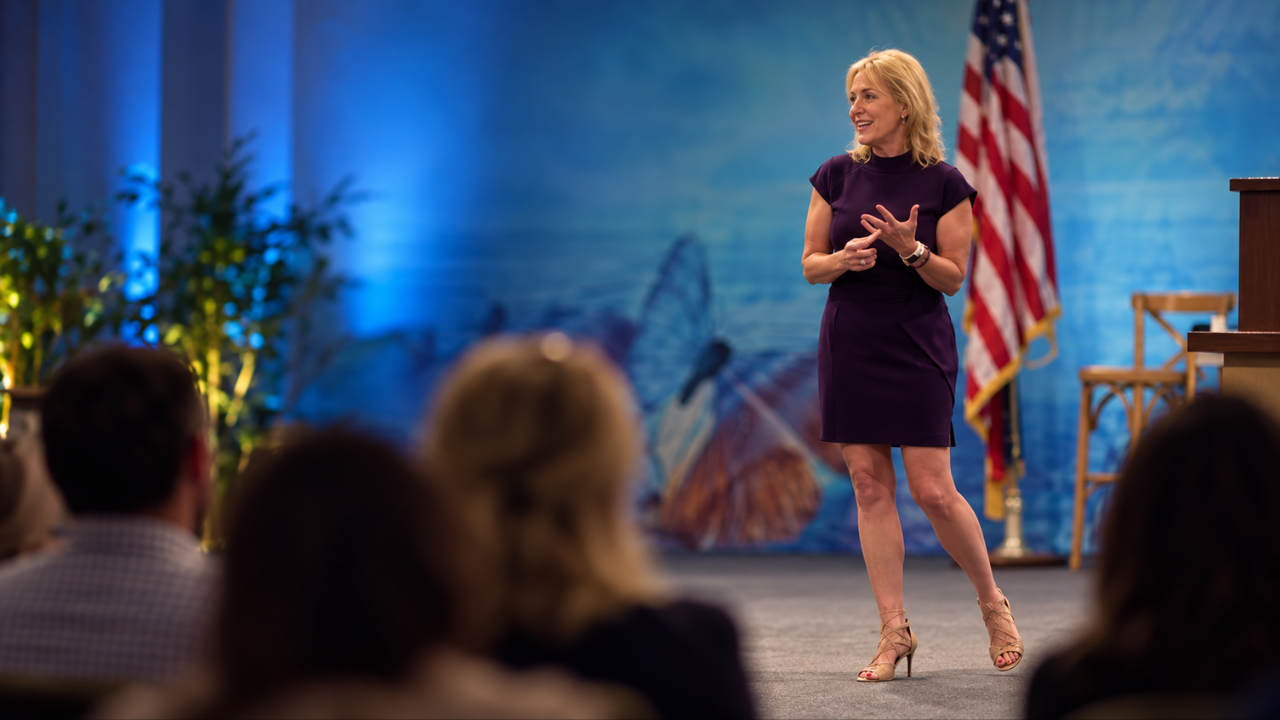
Kathie Owen is a private workplace consultant, speaker, and author specializing in human risk intelligence inside founder-led and private equity-backed organizations.
Drawing on decades of experience in leadership, psychology, corporate wellness, and organizational behavior, she helps executives recognize the hidden people patterns that traditional due diligence often overlooks.
Through her Human Patterns Under Pressure framework, Kathie teaches leaders how fear, trust, identity, emotional regulation, and psychological safety quietly shape culture, leadership effectiveness, and long-term enterprise value.
She is the author of The Truth Bubbles Up and Human Patterns Under Pressure and host of The Kathie Owen Perspective podcast, where she explores the invisible dynamics that determine whether people and organizations fracture or flourish under pressure.
Read More Articles from Kathie



Transcript
Have you ever had a dream that stayed with you for years? Not because it scared you, but because you knew it meant something. And I'm talking about a nighttime dream. That's what I'm talking about. For me, it was always the same dream. It was about a tornado, and looking back, I realize that dream wasn't predicting my future. It was teaching me how to recognize patterns under pressure. Welcome to the Kathie Owen Perspective podcast. My name is Kathie Owen, and I study human behavior under pressure, working with founders, leadership teams, and organizations navigating moments of uncertainty from mergers and acquisitions to succession, growth, and major change. My work focuses on the patterns that quietly shape leadership, culture, and enterprise value long before they become obvious. Today's episode is unlike anything I've shared before. Instead of teaching a concept, I'm gonna read a chapter from my newly revised memoir, The Truth Bubbles Up. People often ask me where my work came from. The answer is not a certification. It's not a degree, and it isn't one workplace or one relationship. It came from a lifetime of watching pressure reveal what was already there. This book is the story of that journey. It's the origin of the ideas that eventually became human patterns under pressure. If you'd like to read the entire book, you'll find a link to that in the show notes and description below, along with a companion blog post that expands on this chapter and includes additional resources. Now, without further ado, let's get into the chapter. The Truth Bubbles Up, Chapter 15: Same Pattern, Different Building. "Every workplace has a nervous system. Under pressure, it tells the truth." -Kathie Owen. There are moments in life that seem insignificant when they happen. Then years later, you realize they mark the end of one chapter and the beginning of another. For me, one of those moments happened in December of twenty nineteen. Our human resources director was dying of lung cancer. A small group of us went to visit her at the hospital. She could barely breathe. I remember standing there watching someone take what would be among her final breaths. There was nothing dramatic about it. No profound speech, no final lesson, just the reality of life. A few hours later, she was gone. At the time, I didn't know why that day stayed with me. Looking back, it was because something else was ending too. Not a life, a season, a culture, a way of operating, a system. A few weeks later, our chief financial officer retired. He had been the stabilizing force within the company for years. Soon after, the pandemic arrived, and that's when everything changed. Not overnight, but steadily, almost imperceptibly at first. Then all at once, fear entered the system. And when fear enters the system, something interesting happens. People begin searching for certainty. Policies multiply, control increases, trust decreases, communication changes, curiosity disappears. People stop asking questions and start protecting positions. The company I had known for years slowly became something different. I wasn't working in human resources. I wasn't an executive. I wasn't involved in strategic planning. I ran the wellness center. I was the fitness and wellness director. At least that was my title. But over the years, something unexpected happened. Employees talked to me a lot. People tell fitness professionals things. They tell us about stress, marriage problems, health concerns, work frustrations, family struggles, leadership challenges, burnout, fear, life. By the time the pandemic arrived, I had spent years listening, and when you spend enough time listening, patterns begin to emerge. At first, I thought I was helping people improve their health. Eventually, I realized I was studying human behavior. I just didn't know it yet. The wellness center became an unexpected observation deck. From there, I could see things happening throughout the organization. People who felt valued performed differently than people who felt invisible. Leaders who created trust generated different results than leaders who created fear. Departments developed personalities. Cultures developed nervous systems. Pressure revealed things always. The more pressure that entered the system, the more visible those patterns became. I noticed employees becoming afraid to speak openly. I noticed information being filtered. I noticed growing gaps between what leaders believed was happening and what employees were experiencing. And because I cared deeply about the organization, I spoke up. I thought that was what responsible people did. I shared concerns, I reported observations, I communicated patterns I believe leadership needed to understand. I wasn't trying to create conflict. I was trying to create awareness. There is a difference. What I didn't understand at the time was that awareness is only welcomed in systems that feel safe enough to hear it. In fearful systems, awareness often feels like a threat. That realization changed my understanding of leadership forever. Over time, I found myself less focused on gym equipment and wellness challenges, and more focused on people. The gym had started with a few pieces of used equipment, and over the years it evolved into something much bigger: health fairs, wellness initiatives, fitness programs, education, connection, community. But the most valuable thing that I gained wasn't any of those. It was perspective. I began seeing the same patterns I had witnessed in families, the same patterns I had witnessed in relationships, the same patterns I witnessed throughout my own life. Different building, same pattern. Control, fear, identity, belonging, trust, psychological safety, pressure. The names changed, the pattern didn't. Eventually, the gap between what I was observing and what the system wanted from me became too large. At the time, I thought the story was about being fired. Looking back, I see something different. The system and I had become incompatible. The organization wanted someone who would stay inside the boundaries of the role. I had already stepped outside of them. I was no longer simply running a gym. I was observing human behavior. I was connecting dots. I was asking questions. And once you begin seeing patterns, it's very difficult to stop seeing them. The day I lost my job remains one of the hardest days of my life. I didn't get to say goodbye to many people I cared about. I left carrying confusion, grief, anger, disappointment, and fear. As I drove off the property for the final time, something caught my eye. A black hawk sat nearby, eating a snake. I stared at it for a moment, then I drove away. I don't pretend to know exactly what it meant. I only know it stayed with me. Some symbols arrive in our life for reasons we don't fully understand until much later. The months that followed were difficult. Then difficult became unbearable. Anxiety showed up. Panic attacks appeared. My confidence disappeared. My identity collapsed. For eighteen months, I wandered through one of the hardest seasons of my life. I thought I was grieving a career. I wasn't. I was grieving an identity. The woman who had spent years helping others suddenly had to learn how to help herself. And that lesson humbled me. Then something unexpected happened. I found my way back to Toastmasters, not because I wanted to become a speaker, because I needed to find my voice again. I had spent years observing. Now it was time to speak. The speeches came. The insights came. The patterns came. One observation led to another, then another, then another. Eventually, everything connected, the childhood stories, the marriage, the custody battles, the therapist, the workplace, the pressure, the fear, the control, the identity, the belonging, the nervous systems, all of it. For years, I thought I had lived through a series of unrelated experiences. I was wrong. I had been studying the same thing my entire life. Human beings under pressure. Families, relationships, organizations, leaders, teams, different buildings, same patterns. And for the first time, I finally understood what I was here to teach.
10:10
All right. That is chapter 15 from The Truth Bubbles Up.
Kathie (2)10:17
Every time I read that chapter, I notice something different. When I first lived those experiences, I thought they were separate stories. Today, I see one story, one pattern. As I drove away that day and saw a black hawk on the ground carrying a snake, I knew I had witnessed something significant, even if I couldn't explain it at the time. Looking back now, I don't think it was predicting the future. I think it was reminding me of something much older. Nature doesn't resist reality. It responds to it. The tornado that opens this book taught me something similar. For years, I thought that dream was about surviving a storm. Now, I think it was teaching me how different people move through the same storm. One son instinctively stayed close to me, sensing emotion before anything else. The other son let go of my hand and stepped into uncertainty, trusting what he saw instead of what he feared. Neither response was wrong. They were simply different ways of navigating pressure. Some people recognize emotions first. Some people recognize intentions first. Over time, I realized my work has become learning to recognize emotions and intentions. That's what I study today. Not because I have all the answers, because life kept placing me in situations where the patterns became impossible to ignore. If you've listened this far, I hope one thing stays with you. Pressure is rarely the whole story. It simply reveals the story that was already unfolding. Thank you for joining me today. If you'd like to read the rest of The Truth Bubbles Up or explore the companion resources for this chapter, you'll find everything linked in the show notes and description below. Until next time, keep observing because sometimes the smallest patterns reveal the biggest truths.

Explore the 12 rules of Reality Transurfing through human patterns under pressure. Kathie Owen connects pendulums, excess potential, intention, slides, and goals and doors to leadership, relationships, and everyday choices. Watch the video and try three practical questions.
#RealityTransurfing #HumanPatternsUnderPressure #Leadership