
Why You Go Quiet Under Pressure: The Withdrawal Pattern
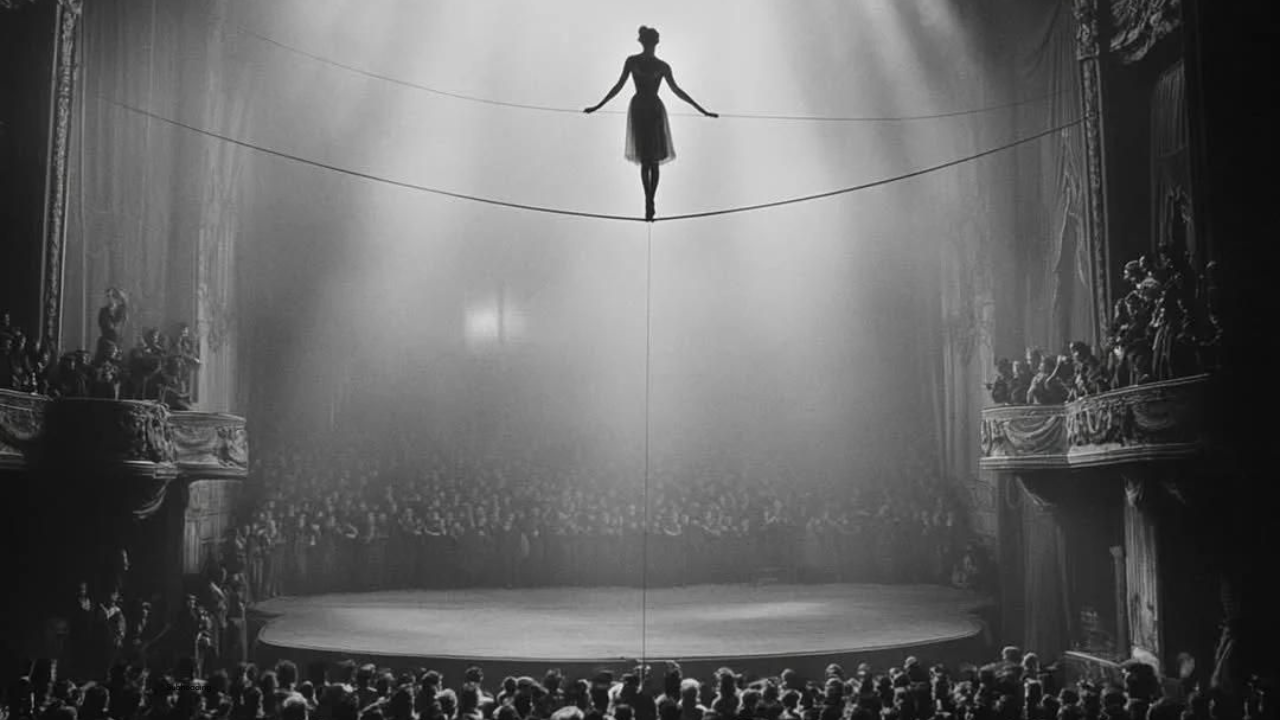
The most withdrawn person in the room may not be the person who leaves.
It may be the person who stays.
They sit through the meeting.
They nod at the right times.
They answer when someone asks them a direct question.
They may even look calm.
But something has changed.
They have stopped contributing.
They aren't asking questions anymore.
They aren't challenging anything.
They have quietly reduced their exposure.
Physically, they are still in the room.
Emotionally, they have stepped away.
And sometimes nobody notices.
This is Withdrawal.
It is one of the seven Human Patterns Under Pressure, and I represent it with one of my favorite circus characters:
The Tightrope Walker. 🎪
Because when you're standing high above the ground and the rope begins to move, your entire relationship with movement changes.
When the Rope Starts Moving
Imagine a tightrope walker moving confidently across the wire.
Her arms are extended.
Her breathing is controlled.
Her eyes are forward.
Then the rope moves.
Her body responds immediately.
She doesn't start jumping around.
She doesn't make wild movements.
She becomes more careful.
Her attention narrows.
Her movements become smaller.
Her body has one immediate priority:
Don't fall.
Human beings can do something very similar when pressure enters our lives.
The pressure may be obvious.
A conflict.
A merger.
A difficult conversation.
A bad financial report.
A relationship problem.
A leadership transition.
Or it may be something much smaller.
Someone questions your decision.
Your boss sends an unexpected email.
A colleague challenges your idea.
Someone says, “Can we talk?”
Suddenly, the emotional rope moves.
And without consciously deciding to do it, you may begin making yourself smaller.
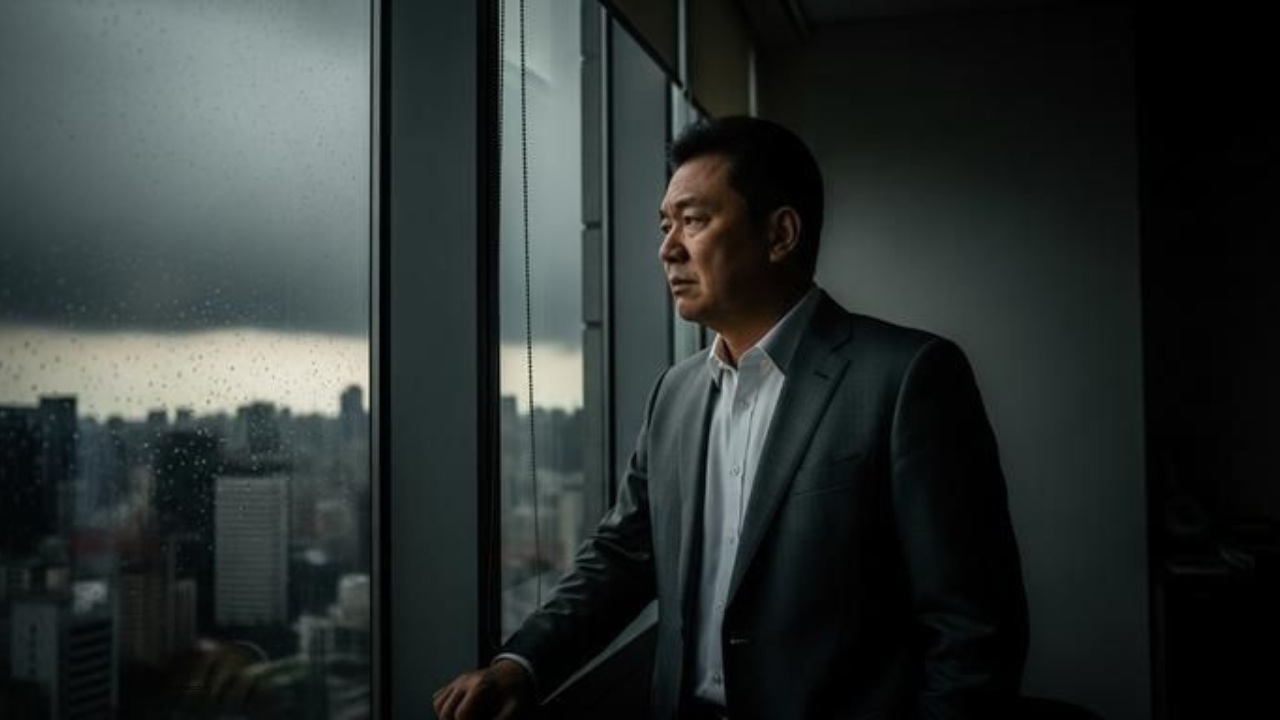
Withdrawal Is More Than Walking Away
We tend to think withdrawal means physically leaving.
Sometimes it does.
But Withdrawal is often much more subtle.
You might stop talking.
You might avoid eye contact.
You might delay responding to an email.
You might postpone a difficult conversation.
You might become incredibly busy.
You might stop sharing information.
You might say, “Whatever.”
Or the famous:
“I’m fine.”
Withdrawal can even look productive.
Imagine an executive facing a difficult transition.
Instead of addressing the uncertainty, she throws herself into work.
She answers emails.
She creates reports.
She schedules meetings.
She works longer hours.
Everyone around her sees dedication.
But activity can sometimes become a hiding place.
The question isn't simply:
“What is this person doing?”
The more interesting question is:
“What might this behavior be protecting them from?”
That is where observation begins.
Withdrawal Can Look Like Calm
This is one of the most important things to understand about Withdrawal.
Silence is not always regulation.
Someone can appear incredibly calm while internally thinking:
Don't say anything.
Don't make this worse.
Just get through this.
They aren't necessarily present.
They may be protecting themselves.
That distinction matters in relationships.
It matters on leadership teams.
And it matters tremendously inside organizations experiencing pressure.
Imagine a founder preparing to sell a company.
For years, that founder has made the decisions.
People come to them for answers.
Their identity may be deeply connected to the business.
Then due diligence begins.
Questions become more difficult.
Decisions that once belonged to the founder are now being examined by outsiders.
The rope starts moving.
What happens next?
Maybe the founder becomes controlling.
That's one Human Pattern Under Pressure.
But another founder might do the opposite.
They pull back.
They become difficult to reach.
Decisions slow down.
Important conversations get postponed.
Information stops flowing as freely.
From the outside, this might look like a communication problem.
But communication may only be the visible symptom.
Pressure may be revealing a deeper human pattern.
That is why understanding human behavior matters during high-stakes transitions.
But Walking Away Isn't Always Withdrawal
Here's where we need to be careful.
I don't want Human Patterns Under Pressure to become another way to label people.
Walking away from a conversation does not automatically mean someone is withdrawing.
Sometimes leaving is the healthiest choice available.
Imagine two people in difficult conversations.
The first becomes overwhelmed.
They leave.
Then they avoid the issue for weeks.
They don't respond.
They don't return to the conversation.
They hope the problem somehow disappears.
The second person notices that the conversation is becoming reactive.
They say:
“We aren't going to solve this well right now. Let's come back to it tomorrow.”
They leave.
The next day, they return.
Same visible behavior.
Two very different things happened underneath it.
One person automatically escaped discomfort.
The other intentionally created space.
That is why the Observer matters.
Instead of asking:
“Did I leave?”
Ask:
“Did I choose to step away, or did I automatically disappear?”
That question changes everything.
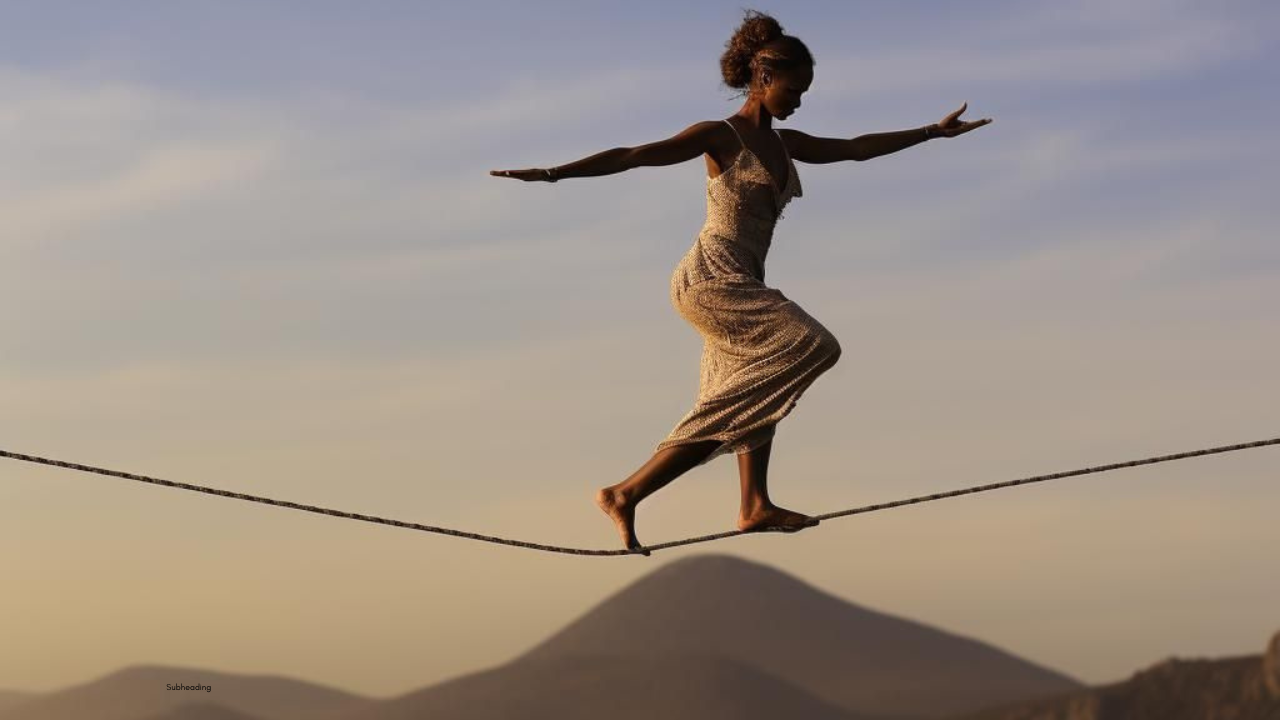
Attachment Makes the Tightrope Harder
Now imagine our Tightrope Walker again.
Except this time, she's carrying a giant backpack.
Inside that backpack are a few things:
I need them to agree with me.
I need this deal to work.
I need them to understand me.
I need this person to like me.
I need to know what's going to happen.
I need this conversation to go the way I planned.
Now walk across the wire.
That's attachment.
The more we believe something must happen a certain way, the more threatening uncertainty can become.
A disagreement isn't simply a disagreement anymore.
It could mean rejection.
A question isn't simply a question.
It could mean someone doesn't trust us.
Feedback isn't simply information.
It could mean we've failed.
The rope moves.
And Withdrawal whispers:
Get smaller.
Don't say anything.
Protect yourself.
Wait.
Disappear.
Non-Attachment Gives Us Room to Balance
Non-attachment does not mean you stop caring.
This is an important distinction.
You can care deeply about an outcome without demanding that reality give you that outcome.
You can want the deal.
You can want the relationship.
You can want someone to understand you.
You can want your idea to succeed.
But you don't have to make your ability to remain present dependent on getting what you want.
That gives you room on the wire.
You aren't trying to control every movement.
You're learning how to respond to movement.
And there is a huge difference.
A skilled tightrope walker doesn't succeed because the rope never moves.
She succeeds because she knows how to adjust.
Observation Comes Before Change
If you recognize yourself in Withdrawal, resist the temptation to immediately fix it.
Observe it first.
There is no shame here.
These patterns are human.
We can all withdraw.
We can all control.
We can all criticize.
We can all try to please people.
Different situations can bring out different patterns.
So become curious.
Notice when you suddenly become quiet.
Notice which emails you avoid.
Notice which conversations keep getting pushed to tomorrow.
Notice when you become unusually busy.
Notice when you say you don't care.
Notice when you are physically present but emotionally somewhere else.
Then ask:
What feels unstable right now?
What am I afraid could happen?
What am I trying to protect?
What outcome am I attached to?
You don't need an immediate answer.
The observation itself matters.
Because observation creates awareness.
And awareness creates choice.
Radical Responsibility Gives Us Our Power Back
Radical Responsibility is not about blaming yourself for what happened.
Someone else may have created the conflict.
Someone else may have behaved poorly.
You may be facing circumstances you never asked for.
The rope may be moving because somebody else shook it.
Radical Responsibility says:
I may not control the rope, but my response belongs to me.
That's where your power is.
You don't have to control everyone around you.
You don't have to force the situation to change.
You don't even have to know exactly what happens next.
You can begin by recognizing your own response.
There's the pattern.
There's the urge to disappear.
There's the story.
There's the attachment.
And now there is something else.
Choice.
Courage May Be One Small Step
Think about the courage required to walk across a tightrope.
We tend to imagine courage as something big.
Bold.
Dramatic.
But on a tightrope, courage might be one tiny step.
Human courage often looks the same.
Maybe courage is saying:
“I disagree.”
Maybe it's:
“I don't understand.”
Maybe it's:
“I need help.”
Maybe it's asking the question you've been afraid to ask.
Maybe it's staying in the conversation for another minute instead of emotionally disappearing.
Maybe it's allowing someone to disagree with you.
Maybe it's letting someone misunderstand you without desperately trying to change their mind.
And sometimes courage really does mean leaving.
But now you aren't leaving because an automatic pattern made the decision.
You observed.
You considered.
You chose.
That is different.
Power. Presence. Peace.
This is where the entire process comes together.
Awareness creates choice.
Choice restores Power because your automatic pattern is no longer making every decision.
Choice restores Presence because you can stay connected to what is actually happening instead of disappearing into fear, prediction, or story.
And choice creates room for Peace.
Not because everything around you suddenly becomes peaceful.
That's not how life works.
The difficult conversation may still be difficult.
The business transition may still be uncertain.
Someone may still disagree with you.
The rope may still be moving.
But here's the beautiful part:
Peace doesn't require the rope to stop moving.
You can learn to find your balance while it moves.
That may be one of the most important lessons the Tightrope Walker has to teach us.
Watch for the Tightrope Walker
Over the next few days, don't try to stop Withdrawal.
Look for it.
Notice the small moments when you begin reducing your exposure.
Maybe you pull back.
Maybe you stop speaking.
Maybe you suddenly become busy.
Maybe you delay.
Maybe you tell yourself you don't care.
When you notice it, don't judge yourself.
Just become the Observer.
There she is.
The Tightrope Walker.
The rope must feel unstable.
Now ask yourself:
What would I choose if this pattern didn't have to make the decision for me?
You might stay.
You might speak.
You might wait.
You might ask a question.
You might walk away.
There isn't one correct answer.
That's the point.
You have a choice.
Human Patterns Under Pressure isn't about becoming someone who never reacts to pressure.
It's about recognizing what pressure reveals.
The Tightrope Walker doesn't need the rope to become perfectly still.
She needs awareness.
Balance.
Courage.
And the willingness to take the next intentional step.
That is where Power, Presence, and Peace begin.
About the Author
Kathie Owen is a private consultant, author, and creator of Human Patterns Under Pressure.
She studies the behavioral patterns that become visible when leaders, founders, teams, and organizations face pressure, uncertainty, conflict, growth, and high-stakes transition.
Her work brings a human lens to leadership and enterprise durability by examining the patterns that traditional financial and operational analysis can easily miss.
Kathie is the author of Human Patterns Under Pressure, which explores the automatic behaviors that surface when life and leadership become uncertain, and The Truth Bubbles Up, an exploration of observation, awareness, identity, emotional patterns, and what becomes possible when we stop automatically believing every story our mind creates.
Her work is grounded in observation, Non-Attachment, Radical Responsibility, and Courage — helping people see the pattern before the pattern makes the next decision.
Read More Articles from Kathie


Transcript
Imagine standing on a tightrope. You're high above the ground. There is nothing underneath you but air. Everything is going well. Your breathing is steady. Your arms are open. You're moving forward, and then the rope moves just a little. What do you do? You probably don't start running. You don't make bigger movements. You might get smaller. You might tighten up. You focus. You may even stop moving altogether. But suddenly, your brain isn't thinking about where you're going. It's thinking about one thing: don't fall. And human beings do something very similar when we're under pressure. We withdraw, not because we're weak, not because we're bad leaders, not because something is wrong with us, because sometimes when life feels unstable, our automatic response is to reduce our exposure. We stop talking, we stop asking, we stop engaging. We pull back, and sometimes we don't even realize we're doing it. That's what we're talking about today. Welcome to the Kathie Owen Perspective Podcast. My name is Kathie Owen, and I study human patterns under pressure, especially the behaviors that become visible when leaders, teams, founders, and organizations face uncertainty, conflict, change, and high-stakes transitions. And one of the patterns I see is withdrawal. This episode is part of my Human Patterns Under Pressure series, where we're looking at seven common patterns that can show up when pressure enters the room. And today, we're meeting the tightrope walker. And if you've ever gone quiet during an argument, avoided an uncomfortable email, delayed a hard decision, disappeared into your work, or told someone, "I'm fine," when you're absolutely were not fine, you've probably walked this tightrope, too. I know I sure have. But these patterns are human. So what is withdrawal? When people hear the word withdrawal, they often picture somebody physically leaving, walking out, closing the door, going home. But withdrawal can happen without moving an inch. You can withdraw while sitting at the conference table. You can withdraw while looking directly at someone. You can withdraw while smiling. You can even withdraw while continuing to do your job very well. Withdrawal is often much quieter than we think. It might sound like, "I don't care," "Whatever," "It's fine," "Let's talk about it later," "I just need more time," or nothing at all. Sometimes it looks like procrastination. Sometimes it looks like avoiding eye contact. Sometimes it's not returning the phone call. Sometimes it's taking three days to answer an email that makes you uncomfortable. Sometimes it's burying yourself in work because numbers feel safer than people. Sometimes it's sitting through an entire meeting without saying the thing you know needs to be said. And sometimes withdrawal looks so calm from the outside that people mistake it for emotional regulation. But silence and presence are not always the same thing. That's important. A person can look perfectly calm while their internal system is screaming, "Don't say anything. Don't make this worse. Just get through this." That's withdrawal Why the tightrope walker? Well, I love the tightrope walker as an image for this pattern because think about what happens when someone is walking across a tightrope. Balance matters. Every movement matters. The higher the perceived danger becomes, the more carefully that person moves. That's what we can do emotionally. When everything feels stable, we're open. We communicate. We take risks. We ask questions. We disagree. We tell people what we're thinking. But when the emotional rope starts shaking, our world can get very small. Maybe your boss criticizes your work. The rope moves. Maybe your business partner questions a decision. The rope moves. Maybe your company is being acquired. The rope moves. Maybe someone you love says, "We need to talk." Oh, boy. The rope really moves, and suddenly we're not thinking about connection. We're thinking about survival. Don't fall. Don't say the wrong thing. Don't make them angry. Don't look foolish. Don't lose the deal. Don't lose the relationship. Don't lose control. So, we reduce movement. We reduce exposure. We withdraw. Withdrawal can look responsible, and this is where the pattern becomes especially interesting in leadership because withdrawal doesn't always look dysfunctional. It can look very responsible. Imagine a leadership team discussing a serious problem. Everyone is waiting for the CEO to make the decision. The CEO says, "I want to gather a little more information." That could be wisdom, or it could be withdrawal. We don't know yet. A founder might say, "Let's revisit this next quarter." Maybe that's strategic, or maybe the founder cannot tolerate what this decision represents. An executive might become incredibly busy during a difficult transition. Everyone thinks, "Wow, she's working harder than ever," but maybe work has become the hiding place. This is why I don't like labeling people by behavior alone. The observer asks another question, "What's happening underneath the behavior?" Walking away isn't always withdrawal. This distinction matters. Sometimes walking away is the healthiest thing you can do. Imagine two people leaving the exact same difficult conversation. One person leaves because the emotions feel unbearable. He avoids the conversation for three weeks. He doesn't answer messages. He hopes the problem disappears. The second person notices that the conversation has become reactive. She says, "We aren't going to solve this well right now. Let's come back tomorrow morning." And she does. Same behavior. Both people walked away. Completely different pattern. One person disappeared from discomfort. The other created space intentionally. That is why observation matters. The question isn't simply, "Did I leave?" The better question is, "Did I choose to step away, or did I automatically disappear?" There's a huge difference. Attachment makes the rope shake. Now let's add another layer, attachment. When we're attached to a certain outcome, every movement of the rope can feel dangerous. I need them to agree with me. I need this deal to happen. I need my employee to understand me. I need this person to like me. I need this conversation to go well. I need to be right. I need to know what's going to happen next. Look at all those needs. Now imagine carrying every one of them across a tightrope. No wonder we're tense. Attachment makes every wobble mean something. A disagreement isn't just a disagreement anymore. It means I might lose something. A question isn't just a question. It means maybe they don't trust me. Feedback isn't just information, it means maybe I'm failing. Now our nervous system has a reason to pull back. Non-attachment doesn't mean we stop caring. It doesn't mean becoming cold. It doesn't mean giving up. It means loosening our grip on what we believe must happen. I can want the conversation to go well without demanding that it does. I can want the deal without making my identity depend on the deal. I can want someone to understand me without needing to force understanding. That gives us room on the rope. Awareness creates choice. So what do we do when we notice ourselves withdrawing? First, we don't shame ourselves. That's important. Remember, these are human patterns, not robot patterns. I do them, you do them, every leader does them, every person does them. The goal isn't to become a human being who never withdraws. The goal is to recognize when the pattern has taken over. That's awareness. Maybe you notice I'm avoiding the email. I'm getting really quiet. I'm putting this decision off again. I'm pretending I don't care. I'm staying busy, so I don't have to think about this. I'm waiting for somebody else to bring it up. That's it. You don't need to fix anything yet. Just notice, because awareness creates a tiny space between what happened and what you do next, and inside that space is choice. Radical responsibility on the tightrope, and this is where radical responsibility enters the picture. Radical responsibility is not blame. It isn't, "This is all my fault." It's much more powerful than that. It says, "This is my pattern. What do I want to do with it?" Maybe somebody else did shake the rope. Maybe they behaved badly. Maybe the situation is unfair. Maybe you didn't create the pressure at all, but your response belongs to you. That's where your power lives. You cannot always control who shakes the rope. You can learn to observe what happens inside you when it moves. That is radical responsibility. And then comes courage. Now we get to my favorite part of the tightrope walker, courage. Because courage is not the absence of fear. Look at somebody standing fifty feet above the ground on a wire. Fear would make perfect sense. Courage is the willingness to take the next intentional step anyway. Sometimes courage means speaking. "I disagree. I need clarification. Something isn't working here. I don't know. I need help." Sometimes courage means staying in the room when your old pattern tells you to disappear. Sometimes courage means asking the question you've been afraid to ask. Sometimes courage means allowing someone to misunderstand you. And yes, sometimes courage means leaving. But this time you're not leaving because your pattern made the decision. You're leaving because you did. That's different. Power, presence, and peace. This is where awareness begins to change everything. Awareness creates choice. Choice creates power because I'm no longer completely controlled by my automatic response. Choice creates presence because instead of disappearing into the story in my head, I can remain with what is actually happening. And choice creates peace. Not because everything around me suddenly becomes peaceful. The rope may still be moving. The acquisition is still happening. The difficult conversation still needs to happen. The numbers are still the numbers. The other person may still disagree. Peace doesn't require the rope to stop moving. Peace comes from knowing I can remain present while it moves. Power, presence, peace. That's what happens when the observer steps onto the tightrope. So here's something I'd like you to try. Don't try to stop withdrawing. Just watch for it. Notice the little moments. When do you become quiet? What conversations do you postpone? What emails sit unanswered? Where do you suddenly become too busy? When do you say, "I don't care," when you actually care very much? When do you physically stay in the room, but emotionally leave it? And when you notice it, don't judge it. Just say, "Interesting. There's the tightrope walker. What feels unstable right now? What am I afraid could happen? What outcome am I attached to?" And then ask one more question: "What would I choose if I didn't have to protect myself from this moment?" Maybe you speak. Maybe you wait. Maybe you ask a question. Maybe you stay. Maybe you leave. The answer isn't the point. The choice is. Because Human Patterns Under Pressure isn't about getting rid of the human part of us. It's about becoming more aware to recognize our patterns before they make every decision for us. The tightrope walker will probably always be part of the circus. That's okay. She knows something about balance. She knows something about fear, and she definitely knows something about courage. The goal isn't to never feel the rope move. The goal is to know you're on it. Observe what's happening, find your balance, and choose your next step. Because awareness creates choice, and choice creates power, presence, and peace. My name is Kathie Owen. Thank you for joining me on the Kathie Owen Perspective podcast. And remember, pressure doesn't always create the pattern. Sometimes pressure simply makes visible what was already there.

What happens in the first second after pressure hits? Kathie Owen explores the pause that helps leaders notice their reactions, regain presence, and make clearer decisions. Watch her Human Patterns Under Pressure speech and learn the three principles she returns to when the stakes are high.
#HumanPatternsUnderPressure #LeadershipUnderPressure #ExecutivePresence #DecisionMaking