
The Truth About Entitlement - It's Not About Ego

Have you ever walked into a room and immediately felt tension?
No one raised their voice.
No one said anything was wrong.
Yet somehow everyone seemed a little quieter. A little more cautious. A little less themselves.
Most people assume moments like these are caused by difficult personalities.
I don't.
After years of studying human behavior under pressure—in families, founder-led companies, and everyday life—I began noticing something much deeper.
The room wasn't reacting to someone's authority.
It was reacting to someone's nervous system.
That realization changed the way I understand entitlement.
Most of us think entitlement is arrogance. We imagine someone demanding special treatment or believing the rules don't apply to them.
Sometimes that's true.
But I've come to believe entitlement is often something far more subtle.
It's what happens when our nervous system quietly expects the world to organize itself around our discomfort.
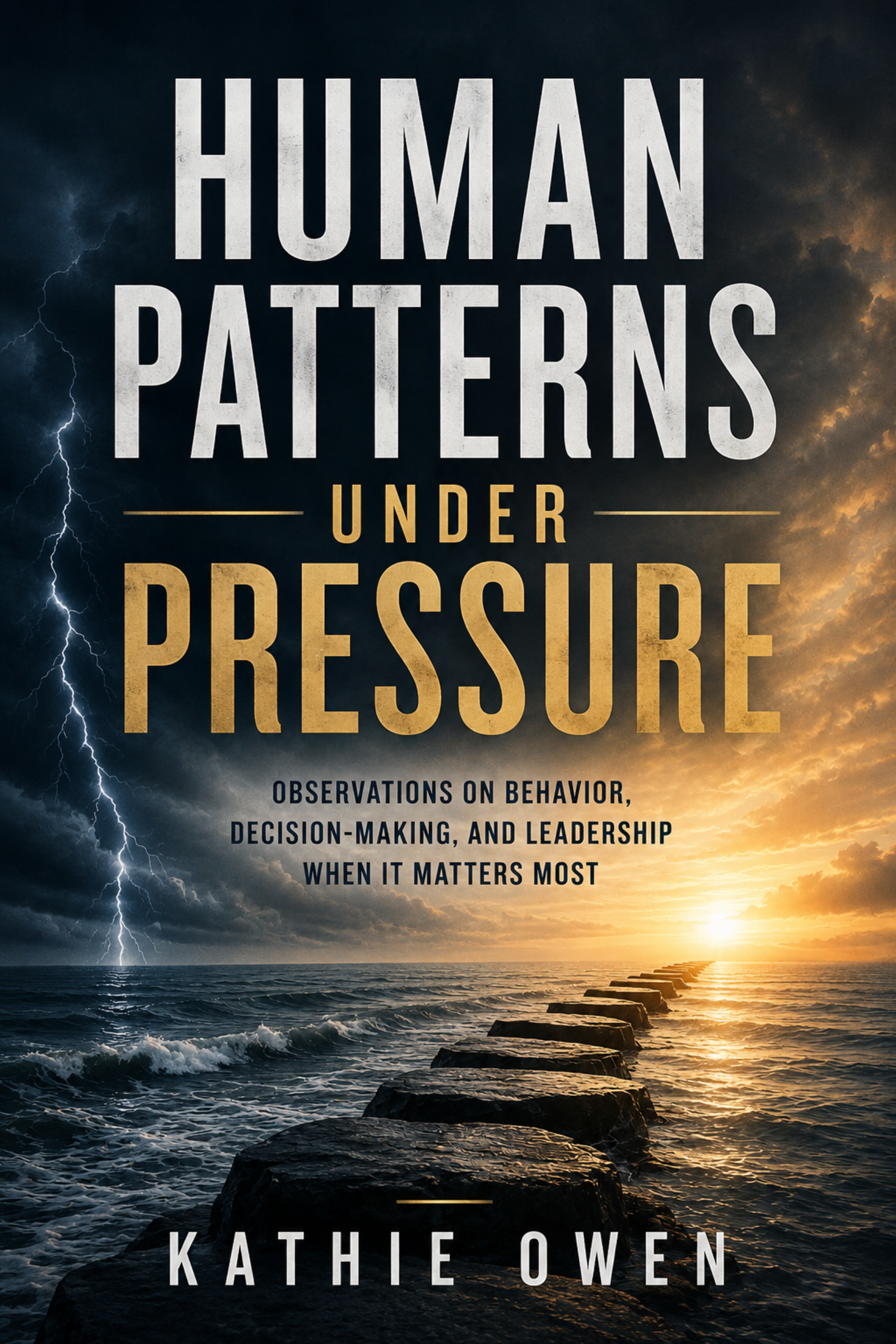
That observation became one of the chapters in my new book, Human Patterns Under Pressure, because once I saw this pattern, I couldn't stop seeing it.
I saw it in traffic.
I saw it in families.
I saw it in leadership teams.
And perhaps most importantly, I saw it in myself.
Entitlement Begins With "Should"
If you've followed my work for any length of time, you've probably heard me talk about one small word that quietly creates enormous pressure.
Should.
People should understand me.
My employees should already know this.
My spouse should make me happy.
Traffic should move faster.
Life should be fair.
That single word creates an invisible gap between reality and expectation.
Reality says, "This is what's happening."
Entitlement whispers, "It shouldn't be."
The more attached we become to that expectation, the harder reality feels to tolerate.
Entitlement Is Often an Attempt to Reduce Uncertainty
One of the biggest shifts in my thinking happened when I stopped asking,
"Why are they acting this way?"
Instead, I started asking,
"What are they trying to regulate?"
When uncertainty rises, our nervous system naturally looks for relief.
Sometimes we seek that relief internally through awareness, curiosity, and emotional regulation.
Other times, without realizing it, we try to regulate ourselves by controlling the people around us.
If everyone would simply behave the way I expect...
I'd finally feel okay.
That isn't just entitlement.
It's emotional outsourcing.

When Entitlement Becomes a Leadership Problem
One of the clearest examples I've ever witnessed happened inside a founder-led company.
The founder was brilliant. Visionary. Deeply committed to building something extraordinary.
But whenever his nervous system became activated, something fascinating happened.
The emotional atmosphere of the entire organization shifted.
If he became frustrated, people became more cautious.
If he questioned a decision, employees stopped asking curious questions and started defending themselves.
Bad news began traveling more slowly.
Honest conversations became less frequent.
Meetings slowly turned into performances instead of opportunities to solve problems.
No one announced these changes.
The organization simply adapted.
By the time those emotional patterns reached supervisors, managers, and even the warehouse floor, most employees had no idea where the shift had started.
They only knew the atmosphere had changed.
Organizations create value when information moves freely.
When people begin filtering information to protect someone's emotional state, the business slowly loses access to reality.
That's not simply a culture problem.
It's a leadership problem.
It's a decision-making problem.
And ultimately, it's an enterprise value problem.
The Hidden Cost of Emotional Outsourcing
One sentence continues to shape the way I observe people.
Entitlement is asking someone else to carry what belongs inside of us.
Sometimes we outsource our discomfort through anger.
Sometimes through urgency.
Sometimes through guilt.
Sometimes through control.
The strategy changes.
The pattern doesn't.
The longer other people become responsible for regulating our emotional state, the heavier every relationship becomes.
Eventually, people stop bringing their best thinking because honesty feels too expensive.
The Most Regulated Person Often Changes the Room
One of the most surprising things I've observed is that emotionally regulated people often become the most frustrating people in an entitled system.
Why?
Because they quietly refuse the assignment.
They don't panic.
They don't over-explain.
They don't rush to manage someone else's emotional state.
Without trying to create conflict, they simply stop participating in it.
The room slowly begins organizing around reality instead of one person's discomfort.
That shift changes everything.
Observation Creates Freedom
Today, when I notice entitlement, I rarely ask,
"What's wrong with this person?"
Instead, I become curious.
What discomfort are they trying to escape?
What uncertainty feels intolerable?
What emotional burden are they hoping someone else will carry?
Those questions don't excuse harmful behavior.
Boundaries still matter.
Accountability still matters.
Consequences still matter.
But curiosity allows us to see the pattern instead of becoming consumed by the person.
Perhaps the most freeing realization I've had is this:
I am not responsible for becoming someone else's emotional infrastructure.
That doesn't mean I stop caring.
It doesn't mean I become indifferent.
It simply means I no longer confuse compassion with carrying.
There is a profound difference.
Real freedom isn't found in changing every difficult person we meet.
It's found in recognizing when someone else's inability to regulate themselves no longer has to become our responsibility.
That isn't rejection.
It isn't superiority.
It's regulation.
And sometimes, the healthiest thing we can do is quietly stop offering our nervous system as the place where someone else's discomfort comes to rest.
About the Author
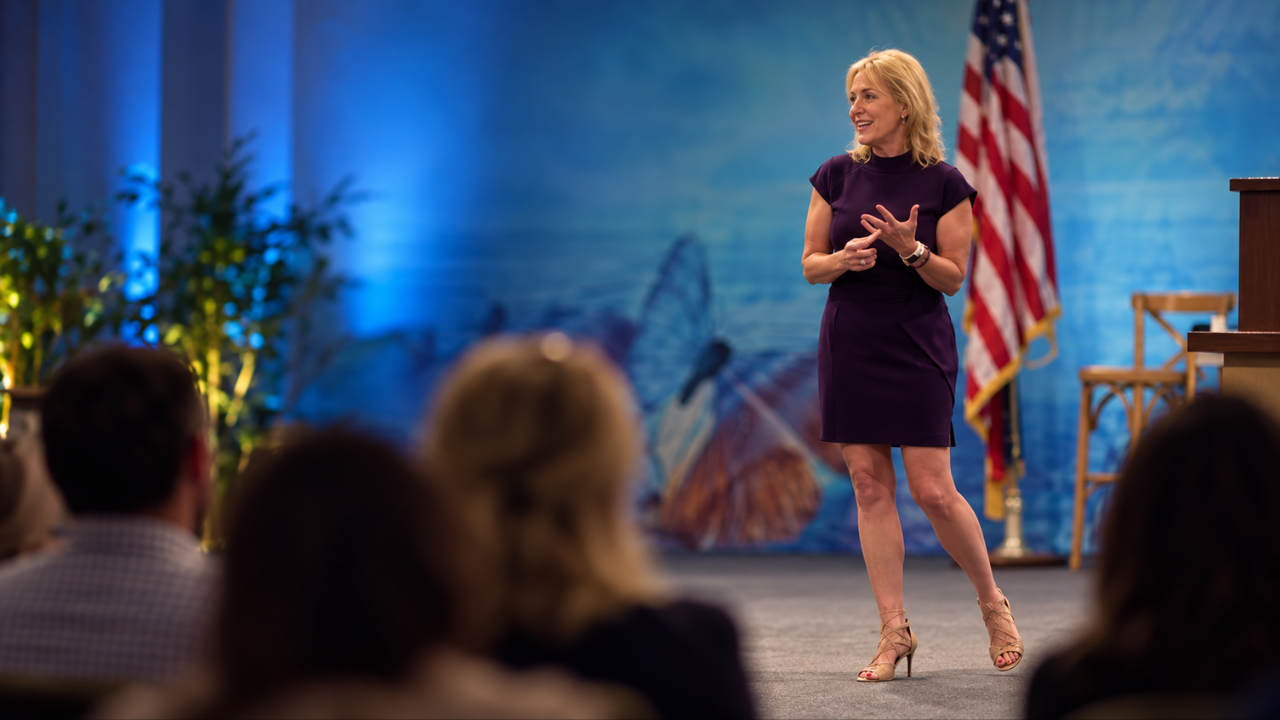
Kathie Owen is a consultant, speaker, and author of Human Patterns Under Pressure, where she helps founders, executives, and leadership teams recognize the invisible human dynamics that shape organizational performance.
Drawing on decades of experience in psychology, corporate wellness, and behavioral observation, Kathie specializes in identifying the emotional patterns that quietly influence trust, communication, leadership, and enterprise value.
Through The Kathie Owen Perspective, she teaches leaders how observation—not judgment—creates the clarity needed to navigate pressure with wisdom and courage.
Read More Articles from Kathie






Transcript
Have you ever been driving down the freeway when someone absolutely loses their mind because another driver merged into their lane? Or maybe you've watched someone ride another person's bumper, lay on the horn the instant the light turns green, or weave in and out of traffic as though every other driver is personally standing in the way of their happiness. Most of us watch those moments and think the same thing: What is wrong with that person? For years, that's what I thought, too, until I realized something that completely changed the way I observe people. I don't think the lane is the problem. I don't think traffic is the problem. I don't even think entitlement is the problem. I think people are trying to regulate something inside themselves, and that realization changed everything. Welcome to the Kathie Owen Perspective Podcast. My name is Kathie Owen, consultant, speaker, and author of Human Patterns Under Pressure, and someone who has spent years studying what pressure does to people, leaders, organizations, families, and even complete strangers sitting in traffic. Most people think leadership problems begin in boardrooms. I don't. I think they begin in grocery stores, in restaurants, on highways, at Little League games, inside our homes, because pressure doesn't create character. Pressure reveals the patterns we were already carrying. Today, we're talking about entitlement, but probably not the way you've ever heard it before, because I don't believe entitlement is simply arrogance. I think it's a human pattern, and once you see it, you can't unsee it So I have to confess something. One day I was riding with my son, Kody. We were driving through traffic when another driver cut him off. She wasn't paying attention. She squeezed into the lane. You know, exactly the kind of situation I'm talking about. Now, Kody stayed calm. He didn't honk. He didn't yell. He just kept driving. A few minutes later, we caught up to her. He had the perfect opportunity to return the favor, and what did I do? I leaned forward and said, "Speed up, Kody. Speed up. Don't let her in." The moment those words came out of my mouth, Kody looked at me like I lost my mind. He said, "Mom, what are you doing?" And I started laughing because in that moment I realized something. I wasn't trying to solve traffic. I wanted justice. I wanted balance. I wanted her to experience what she made us experience. For just a split second, I wanted the world to reorganize itself around my discomfort. That's entitlement. Not because I thought I was better than her, because my nervous system wanted reality to make me feel better. That realization humbled me. It also made me curious because once I noticed it in myself, I started seeing it everywhere. Today I'm going to share seven lessons about entitlement that I learned from observing human patterns under pressure. And here is lesson number one Entitlement usually begins with one small word, should. Traffic should move faster. People should drive better. My spouse should understand me. My boss should appreciate me. My employees should already know this. My children should call me. The weather shouldn't ruin my plans. Life should be fair. And you know me, I always say, "Should is a dirty word." But do you notice something? Entitlement almost always begins with an expectation colliding with reality. Reality says, "This is what's happening." Entitlement says, "No, it shouldn't be happening." That tiny little word should creates enormous suffering, not because expectations are bad, but because we quietly become attached to the story we've written instead of the reality we're actually living. Lesson number two, entitlement is often an attempt to reduce uncertainty. This is where my perspective probably becomes a little different. Most conversations about entitlement focus on behavior. I want to understand what produces the behavior. When uncertainty rises, our nervous system naturally wants relief. One way we try to create relief is by trying to control our environment. If everyone would simply behave the way I think they should, I'd feel okay. If my employees would stop making mistakes, I would relax. If my spouse would change, I would finally be happy. If traffic would move, my morning would be better. Notice what's happening? We're asking the outside world to regulate something happening inside of us. That doesn't make us bad people, it makes us human. But if we don't notice it, it quietly becomes entitlement. Lesson number three: entitlement spreads. This is where my consulting work comes in. Years ago, I worked inside a founder-led company. The founder was brilliant, visionary, hardworking, committed. He built something extraordinary. But there was another pattern happening that very few people noticed. Whenever his nervous system became activated, the entire organization changed. If he became frustrated, people became cautious. If he became impatient, conversations became shorter. If he questioned someone's work, people stopped asking questions. Nobody announced new rules. Nobody sent an email. Nobody held a meeting. The system simply reorganized itself. Eventually, something fascinating happened. Information slowed down. People filtered bad news. Meetings became performances instead of conversations. Curiosity disappeared. Truth became expensive. Think about that. One person's inability to regulate themselves slowly became everyone else's responsibility. By the time that emotional pattern reached supervisors, then managers, then administrative staff, then the warehouse, most people had no idea where it started. They just knew the atmosphere had changed. I watched organizations lose enormous value because people spent more energy managing someone's emotional reactions than managing reality. When honesty becomes dangerous, clarity disappears. And when clarity disappears, performance follows. That isn't just a culture problem. It's an enterprise value problem. Lesson number four: entitlement is emotional outsourcing. This might be the simplest definition I've ever found. Entitlement is asking someone else to carry what belongs inside of us. Sometimes we do it with anger, sometimes with guilt, sometimes with status, sometimes with urgency. The strategy changes, the pattern does not. When we expect another person to make us feel secure, validated, important, or emotionally stable, we're outsourcing regulation. That burden quietly shifts, and relationships become heavier than they were ever designed to be. Lesson number five: regulated people interrupt the pattern. One of the most confusing things I've observed is this: the most emotionally regulated person in the room often becomes the most frustrating person to someone operating from entitlement. Why? Because they quietly refuse the assignment. They don't panic. They don't rush to reassure. They don't immediately absorb someone else's emotional state. Without even trying, they stop participating in the emotional system, and that's incredibly disruptive to someone who expects everyone else to reorganize around their discomfort. Insert eye roll. Lesson number six: reality is not your enemy. I've become convinced that entitlement isn't really arguing with other people. It's arguing with reality itself. Reality says there is traffic. Entitlement says there shouldn't be. Reality says the project hit a setback. Entitlement says that shouldn't have happened. Reality says this person disappointed me. Entitlement says they shouldn't have. The more we fight reality, the more exhausted we become. Observation allows us to stop fighting what already exists. That's where peace begins. Lesson number seven, observation dissolves entitlement. Not shame, not guilt, observation. The next time you catch yourself saying, "They should," pause. Get curious. Ask yourself, "What expectation am I holding right now? What discomfort am I trying to escape? What uncertainty am I trying to ask someone else to solve for me?" Those questions don't create shame, they create awareness, and awareness creates choice. One of the chapters in my new book, Human Patterns Under Pressure, is called Entitlement is a Regulation Problem. When I wrote that chapter, I wasn't trying to explain difficult people. I was trying to explain a pattern I've observed for years inside organizations, families, leadership teams, and even inside myself. Because this isn't about pointing fingers. It's about recognizing the invisible emotional systems we are all participating in. The beautiful thing about observation is that it gives us another choice. We don't have to keep asking the world to regulate us. We can slowly build the capacity to regulate ourselves. And when we do, our relationships change, our leadership changes, our organizations change, and ultimately, our lives change. If today's conversation resonated with you, I've written a companion article that goes even deeper into these ideas. You'll find a link in the description, the show notes, and I'll pin it in the first comment on YouTube. If you're interested in exploring these patterns more deeply, I'd also love for you to check out my new book, Human Patterns Under Pressure. This episode was inspired by one of the chapters, but the book expands on these ideas and the invisible patterns that shape leadership, relationships, and decision-making under pressure. If you've enjoyed this episode, please subscribe so you don't miss future conversations. Every week, we explore the hidden patterns that quietly shape our lives and how becoming an observer can change everything. Until next time, keep observing because the truth has a way of bubbling up.

Explore human patterns under pressure with private consultant Kathie Owen. Learn how a pause, nervous system regulation, non-attachment, radical responsibility, and courage can support clearer choices at work and at home. Watch the keynote and book a conversation.
#HumanPatternsUnderPressure #KathieOwenKeynote