
When Calm Feels Wrong: What Your Nervous System Is Really Doing
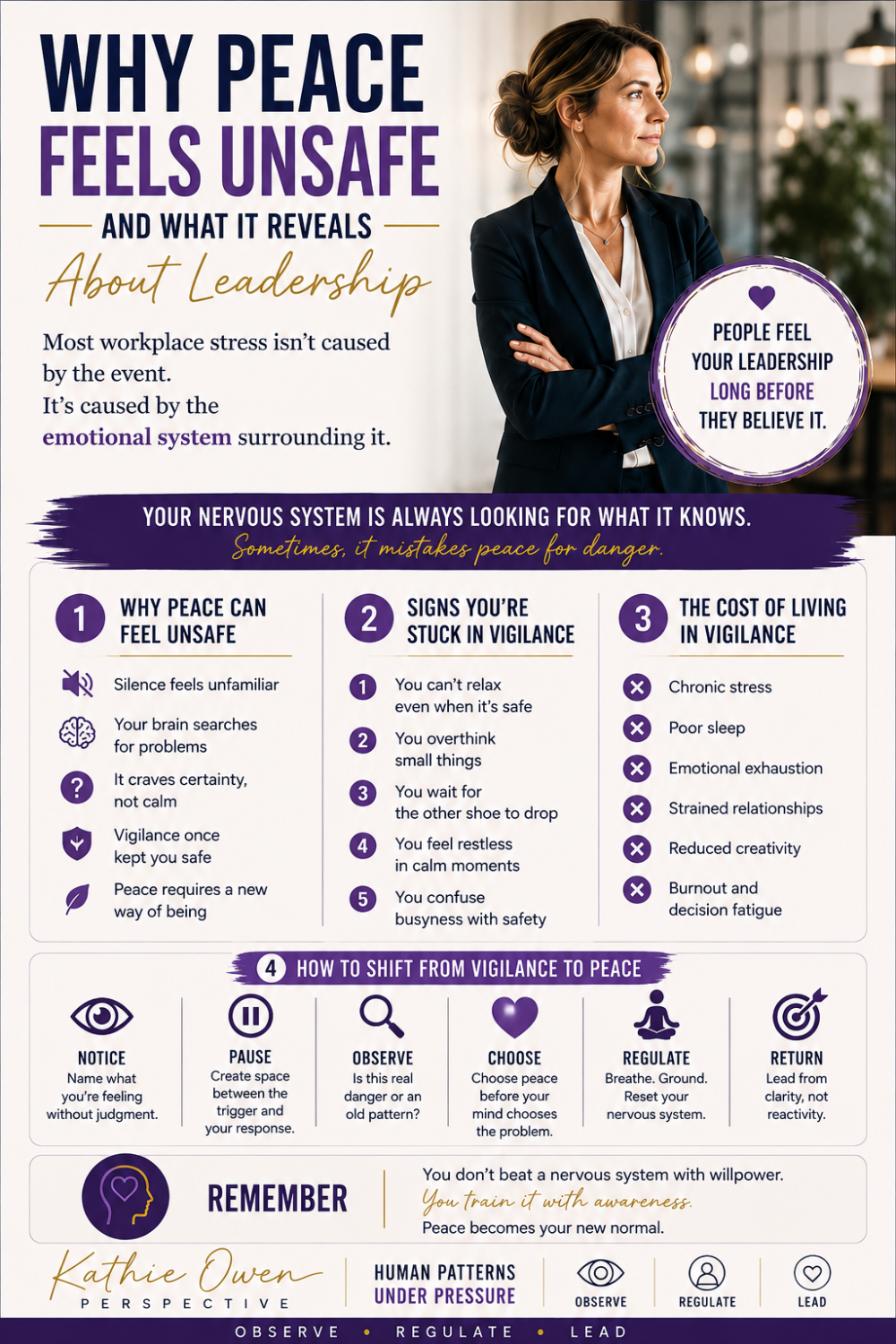
Why Peace Feels Unsafe
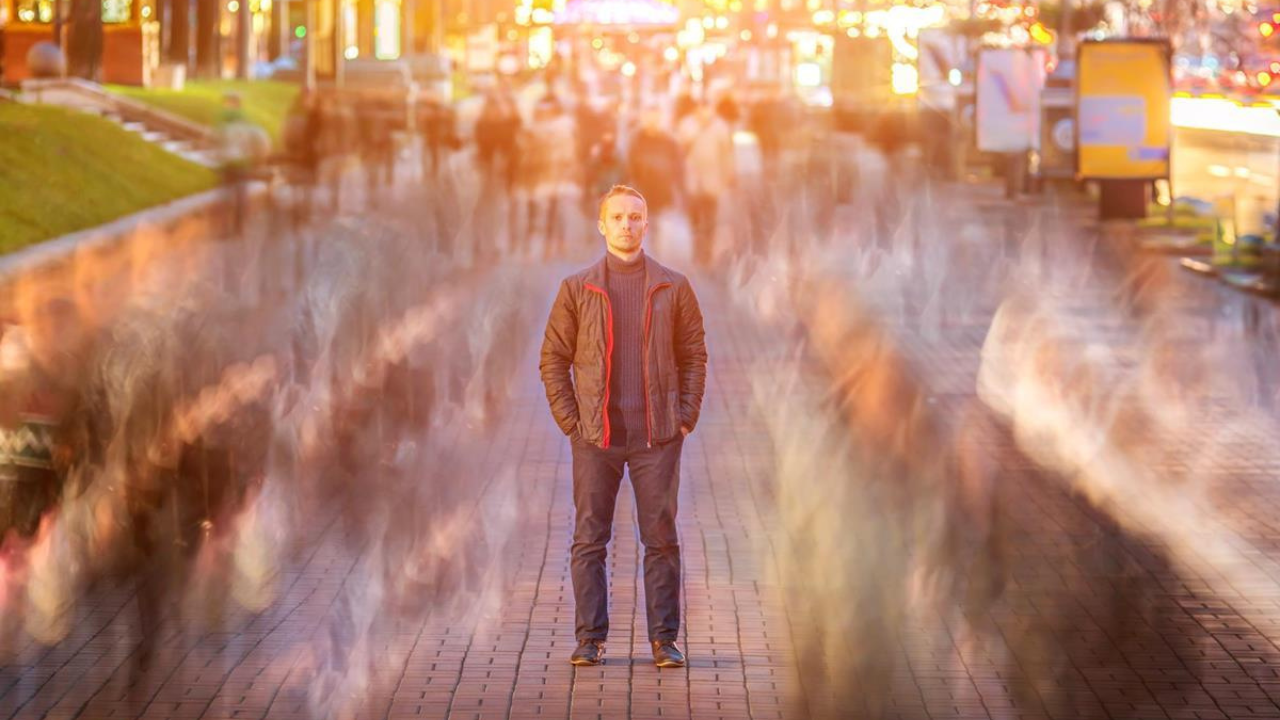
Have you ever had one of those moments when everything is finally okay... and yet you still can't relax?
Nothing is wrong.
The bills are paid.
Nobody is angry.
There is no emergency.
Your phone is quiet.
Your calendar is manageable.
And somehow your brain starts searching for a problem anyway.
You replay a conversation.
You wonder if someone is upset with you.
You think about money.
You think about your health.
You think about the future.
You check your phone.
Then you check it again.
Most people assume this means they are anxious.
Others assume they are negative thinkers.
Some even believe there is something wrong with them.
But what if none of those explanations are true?
What if your nervous system simply learned that staying alert was the safest thing to do?
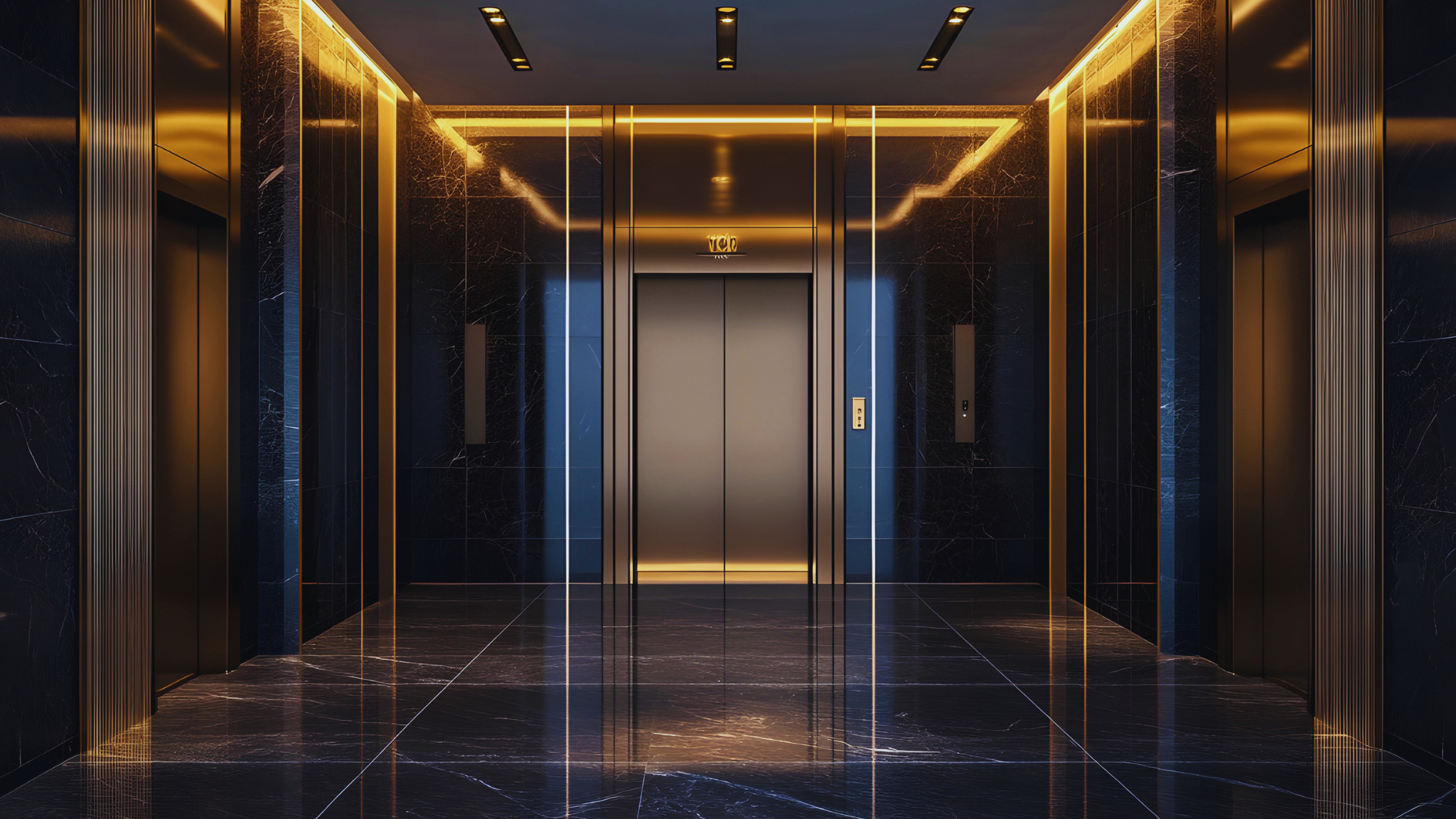
The Elevator That Taught Me Something About Humans
Years ago, I worked in a downtown Houston high-rise building.
My office was on the 66th floor.
To get there, we had to take one elevator and then transfer to another elevator for the rest of the ride.
On windy days, something interesting happened.
The elevators slowed down.
Sometimes they slowed down so much that people thought they had stopped moving.
Other times the elevator would sway slightly or make noises as the building adjusted to the wind.
The building was doing exactly what it was designed to do.
It was adapting to pressure.
But many people didn't understand that.
You could feel fear spreading through the elevator.
People would look around.
They would stare at the floor numbers.
They would check other people's reactions.
They were searching for reassurance.
The fascinating part wasn't the elevator.
It was the human behavior.
The moment uncertainty appeared, people started scanning.
And honestly, many of us do the exact same thing in life.
Vigilance Can Become a Lifestyle
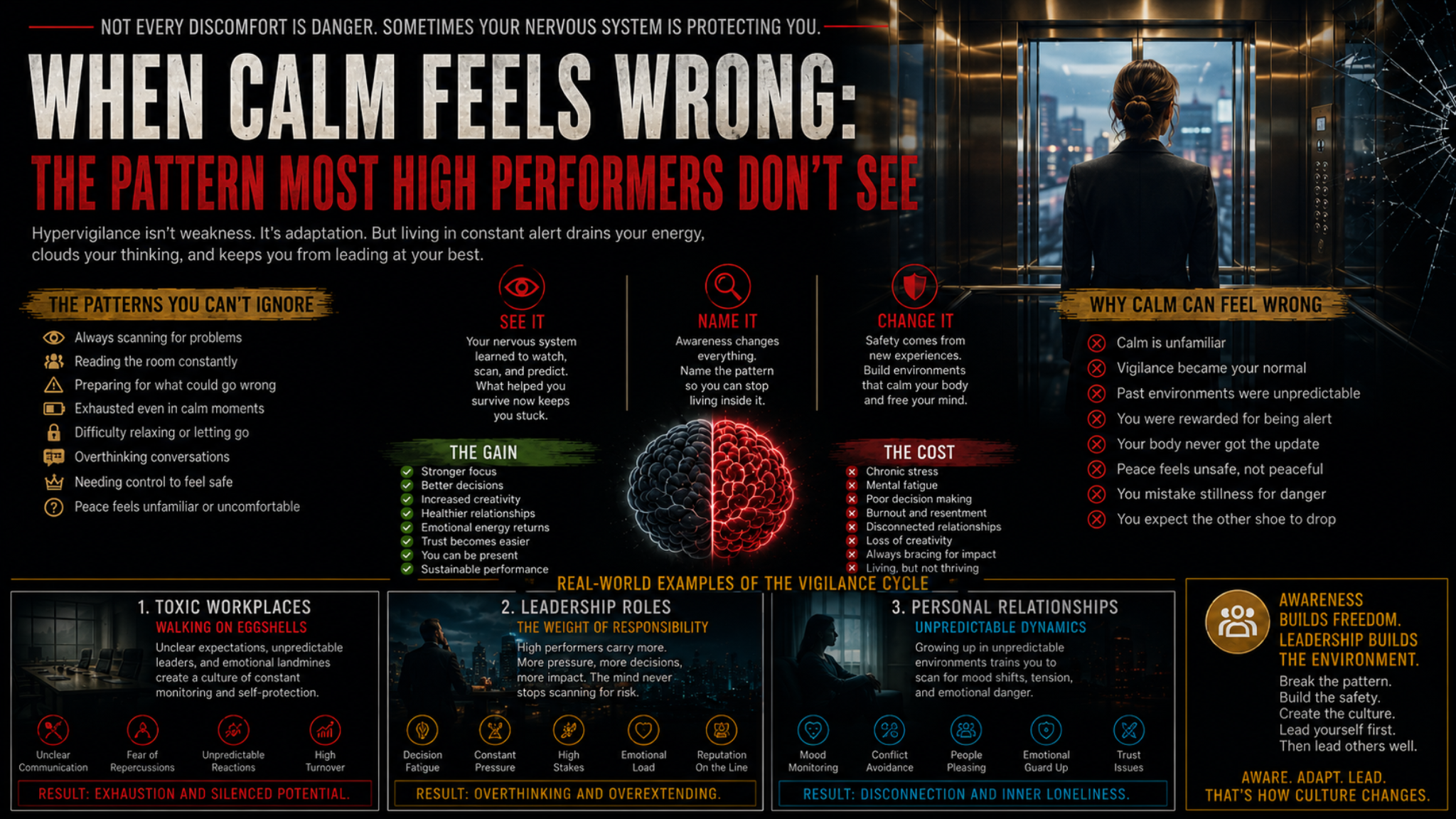
Many people grew up in environments where paying attention mattered.
Maybe a parent had unpredictable moods.
Maybe there was conflict in the home.
Maybe they experienced bullying.
Maybe they worked for a difficult boss.
Maybe they spent years inside a toxic workplace.
Maybe they walked on eggshells around someone they loved.
Over time, the nervous system learns an important lesson:
"Pay attention."
"Stay ready."
"Monitor everything."
The problem is that the nervous system doesn't always update its software when circumstances change.
The environment becomes safer.
The relationship improves.
The toxic workplace ends.
The crisis passes.
But the monitoring remains.
The body continues doing what it learned to do.
Not because it is broken.
Because it became very good at protecting you.
The Secret High Performers Rarely Talk About
Many of the most successful people I meet share a similar pattern.
They are observant.
Responsible.
Conscientious.
Prepared.
Reliable.
Emotionally intelligent.
They notice things other people miss.
At first glance, these traits look like strengths.
And they are.
But there is often a hidden cost.
Many high performers are not simply working hard.
They are running constant background surveillance.
Their nervous system is monitoring:
People's moods
Team dynamics
Potential problems
Future risks
Hidden conflict
Emotional tension
Even when nobody asks them to.
Even when nothing is wrong.
Imagine leaving dozens of browser tabs open on your computer all day.
Eventually the system slows down.
Human beings are no different.
The constant scanning consumes energy.
And over time, that energy drain becomes exhaustion.
Why Calm Can Feel Uncomfortable
This is one of the most misunderstood aspects of healing.
People often believe they are trying to create peace.
But when peace finally arrives, it feels strange.
Why?
Because peace is unfamiliar.
And unfamiliar does not always feel safe.
Think about that for a moment.
Many people aren't addicted to stress.
They are simply accustomed to it.
Stress became predictable.
Vigilance became familiar.
Monitoring became normal.
When life finally gets quiet, the nervous system says:
"Wait a minute. Why aren't we looking for something?"
And suddenly the brain starts creating work.
Not because danger exists.
Because vigilance has become a habit.
The Leadership Lesson Nobody Talks About
This matters far beyond personal growth.
It matters inside organizations.
It matters on leadership teams.
It matters inside families.
It matters in every environment where human beings gather.
One of the biggest mistakes leaders make is assuming people are underperforming because they lack motivation.
Sometimes the issue isn't motivation.
Sometimes people are exhausted from emotional monitoring.
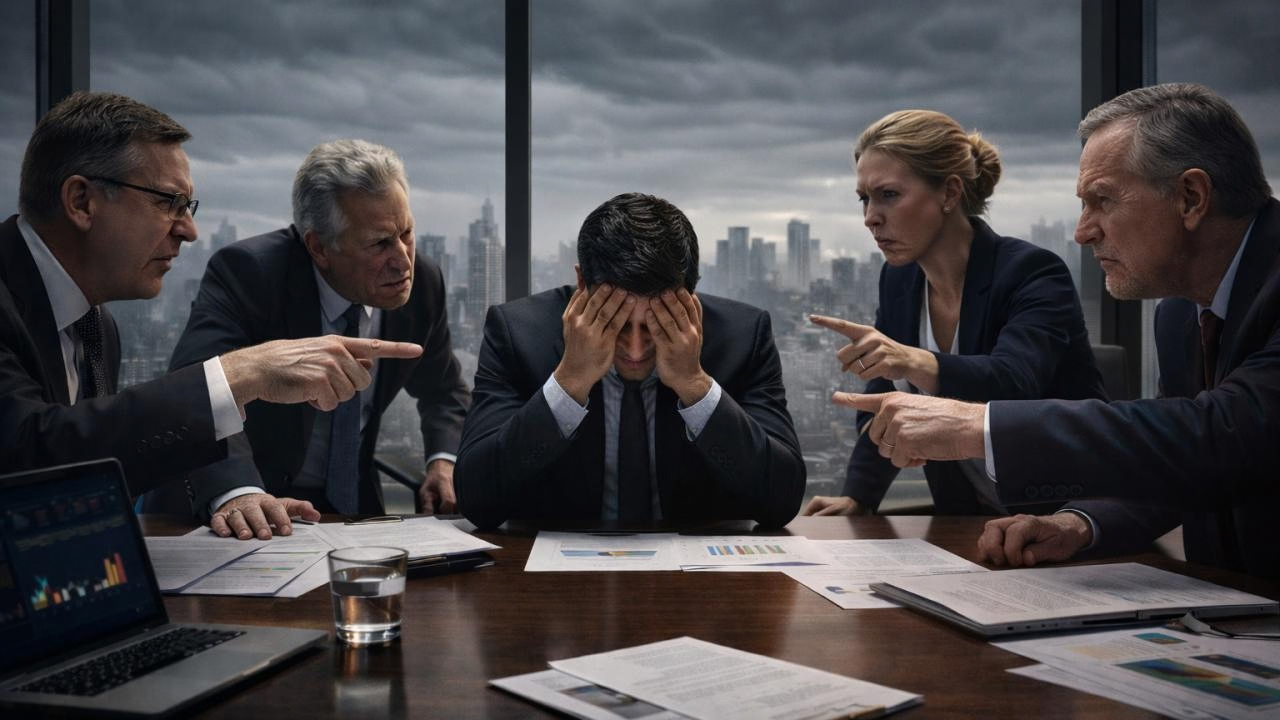
When employees spend their day trying to predict reactions, avoid conflict, interpret mixed messages, or manage unpredictable leaders, they burn enormous amounts of energy.
Energy that could have gone toward:
Creativity
Innovation
Collaboration
Problem-solving
Strategic thinking
Emotionally safe environments don't make people weaker.
They free up capacity.
The brain performs better when it isn't constantly bracing.
That's true in families.
It's true in friendships.
And it's absolutely true in business.
A Different Way to Think About Anxiety
One of the most powerful shifts happens when people stop asking:
"What's wrong with me?"
And start asking:
"What did my nervous system learn?"
That question changes everything.
Because now we're moving from judgment to curiosity.
We're no longer treating ourselves like a problem to solve.
We're becoming students of our own experience.
Awareness creates space.
Space creates choice.
Choice creates freedom.
Many times, healing doesn't begin when the symptoms disappear.
Healing begins when you stop fighting the symptoms and start understanding them.
The Bonus Insight: Observation Changes the System
Here's something I didn't discuss in the podcast episode.
Observation itself is regulating.
Think about that.
Not fixing.
Not controlling.
Not forcing.
Observing.
When you notice yourself checking your phone for the fifth time...
Observe.
When you catch yourself replaying a conversation...
Observe.
When you find yourself preparing for a problem that hasn't happened...
Observe.
The moment you become the observer, you create a small amount of distance between yourself and the pattern.
That distance is powerful.
You are no longer completely inside the experience.
You are witnessing it.
And often, that simple shift reduces the intensity all by itself.
Not overnight.
Not perfectly.
But gradually.
The observer sees the elevator slowing down and understands the building is adapting.
The observer notices the nervous system activating and understands the body is trying to protect itself.
The observer doesn't panic.
The observer becomes curious.
And curiosity is often the beginning of freedom.
Final Thoughts
The next time you notice yourself scanning, monitoring, preparing, or bracing, pause before assuming something is wrong.
Maybe your nervous system is simply doing what it learned to do.
Maybe the elevator is slowing down because the building is adapting to pressure.
Maybe peace feels uncomfortable because you're learning something new.
And maybe awareness—not force—is the first step toward change.
Spend a few moments this week simply observing your nervous system.
No judgment.
No fixing.
No self-criticism.
Just observation.
You may discover that what you've been calling anxiety is actually a very intelligent system doing its best to protect you.
And that realization alone can change everything.
About the Author
Kathie Owen is a consultant, speaker, and observer of human behavior under pressure. She works with leaders, founders, executives, and organizations to identify the hidden emotional patterns that influence decision-making, performance, trust, and workplace culture.
Through her work, Kathie helps people see what they couldn't see before—often revealing the invisible dynamics that quietly shape outcomes.
If this article resonated with you and you'd like to share your thoughts, ask a question, or explore working together, visit the Contact page. You'll find additional resources and a link to schedule a conversation.
Read More Articles from Kathie
Transcript
Have you ever noticed that the moment things get quiet, your brain starts searching for a problem? Nothing bad is happening. Nobody's yelling, no emergency, no crisis, no major issue, and yet your nervous system still feels like something is coming. You check your phone, replay conversations, think about money, think about relationships, think about work, think about what could go wrong next. And what's interesting is most people think this means they're anxious, negative, dramatic, or bad at relaxing, but I don't think that's what's happening at all. I think a lot of people have nervous systems that were trained to monitor. Welcome to the Kathie Owen Perspective podcast. My name is Kathie Owen, and this channel is where we talk about human patterns under pressure, leadership, emotional regulation, nervous systems, workplace dynamics, and the invisible emotional patterns that quietly shape the way people think, perform, lead, and relate to each other. And one thing I've become deeply aware of over the years, especially working with leaders, teams, high performers, and people healing from toxic environments is this: a lot of people don't actually feel safe in peace. They feel familiar in vigilance. There's a difference, and I wanna explain what I mean. Years ago, I worked in downtown in a high-rise building, and I worked on the sixty-sixth floor. To get there, we had to take an express elevator up to one floor and then transfer to another elevator to go the rest of the way up. And on windy days, those elevators would slow way down, sometimes so much that people thought we weren't even moving. Other times, the elevator would sway or bang slightly because the building itself was designed to move with the wind. Now, what fascinated me wasn't the elevator, it was the people. You could feel the fear in the elevator almost immediately. People would start looking around, checking faces, watching the numbers, scanning for reassurance. And because I had experienced it so many times, I understood what was happening. The building was doing exactly what it was designed to do. The slowing down wasn't danger. The movement wasn't failure. The system was adapting to pressure. And I think human nervous systems do something very similar, especially people who grew up in emotionally unpredictable environments, or worked in toxic workplaces, or walked on eggshells, or had to constantly monitor someone else's mood, reaction, behavior, or emotional state. Eventually, the nervous system learns something very important: stay alert. Not necessarily because danger is happening right now, but because at one point, vigilance helped you stay emotionally prepared. And what's fascinating is this pattern often gets rewarded. These people become highly observant, responsible, emotionally intelligent, prepared, productive, high functioning. But underneath it all, their nervous system is still scanning, still monitoring, still anticipating, still trying to feel the emotional weather of the room. And this is why some people struggle to relax even when life is finally calm. Because calm feels unfamiliar, and unfamiliar can feel unsafe. That's a very different conversation than simply saying someone has anxiety. Sometimes what we call anxiety is actually a nervous system that became incredibly skilled at predicting emotional impact. And here's where this becomes important in leadership, relationships, and performance. Hypervigilance is exhausting, very exhausting. It drains creativity, it drains clarity, it drains emotional energy. People cannot think clearly when their nervous system believes it must constantly prepare for emotional impact. This is why emotionally safe environments matter so much. And when I say emotionally safe, I do not mean weak environments. I mean environments where people are not constantly bracing, where they are not endlessly trying to read the room, monitor reactions, avoid landmines, predict emotional explosions, or protect themselves from unpredictable responses. Because eventually, that level of monitoring becomes exhausting. And what's interesting is many people don't even realize they're doing it. They think, "This is just my personality," but often it's adaptation. And honestly, I think this is one reason so many high performers are tired and burned out, not because they're lazy and not because they lack discipline, but because their nervous system has been running background surveillance for years, sometimes decades. They're watching, they're scanning, preparing, monitoring, even during moments that are supposed to feel peaceful. And I want to say something important here. This is not about blaming parents or blaming workplaces or blaming relationships. This is about awareness, because once you start recognizing the pattern, you stop making yourself wrong for having it. You start realizing, "Oh, my nervous system learned this for a reason." And strangely enough, that awareness itself can become regulating. Because now you're observing the system instead of unconsciously living inside it, and that changes everything. Sometimes healing is not forcing yourself to calm down. Sometimes healing is simply realizing the elevator is slowing down because the building is adapting to pressure. Not every uncomfortable sensation means danger, and not every quiet moment is the beginning of disaster. Sometimes your nervous system is simply trying to protect you the best way it learned how. And the more awareness we bring to these patterns, the less controlled we become by them. All right, that's my episode for today. I always include a blog post that includes bonus resources and full details, including the video, the podcast episode in the show notes and description below. And if this resonated with you, I'd love you to spend some time simply observing your own nervous system this week. Not judging it, not fixing it, just observing it. All right. That's today's episode, and I trust that you found it helpful. And until next time, I will see you next time on the Kathie Owen Perspective podcast.

Learn how to practice non-attachment, let go of expectations, and stop carrying workplace stress into your personal life. Kathie Owen shares personal stories, Reality Transurfing insights, and simple ways to create space through meditation, hobbies, and nature walks.
#NonAttachment #LettingGo #RealityTransurfing #WorkplaceStress