
Why One Mistake Feels So Big

You gave the presentation.
It went well.
People listened. They smiled. Someone even came up afterward and told you how much they enjoyed it.
But that's not what you're thinking about on the drive home.
You're thinking about the sentence you stumbled over.
The awkward pause.
The answer you wish you had given differently.
Ten things went right.
One thing didn't.
And somehow, that one thing becomes the entire story.
Everybody else saw the performance. You saw the ball you dropped.
That is one of the ways perfectionism hides in plain sight.
And it is why I use the Juggler to represent perfectionism in my Human Patterns Under Pressure framework.
Because sometimes the problem isn't that we dropped the ball.
It's what we make the dropped ball mean.
Read the post on LinkedIn: It includes the human diligence in Mergers and Acquistions aspect of this article.
Perfectionism Doesn't Always Look Perfect
When we hear the word perfectionism, we might picture someone who needs everything neat, organized, polished, and exactly right.
But perfectionism can be much quieter than that.
It can look like rewriting an email five times before hitting send.
It can look like spending hours preparing for a conversation that may last ten minutes.
It can look like creating something good and refusing to publish it because you can still see ways to improve it.
It can look like walking away from a meeting and replaying everything you said.
Or it can sound like one simple sentence:
"I should have done that better."
There is nothing wrong with wanting to improve.
The important question is what happens next.
Does the observation give you useful information?
Or does it become a verdict about you?
That's where the Juggler enters the circus.

The Juggler Under Pressure
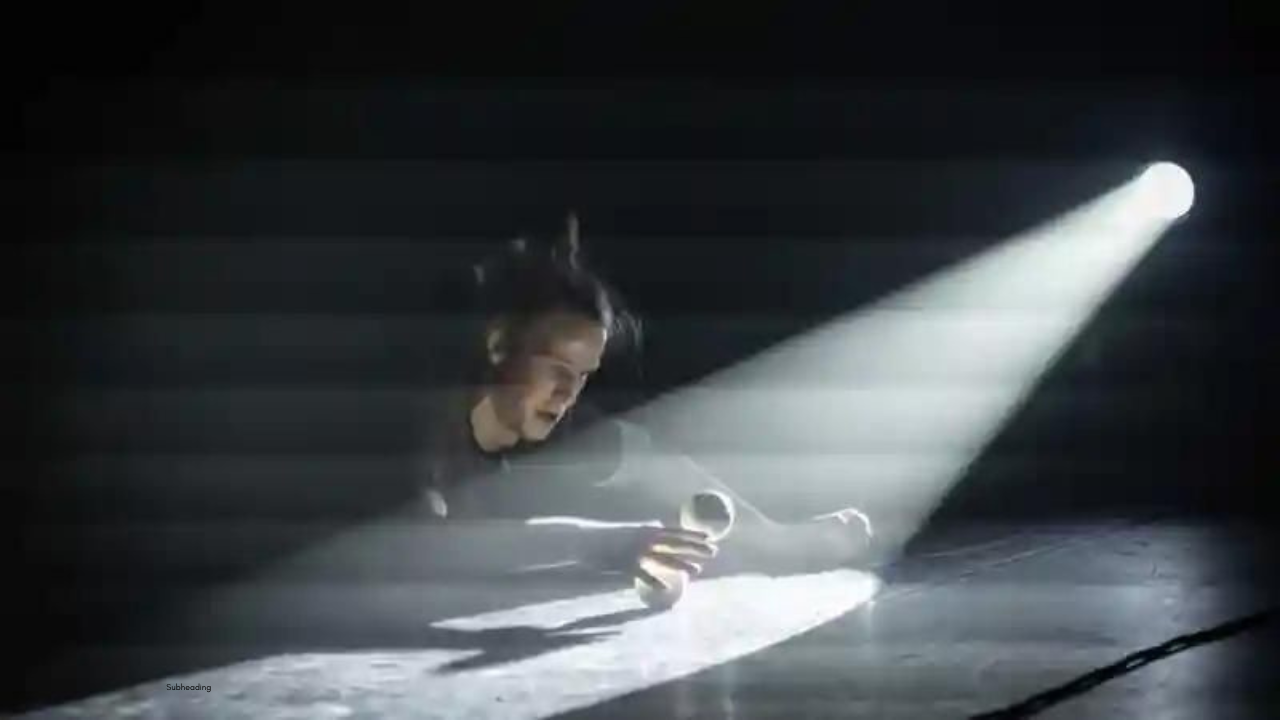
Picture a circus performer juggling five balls.
Everything is moving.
The rhythm is beautiful.
Then one ball drops.
It hits the floor.
What does the Juggler see?
Not the four balls still moving through the air.
Not the audience watching the performance.
Not the skill required to do what she is doing.
She sees the ball on the floor.
And that is what perfectionism can do to our attention.
Five things went well.
One didn't.
We stare at the one.
The mistake may be real.
The question is whether we are seeing it in proportion.

Excellence and Perfectionism Are Not the Same
This distinction matters.
Wanting to do excellent work does not automatically make someone a perfectionist.
High standards can be valuable.
Preparation matters.
Practice matters.
Attention to detail matters.
Learning from our mistakes matters.
But excellence and perfectionism can come from very different places.
Excellence says:
"I want to do this well."
Perfectionism says:
"I need to get this right."
That tiny change creates enormous pressure.
Excellence leaves room for learning.
Perfectionism can make a mistake feel dangerous.
Now I am not simply giving a presentation.
I need everyone to like it.
I am not simply writing an article.
It needs to be the right article.
I am not simply having a difficult conversation.
I need to say everything correctly.
The Juggler is no longer juggling tasks.
The Juggler is juggling expectations.
And some of those expectations may not even be real.

What If They Judge Me?
I recently spoke with someone who is beginning to speak in front of audiences.
One of her fears was simple.
People are going to look at her.
They might judge her.
Of course they might.
That's one of the uncomfortable truths about becoming visible.
When you stand in front of a room, people look at you.
When you publish your ideas, people can disagree with them.
When you lead, someone may dislike your decision.
When you create, someone may criticize what you created.
I have spent years speaking, writing, teaching, creating content, and putting my ideas into the world.
I don't believe the goal is to reach some magical place where we never notice judgment again.
Something else happens.
We begin to understand its size.
One person's opinion can feel enormous when we are standing under the spotlight.
But step back.
Look at the entire stage.
Then look at the entire circus.
Then look at your entire life.
How big is that opinion now?
It exists.
But it doesn't have to become everything.
That is a very different kind of freedom.

Perfectionism Can Steal Presence
Now imagine our Juggler again.
Five balls are moving through the air.
Instead of trusting the rhythm, she begins thinking:
Don't drop it.
Don't drop it.
Don't drop it.
Her body tightens.
Her attention changes.
She becomes focused on preventing the mistake instead of being present with what she is doing.
We do this too.
A speaker can become so concerned with how she looks that she stops connecting with the audience.
A leader can become so focused on saying the right thing that nobody can feel the human being behind the words.
A creator can spend so much time perfecting the work that the work never reaches anyone.
We stop participating in the moment.
We start monitoring ourselves inside the moment.
Part of us is doing the thing.
Another part is standing nearby asking:
"How am I doing?"
That is exhausting.
And ironically, trying so hard to perform perfectly can interfere with our ability to perform naturally.
Then Another Circus Character Appears
Our patterns under pressure rarely operate alone.
This is where another character from my framework often walks into the ring.
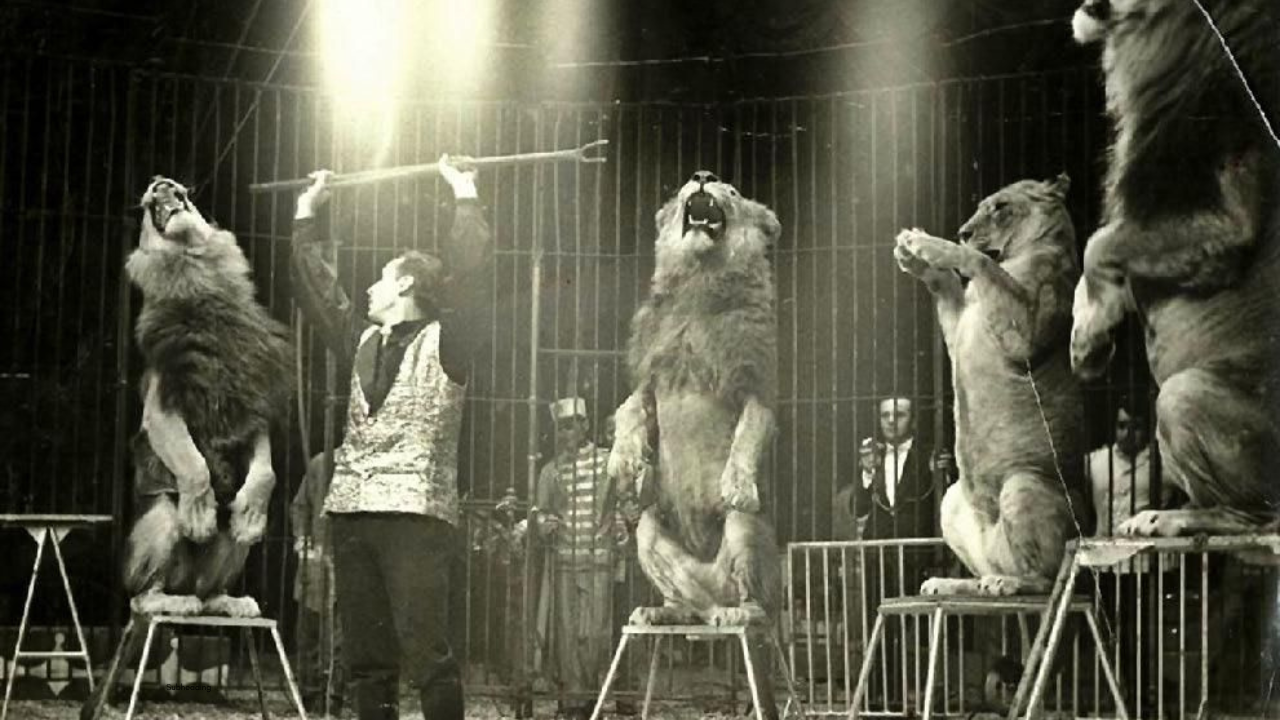
The Lion Tamer.
The Lion Tamer represents criticism.
The Juggler drops a ball.
Then the Lion Tamer cracks the whip.
"You should have known better."
Crack.
"Why did you say that?"
Crack.
"You weren't prepared enough."
Crack.
"Everybody noticed."
The Juggler creates the standard.
The Lion Tamer punishes us when we don't meet it.
And sometimes all that happened was this:
We made a typo.
We forgot a word.
We asked an awkward question.
We missed something.
We were human for twelve seconds.
Yet our mind can turn those twelve seconds into an entire story about who we are.

The Observer Sees Something Different
This is where we can step out of the circus and into what I call the Observer's Lens.
The Observer doesn't rush into the ring and start grabbing balls.
The Observer notices.
What actually happened?
Let's return to our presentation.
"I forgot part of my speech."
Okay.
What else happened?
"I recovered."
What else?
"I finished."
What else?
"People listened."
What else?
"Someone told me afterward that they enjoyed it."
Now compare those observations with this statement:
"I completely blew that presentation."
Those are not the same thing.
One describes what happened.
The other tells a story about what happened.
This is why observation is such an important part of my work.
Observation creates awareness.
Awareness creates choice.
Once I can see what actually happened, I have options.
Maybe I practice that section more next time.
Maybe I ask for feedback.
Maybe I make a change.
Maybe I laugh.
Maybe I do absolutely nothing.
But now I am choosing instead of automatically reacting to the pattern.
Sometimes the Ball Can Stay on the Floor
There is another possibility we rarely give ourselves.
What if you don't pick up every ball?
Some things genuinely matter.
Some mistakes need to be corrected.
Some conversations need to be revisited.
Some skills need more practice.
And some things simply aren't that important.
That typo?
Maybe it can stay there.
The awkward sentence you said three days ago?
Perhaps nobody remembers it except you.
The person who didn't like your presentation?
They are allowed not to like it.
The social media post that didn't perform well?
It may simply be one post.
Not every dropped ball is an emergency.
And not every ball was yours to juggle in the first place.
The Real Question Behind Perfectionism
When you notice the Juggler appearing, try asking:
What am I afraid will happen if I drop the ball?
Don't rush to answer.
And don't judge what you discover.
Maybe you are afraid someone will criticize you.
Maybe you are afraid of disappointing someone.
Maybe you fear looking incompetent.
Maybe you are afraid of rejection.
Maybe you simply have a deeply practiced habit of expecting more from yourself.
Two people can display the same perfectionistic behavior for completely different reasons.
We don't need to immediately diagnose it.
We can observe it.
Sometimes observation is enough to create a little space.
And inside that space, we find choice.

Look at the Whole Circus
The Juggler gives us one final lesson.
Imagine five balls still moving beautifully through the air.
One is lying on the ground.
Where are you looking?
Perfectionism pulls our attention toward the floor.
The Observer widens the view.
Yes, there is a ball on the floor.
And there are still four in the air.
Both things can be true.
You can make a mistake and still be capable.
You can receive criticism and still trust yourself.
You can feel nervous and still speak.
You can be judged and still become visible.
You can wish you had done something differently without turning that moment into evidence against yourself.
The goal isn't to stop caring.
The goal isn't to lower every standard.
And the goal isn't to convince yourself that mistakes don't matter.
The shift is much quieter.
The dropped ball doesn't have to become bigger than the entire performance.
So the next time you find yourself replaying, rewriting, checking, correcting, or worrying about what someone thinks, picture the Juggler.
Look around the ring.
Then ask yourself:
What am I making bigger than it actually is because I'm afraid of dropping the ball?
Maybe you need to pick it up.
Maybe there is something to learn.
And maybe you can leave it right where it is.
Because there is a whole circus happening around you.
Don't miss it because you're staring at one ball on the floor.
About the Author
Kathie Owen is a consultant, author, speaker, and creator of the Human Patterns Under Pressure framework.
Her work explores what happens to human behavior when pressure enters the room — particularly in leadership, communication, decision-making, visibility, and high-stakes environments.

With a background in psychology, coaching, leadership development, fitness, and human behavior, Kathie helps people recognize the patterns that can quietly take over when uncertainty, criticism, conflict, or pressure rises.
Her work is built around a simple principle: observation creates awareness, awareness creates choice.
Kathie is the author of Human Patterns Under Pressure, where she introduces the circus characters that make common pressure patterns easier to recognize, including the Juggler, Lion Tamer, Ringmaster, Tightrope Walker, Strongman, Clown, and Magician. She is also the author of The Truth Bubbles Up, which explores awareness, truth, and the patterns we begin to recognize when we learn to observe ourselves differently.
As a speaker and consultant, Kathie brings these ideas to life through stories, practical observations, and simple frameworks designed to make complex human behavior easier to understand.
She is also the host of The Kathie Owen Perspective, where she explores human patterns, leadership, emotional awareness, Reality Transurfing, personal development, and what it means to remain present when life applies pressure.
Her work asks us to do something deceptively simple:
Notice.
Because what we can observe, we no longer have to automatically obey.
Read More Articles from Kathie






Transcript
Have you ever done something really well and then spent the next hour thinking about the one thing you did wrong? Maybe you gave a presentation. People smiled, they listened. Someone even came up afterward and told you how much they enjoyed it. But you, you're thinking about the sentence you stumbled over. You remember that awkward pause, or the moment you forgot what you were going to say. Everybody else saw the whole performance. You saw the ball you dropped. Welcome to the circus. Today, we're talking about another character in human patterns under pressure, the juggler. Welcome to the Kathie Owen Perspective podcast. My name is Kathie Owen. I study human patterns under pressure, the things we do when life gets uncomfortable, uncertain, or when we feel like all eyes are on us. I've spent decades studying human behavior, psychology, leadership, fitness, personal development, and what happens to us when pressure enters the room. I'm also the author of Human Patterns Under Pressure, where I use the characters of the circus to make these patterns easier to see. Because that's really what my work is about: not judging the pattern, not trying to get rid of ourselves, but learning to observe what we're doing while we're doing it. Because observation creates awareness, awareness creates choice, and once we have choice, we have possibilities. So today, we're stepping back into the circus to meet the juggler, and the juggler represents perfectionism. Think about a juggler in a circus. At first, there are three balls, then four, then five. The juggler keeps them moving. Everything is going beautifully, then one hits the floor. What happens? The audience probably doesn't care. They might even clap when the juggler picks it up and keeps going. But inside the juggler's mind, that one ball dropped can become the entire performance. "I shouldn't have done that. I knew better. I should have practiced more. Everybody saw that. What are they going to think?" And suddenly, we're not talking about juggling anymore. We're talking about what the dropped ball means. That is where perfectionism gets interesting. I don't think perfectionism is simply wanting everything to be perfect. Sometimes it looks like nothing like that. It can look like rewriting an email five times. It can look like preparing way too much for a conversation. It can look like not posting something because you don't think it's ready. It can look like walking away from a meeting and replaying everything you said, or standing in front of an audience and wondering, "What are they thinking about me?" That's an important one. I was talking with someone recently who is beginning to speak in front of audiences, and she told me she is afraid of being judged. She's afraid of people looking at her. I understand that because when you stand in front of a room, people are looking at you. That's kind of the deal. And I don't know that we ever completely eliminate the awareness that someone might judge us. Someone probably will. Someone may not like your presentation. Someone may not like your voice, your clothes, your message, your personality. Someone may decide they don't like you before you finish your first sentence. But here's what can change. You begin to realize how small that judgment actually is. Someone's opinion can feel enormous when you're standing under the spotlight, but step back. Look at the whole circus. Look at your whole life. That person's opinion is one tiny moment, one ball, and we give that one ball far more importance than it deserves. There's another distinction I wanna make. I don't think wanting to do something well is a problem. I like doing things well. Preparation matters. Practice matters. Learning matters. Excellence matters. But excellence and perfectionism are not the same thing. Excellence says, "I want to do this well." Perfectionism says, "I need to get this right." Excellence leaves room for being human. Perfectionism often doesn't, and that's where pressure starts building because now I'm not simply giving a presentation, I need everyone to like the presentation. I'm not simply writing an article, it has to be the right article. I'm not simply having a conversation, I need to say everything correctly. I'm not simply learning, I'm trying not to make a mistake. Do you feel the difference? The juggler isn't just juggling balls anymore. The juggler is juggling expectations. Now, imagine an actual juggler standing on stage. Five balls are moving through the air, and instead of getting into the rhythm, the juggler starts thinking, "Don't drop it. Don't drop it. Don't drop it." What do you think happens? The body tightens, attention narrows, the rhythm changes. The juggler becomes so focused on preventing the mistake that it becomes harder to perform naturally. That happens to us, too. We can become so concerned about doing something correctly that we lose our presence while we're doing it. We're no longer in the conversation. We're monitoring ourselves in the conversation. We're no longer giving the speech. Part of us is giving the speech while another part is standing off to the side asking, "How am I doing?" That's freaking exhausting, and it takes us out of the moment. And here's something else I've noticed about these human patterns under pressure. They don't always work alone. Remember the lion tamer? We talked about it the other day. I will link to that video in the show notes and description below. The lion tamer represents criticism. So imagine this, the juggler drops a ball, and the lion tamer immediately walks into the ring. "Crack. You should have known better. Crack. Why did you say that? Crack. You weren't prepared enough. Crack. Everybody noticed." The juggler creates the impossible standard, and then the lion tamer punishes us when we don't meet it. That's quite a circus. And sometimes all that happened was we made a typo, we forgot a word, we asked an awkward question, we said something we wish we'd said differently. We were human for approximately 12 seconds, and our mind turned it into a three-act courtroom drama. This is where the observer enters. The observer doesn't run into the circus and try to grab all the balls. The observer watches. What actually happened? I forgot part of my speech. Okay. What else? People were still listening. Okay. What else? I finished. Okay. What else? Someone told me afterward that they enjoyed it. Interesting. Now compare that with the story. I completely blew the presentation. Those are two different things. The observer helps us separate what happened from what we made it mean. Observation creates awareness, awareness creates choice, and choice gives us possibilities. Maybe I practice that section more next time. Maybe I ask for feedback. Maybe I change something. Maybe I laugh. Maybe I do absolutely nothing. But I get to choose. Here's the image I want you to remember. Imagine a juggler with five balls still moving beautifully through the air and one ball sitting on the floor. Where does the perfectionist look? At the floor. That's what perfectionism can do. Five things went well, one didn't, and we stare at the one. But the observer can see the entire thing. Yes, there's a ball on the floor, and there are still five in the air. Both things are true. That is perspective. So here's a question worth asking yourself. What am I afraid will happen if I drop the ball? Don't rush to answer it. Just observe. Maybe you're afraid someone will judge you. Maybe you're afraid someone will be disappointed. Maybe you're afraid you'll look incompetent. Maybe you're afraid you'll disappoint yourself. Maybe you don't know. That's okay, too. Because two people can display the exact same behavior for completely different reasons, we don't need to immediately diagnose it. We can observe it. That's enough And there's something I've learned lately about getting older, learning, speaking, creating, working, and just being a human being. Some balls can drop. They really can. Somebody might judge you. You might say the wrong thing. You might make a mistake. You might publish something and later realize you would write it differently today. You might give a speech and think, "I coulda done that better." And maybe you could have, but look at the size of that moment compared with the size of your life. We make some of these moments enormous, and they're not. They're one ball, one moment, one day, one opinion, one mistake, one awkward sentence. The juggler under pressure thinks, "I cannot drop this." The observer can say, "There it goes," and then decide what to do next. I don't think the answer is to stop caring. I don't want to stop caring about doing good work. I don't want to stop learning. I don't want to stop preparing. I don't wanna stop improving, and I don't think we have to become completely immune to judgment. The goal isn't, "I don't care what anybody thinks." The shift is much quieter than that. Their opinion doesn't have to become bigger than my own presence. The mistake doesn't have to become bigger than the whole performance, and the dropped ball doesn't have to erase everything still in the air. That's where perfectionism begins to loosen, not because we become perfect, but because we stop requiring perfection before we allow ourselves to keep going. So the next time you catch yourself replaying something, rewriting it, checking it, trying to make sure nobody could possibly criticize it, or staring at the one thing you wish you'd done differently, picture the juggler. Then look down. Is there actually a disaster happening, or is there simply one little ball sitting on the floor? Pick it up if you need to, learn from it if there's something to learn, or leave it there and keep going. Because there is a whole circus happening around you, and you don't wanna miss your life because you're staring at one dropped ball. And I'll leave you with one question to take with you. What am I making bigger than it actually is because I'm afraid of dropping the ball? Don't judge your answer. Don't immediately try to fix it. Just notice. You might be surprised by what you see. And if you'd like to explore this idea a little further, I create a companion blog post for every episode of the Kathie Owen Perspective podcast. You'll find the link to this- in the show notes or description, and I'll also put it in the first comment on YouTube. And remember, the juggler is only one character in this circus because sometimes we don't try harder when pressure hits. Sometimes we do something very different, and that's the pattern we're gonna look at next. Until then, observe what you notice. You don't have to fix every pattern you see. Sometimes seeing it changes more than you think.

Explore Reality Transurfing pendulums, visualization, and simple problem-solving with Kathie Owen. Learn to picture confidence, peace of mind, and ease, then make space for a useful next step under pressure.
#RealityTransurfing #Pendulums #Visualization #HumanPatternsUnderPressure