
The Silent Takeover, That Wasn’t Silent
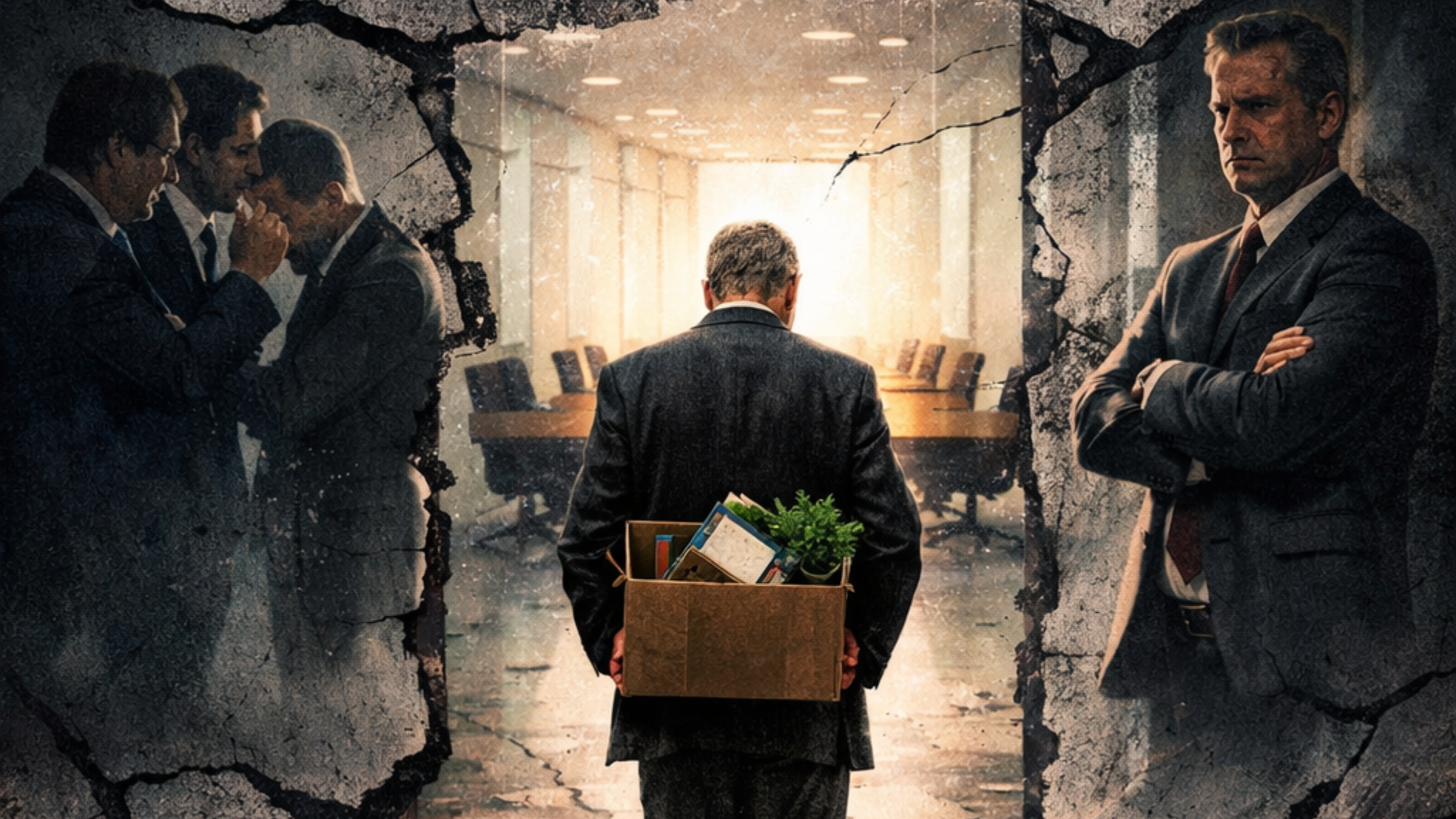
Over time, I’ve noticed something most leaders don’t expect to hear:
The biggest risks inside a business are not hidden.
They’re visible.
They’re felt.
They’re just… not recognized for what they are.
I recently came across a story about a CEO who built a company to extraordinary scale.
Brilliant. Capable. Proven.
But inside his leadership team, something was happening right next to him…
That he couldn’t—or wouldn’t—see.
Two of his top executives were running the room through pressure, dominance, and control.
They didn’t just push others.
They pushed him.
Yes—The CEO Was Being Bullied
This is the part most people struggle to accept.
Because we assume power flows one way.
It doesn’t.
In certain systems, power shifts quietly.
It moves to:
the loudest voice
the most aggressive operator
the person willing to create the most pressure
And when that happens…
Even the CEO can start adjusting around it.
Not confronting it.
Not correcting it.
Just… managing it.
The Moment It Was Called Out
An outside advisor sat with him and said it clearly:
👉 They bully your team
👉 They bully me
👉 And if you’re honest… they bully you
That moment matters.
Because that’s the intervention point.
That’s where everything can change.
And He Didn’t Take It
He asked:
“Who do they bully?”
Not because the answer wasn’t there.
Because accepting it would require action.
And action would require:
conflict
disruption
and a shift in the power dynamic he had learned to live with
So he didn’t act.
I’ve Lived Inside This Pattern
I want to be clear about something.
I don’t just see this from the outside.
I’ve lived inside a system like this.
I’ve been the one who named what everyone felt.
I’ve watched what happens when that truth lands in a room that isn’t willing to hear it.
At first, it creates clarity.
People recognize it.
They feel it.
There’s a moment where everything could shift.
But then something else happens.
The system protects itself.
The focus moves away from the behavior…
And onto the person who named it.
Not because they’re wrong.
Because the system isn’t ready to change.
And Here’s What Most People Don’t Understand
Removing the person who calls it out…
Doesn’t remove the problem.
It just removes the signal.
For a short period of time, it can even feel like things are “better.”
Quieter.
Less tension.
More controlled.
But underneath that…
Nothing has actually changed.
The Outcome Still Comes
Because these patterns don’t disappear.
They compound.
They spread.
They distort how the system operates.
And eventually…
They lead to the exact outcome that was trying to be prevented.
Not because someone spoke up.
Because no one acted.
This Is Why I See It So Clearly Now
When I read situations like this…
I don’t just understand them.
I recognize them.
Because I’ve watched it play out from the inside—
From the moment it’s named…
To the moment the system chooses not to see…
To the point where the outcome becomes unavoidable.
This Is Where Leaders Lose Control
Not in a dramatic moment.
In a quiet decision:
👉 to tolerate what should be corrected
👉 to manage what should be confronted
👉 to delay what should be addressed
And slowly…
The system reorganizes.
The Culture Fractures
This is not just about behavior.
This is where everything starts to break.
People see what’s happening.
They adjust.
They:
stop speaking up
stop challenging decisions
start protecting themselves instead of the business
And here’s what’s critical:
The fracture spreads.
Through leadership.
Through teams.
Through execution.
Until One Moment Says Everything
For the CEO mentioned in the post….Eventually, the board stepped in.
He was exited.
Yes, it was professional.
Yes, it was financially structured.
But the culture had fractured so deeply…
They didn’t even throw him a going-away party.
He had to host his own.
That’s not a small detail.
That’s the final signal.
There was no cohesion left in the system he built.
That Doesn’t Happen Overnight
That happens when:
behavior is seen
truth is spoken
and nothing changes
The Advisor Did Their Job
This part matters.
The advisor called it.
Clearly. Directly. Without hesitation.
At that point, the responsibility shifts.
Because once it’s visible…
It becomes a leadership decision.
And if leadership chooses not to act?
The outcome is already in motion.
This is also where discernment matters.
Not every system is willing to see itself.
And when it’s not…
The right move is not to push harder.
It’s to step back.
Why This Is Fixable (Earlier Than You Think)
This is what most people miss.
This situation was fixable.
Early.
Before it became cultural fracture.
Before it became board intervention.
Before it became legacy damage.
Here’s what it would have required:
1. Recognizing the Power Shift
The moment you feel yourself adjusting around someone…
That’s the signal.
Not personality.
Not style.
Power.
2. Addressing It Directly
Not indirectly.
Not later.
In the moment:
👉 “This behavior doesn’t work in this environment.”
Clear. Calm. Final.
3. Resetting the Standard Publicly
What leaders tolerate becomes the system.
What leaders correct reshapes it.
Silence reinforces the wrong structure.
4. Listening When It’s Called Out
This is the hardest one.
Because when someone says:
👉 “You’re being affected by this too”
It doesn’t feel accurate.
It feels confronting.
But that’s often the exact moment that matters most.
The Part No One Wants to Admit
You can build a company to extraordinary scale…
And still lose control of the system inside it.
Not because you lack intelligence.
Because you tolerated a pattern that quietly took hold.
Closing
The signal was there.
It was named.
It was clear.
But it wasn’t acted on.
And in the end…
It wasn’t the market that removed him.
It was the system he allowed to form around him.
These patterns don’t resolve themselves. They resolve through leadership… or they resolve through consequence.
This pattern doesn’t only live in boardrooms.
It shows up in families… in relationships… and even in our own thinking.
Anytime pressure starts to organize behavior—when one voice dominates, when truth goes unspoken, when people begin adjusting instead of expressing—you’re watching the same dynamic play out. It might look smaller. It might feel more personal. But the structure is the same. Something is being tolerated that is quietly shaping everything around it.
And the most important place to recognize it is within yourself.
Where are you adjusting instead of being clear?
Where are you allowing pressure—external or internal—to override what you already know is true?
Because just like in organizations, these patterns don’t disappear on their own.
They either get seen and shifted…
or they continue—until they resolve through consequence.
About the Author
Kathie Owen is a private consultant, speaker, and host of The Kathie Owen Perspective. She works with CEOs and leadership teams navigating high-stakes moments where pressure, complexity, and human behavior intersect.
Kathie wrote the book Human Patterns Under Pressure.
Kathie is known for her ability to see what others miss—how power moves inside a room, where communication breaks down, and how unaddressed behavior quietly reshapes an organization.
Her work focuses on helping leaders see clearly and act early—before small patterns become expensive outcomes.
Read More Articles from Kathie



Transcript
A CEO builds a company to millions, maybe even billions. They lead the organization. They sit at the head of the table. And still, they quietly are overpowered inside their own leadership team, not by the market, not by the competitors, by the people sitting right next to them. And the most important part, they were told it was happening and they didn't act. Welcome to the Kathie Owen perspective. My name is Kathie Owen. I work with leaders and organizations during high pressure moments, mergers and acquisitions, growth, transition, and what I observe is not just strategy, its behavior because behavior, especially under pressure, is what actually determines outcomes. And today I'm gonna walk you through a pattern that quietly takes leaders out even when everything looks successful on the surface. An advisor sat down with the CEO and told him directly, your chief operating officer is bullying you and your team. They're bullying me. And if you're honest, they are bullying you. And the CEO responded, who do they bully? Um, that moment matters because the issue was not hidden. It was visible. It was felt, it had already been named, but it wasn't recognized for what it actually was. This wasn't a culture issue, this was a power pattern. Here's what was happening in real time. One person controlled the room through pressure, others adapted to that pressure, and the CEO adjusted instead of correcting. And the moment a leader starts adjusting around behavior, they've already lost position, not visibly but structurally. This is exactly what I look for when I'm inside leadership teams, not what people say, what actually happens. I watch for who interrupts and who gets interrupted, who tone shifts the room, who people adjust around. What goes unchallenged because that's where the signal lives, not in reports, not in metrics, in human behavior. You don't have to be in a boardroom to recognize this. Start with one question. Who is the room organizing itself around? Watch what happens? Do conversations change when one person speaks? Do people hold back? Do decisions shift under pressure? If they do, you're not looking at leadership, you're looking at control. The CEOI talked about at the beginning, did not act. Not because he was not capable, because the pattern had become normal. And when something becomes normal, you stop questioning it. You start working around it, you no longer see it clearly. Even when someone points directly at it. And this is the part most people underestimate. Just because something is clearly seen, just because it's clearly named, does not mean the outcome changes. The advisor did their job, they made the pattern visible. At that point, it becomes a leadership decision. And when leadership does not act, the system does not pause, it continues. Let me ground this in something I've seen directly. I've worked inside an organization where this exact pattern was happening in real time. The behavior was visible, it was felt across the entire team from the top to the bottom, and it was clearly named, but it wasn't addressed. The CEO did not act on it, and over time began adjusting to it. And when that happens, the pattern does not stabilize. It expands. And what starts as behavior at the top becomes structure across the business. You begin to see a loss of psychological safety, breakdowns in communication, people withholding instead of contributing, and decisions being shaped by pressure instead of clarity. And over time, that affects execution, it affects trust, and ultimately it affects enterprise value. I've watched this play out over years, and the outcome is always the same when the pattern is clearly seen, clearly named, and not acted on. The system does not correct itself. It resolves itself through consequence. In the CEO's case that we've talked about here, the board stepped in, he was exited, and the culture had fractured so deeply. There was no cohesion left, no alignment, no real respect in the system he built. That doesn't happen suddenly. That happens over time. Here's how you interrupt this pattern early. Number one, do not normalize pressure based control. If someone consistently dominates conversations, creates tension, controls outcomes through pressure, that's not leadership. That's a system risk. Number two, address behavior in real time, not later, not after the meeting. In the moment."That's not how we operate here." Clear, calm, and direct. Number three, watch what you are adjusting around. This is the biggest signal. The moment you start avoiding someone, reshaping conversations, softening your position. That's the pattern. Number four take the signal seriously when it's named. If someone says something is off here, pause. Look, because that moment, that's usually the cleanest chance to correct it. The signal was there, it was visible, it was named, it was clear, but it was not acted on. And eventually the system resolved itself. Just not in the CEO's favor. I've seen this pattern more than once. It always feels manageable in the moment until it isn't. If you wanna go deeper on this, I wrote a full article breaking it down, and the link is in the show notes and description below. Also, I've included a link to the LinkedIn post that was written on this by the advisor herself that saw this happened probably many, many times. You can find that in the show notes and description below. And if you are leading a team, a company, or navigating pressure, this is the work seen clearly before the cost shows up. Alright, that's my episode for today. I trust that you found it helpful, and if you know someone, like a leader or a team who could benefit from this, please share it with them. And until next time. I'll see you next time on the Kathie Owen Perspective.

Explore the 12 rules of Reality Transurfing through human patterns under pressure. Kathie Owen connects pendulums, excess potential, intention, slides, and goals and doors to leadership, relationships, and everyday choices. Watch the video and try three practical questions.
#RealityTransurfing #HumanPatternsUnderPressure #Leadership