
Leadership Under Pressure

Leadership Under Pressure
Most leadership problems don’t start with incompetence.
They start with pressure.
Pressure changes how people think.
How they speak.
How they listen.
How they decide.
And yet, most leaders are never trained for it.
They’re trained in strategy.
Execution.
Operations.
Finance.
But not in emotional regulation.
Not in discernment.
Not in how to stay grounded when the stakes are high and everyone is watching.
Pressure Is Not the Enemy
Pressure itself isn’t bad.
In fact, pressure is neutral.
What matters is how a leader relates to it.
Under pressure, some leaders become reactive.
Some become controlling.
Some withdraw.
Some over-function.
Some people-please.
Others become clearer.
Calmer.
More precise.
The difference is not personality.
It’s training.
Why Athletes Understand Leadership Better Than Most Leaders
Professional athletes live in pressure.
They perform in front of crowds.
They’re evaluated constantly.
They lose publicly.
They recover quickly—or they’re out.
What makes elite athletes successful is not just physical skill.
It’s emotional regulation.
They are trained to:
Stay present after mistakes
Separate identity from outcomes
Recover between high-stakes moments
Perform again without carrying emotional residue
Leadership requires the same capacity.
Yet most leaders are expected to “figure it out” on their own.
The Hidden Cost of Unregulated Leadership
Unregulated pressure doesn’t just affect leaders.
It affects entire systems.
It shows up as:
Meetings that feel tense but unproductive
Teams walking on eggshells
High performers burning out quietly
Expensive decisions driven by urgency instead of clarity
Culture problems no one can quite name
These patterns compound over time.
And they cost organizations far more than they realize.
Discernment vs. Judgment
One of the most misunderstood skills in leadership is discernment.
Judgment is fast.
Ego-driven.
Reactive.
Discernment is slow.
Grounded.
Clear.
Discernment requires presence.
When leaders—or consultants—analyze situations too quickly, they miss what actually matters.
Real clarity doesn’t come from reacting in the room.
It comes from observing first.
Why Observation Comes Before Analysis
Some of the most impactful leadership work happens after the meeting.
After the conversation.
After the event.
After the noise.
Observation without immediate analysis allows patterns to emerge naturally.
It removes ego.
It removes bias.
It removes the need to be right.
This is where discernment lives.
When leaders take time to process, reflect, and regulate, their decisions become cleaner.
And clean decisions save money.
Time.
Energy.
Often, millions of dollars over the long term.
Leadership Is a Whole-System Experience
Leadership doesn’t exist only at work.
It shows up at home.
In routines.
In sleep.
In health.
In relationships.
In recovery.
A leader who is dysregulated at home will bring that energy into the workplace.
A leader who never rests will eventually lead from depletion.
Performance doesn’t live in silos.
Neither does pressure.
Presence Is Not Passive
One of the biggest myths about leadership is that presence is passive.
It’s not.
Presence is active regulation.
A regulated leader:
Changes the tone of a room without speaking
Stabilizes teams during uncertainty
Creates psychological safety without forcing it
Makes fewer but better decisions
Presence organizes systems.
This is why environments change around calm, grounded leaders.
Not because they control others.
But because regulation is contagious.
Why Workplace Case Studies Matter
Workplace case studies aren’t about calling people out.
They’re about calling patterns forward.
Patterns repeat everywhere:
Role confusion
Emotional leakage
Boundary breakdowns
Unspoken expectations
Once leaders can see these patterns, they can change them.
Awareness is the first intervention.
Watch or listen to the Workplace Case Studies with Kathie Playlist on YouTube
Invitation-Only Work and Confidentiality
Some leadership work must remain private.
High-level leaders carry responsibility most people never see.
They need space to think.
To process.
To regulate.
To be honest without exposure.
That’s why the most impactful leadership work is often invitation-only.
It’s not scalable.
It’s precise.
And it’s deeply effective.
From Corporate Wellness to Elite Performance
Many leadership journeys begin with wellness.
Burnout prevention.
Movement.
Health.
But true performance work goes deeper.
It addresses:
How leaders respond under pressure
How they regulate disappointment
How they detach from outcomes
How they recover and re-engage
This is where leadership shifts from survival to mastery.
The Real Skill Leaders Were Never Taught
Leadership under pressure is not about doing more.
It’s about regulating better.
Pressure doesn’t go away as responsibility grows.
But resilience can.
Clarity can.
Presence can.
And when leaders learn to regulate under pressure, everything changes.
Read More Articles from Kathie



Transcript
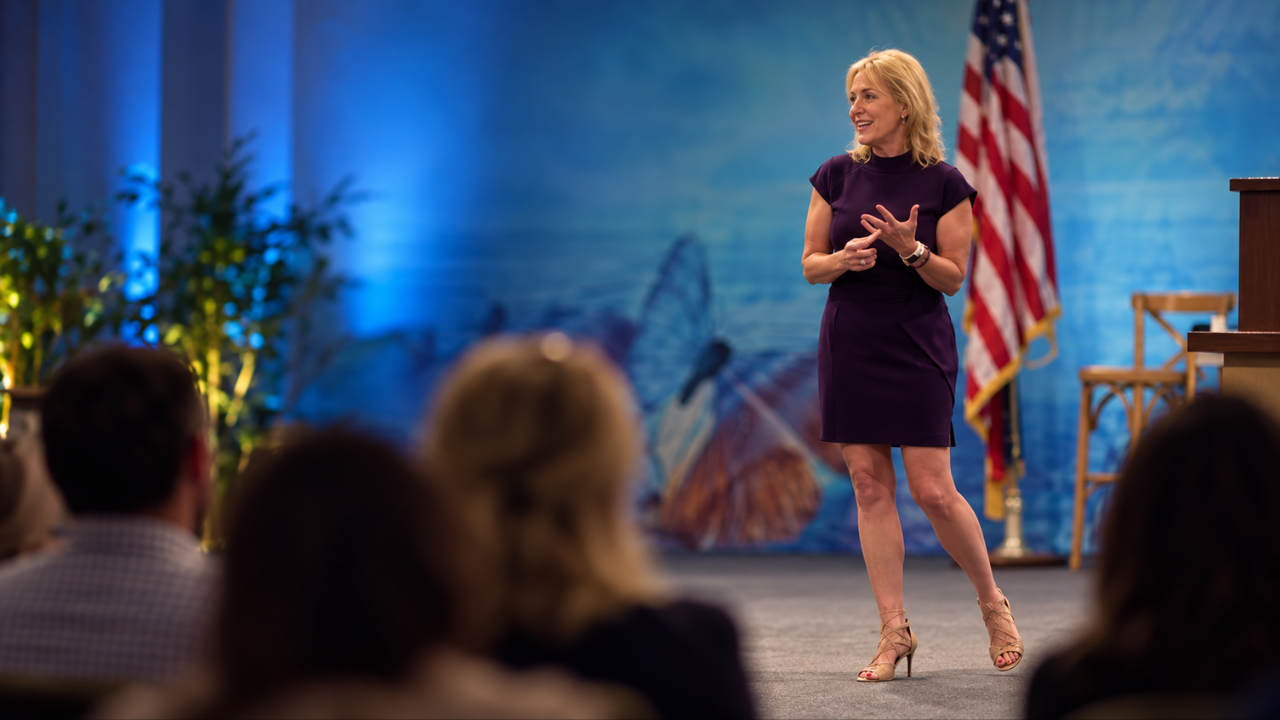
Welcome to my channel. My name is Kathie Owen. This is where we talk about leadership under pressure. You know, the kind you don't see on LinkedIn. Elite athletes train for pressure. Most leaders don't. What I do doesn't fit neatly into a box. So people often ask me. Are you a coach? Are you a personal trainer? Are you a consultant? Are you corporate wellness? Are you leadership development? The honest answer is, well, I started there, but this work has evolved into something very different. And today I want to explain what I actually do. How I work. Why I work the way I do. And where this ability came from. This video is for leaders, founders, executives, and people who carry responsibility most people never see. For most of my life, I didn't know this was a skill. I thought everyone noticed what I noticed. I see patterns very quickly. I see what happens beneath words, beneath behavior, beneath systems and beneath culture. I can walk into a workplace, a home, a boardroom, or a conversation, and immediately feel where energy is leaking, where tension lives, where performance quietly breaks down. For years, I called this intuition or empathy. But through healing, reflection, and deep inner work, I now understand it differently. This is discernment. And it was forged through lived experience. It came from navigating environments where reading the room mattered even as a child. Where emotional regulation mattered, where power dynamics were very real, where silence spoke louder than words. What once helped me survive is now what allows me to serve at the highest level. I study professional athletes, not just how they train their bodies, but how they train their minds. Elite athletes live under pressure, high expectations, public wins, public failures, disappointment, criticism, loss. Leadership is no different. What separates elite performers isn't talent alone. It's emotional regulation. Professional athletes are trained to stay present under pressure, recover quickly from mistakes, detach from outcomes, take radical responsibility, perform again and again, and again. That is leadership. Executives don't burn out because they aren't capable. They burn out because no one taught them how to regulate their nervous system while carrying responsibility. That's where my work lives. Everything I do is built on three pillars. Number one, non-attachment. You can care deeply without being emotionally hijacked. Attachment clouds judgment, non-attachment creates clarity. Number two, radical responsibility, not blame, not shame, no excuses, just ownership. And number three, courage. The courage to see reality clearly. The courage to interrupt patterns, the courage to lead differently. These aren't motivational ideas. They are performance principles. This part is important because my work doesn't look like traditional consulting. When I work with a leader, I observe. I might sit with you at a board meeting. Or at a restaurant or at a sporting event or in your home or during a speaking engagement. Sometimes I'll fly in and quietly attend something you're already doing. And here's the key part. I don't analyze in the moment. I don't critique, I don't correct. I observe. Then I go home, I process, I meditate. I contemplate. Because this work requires discernment, not judgment. When I'm sitting in a room, my ego doesn't get a vote. If I judge from ego, I lose clarity. If I retract, I distort truth. The real work happens in the stillness afterwards. That's where patterns organize themselves. That's where truth surfaces. That's where precision is born. And from that place, I design a plan, a clear plan, a grounded plan, A plan that saves leaders time, energy, and often millions of dollars. Multimillions. Because small unaddressed patterns become expensive over time. I don't just look at work. I look at the whole system. Your leadership style, your communication patterns, your emotional regulation, your home life, your routines, your recovery, your wellness. Leadership doesn't turn off at 5:00 PM. Performance doesn't live in silos. I don't create content to call people out. I create content to call patterns forward. Workplace case studies allow me to teach without exposing, educate without shaming, give language to things people feel but can't name. These stories are never about one person. They're about patterns that repeat everywhere. And once you see the pattern. You can change it. This might be the most important part. My power is not force. It is not volume, and it also isn't charisma. It's presence. Presence with a capital P. I see this clearly in places like Toastmasters. Toastmasters is a playground for me. I go there to sit in presence. To observe, to regulate, to notice, and I've watched the clubs I'm part of grow dramatically. Not because I'm trying to lead them, but because regulated presence organizes systems naturally. The same thing happens when I study leadership through shows like Quarterback and Receiver on Netflix or Ted Lasso. I'm not watching for entertainment. I'm watching regulation, attachment, pressure responses, leadership under stress. All of it informs my work. Because of the depth of this work, my client list is confidential. Our conversations are confidential, their lives are confidential. I work with leaders who carry real responsibility, sometimes public. Often private. That is why my work is invitation only. I work with a very small number of clients each year. This is high touch, highly precise, deep work. I don't scale this through volume, I scale it through impact. I started in corporate wellness, movement, health, burnout prevention. But as I healed, so did the work. I realized most leaders don't need another program. They need someone who can see the whole board, someone who understands pressure, someone who expects excellence. Not perfection, excellence. And knows how to train it. If you're interested in my workplace case studies, you are in the right place. That's what I share publicly. If you're curious about working with me, my work is invitation only. But you can always reach out through my website. And if nothing else, let this land. You don't need to work harder to lead better. You need to regulate better. That's where performance lives. All right, thanks for being here today. I trust that you found it helpful, and if you know someone who can benefit from this, please share it with them. And until next time, I will see you next time.

Explore Reality Transurfing pendulums, visualization, and simple problem-solving with Kathie Owen. Learn to picture confidence, peace of mind, and ease, then make space for a useful next step under pressure.
#RealityTransurfing #Pendulums #Visualization #HumanPatternsUnderPressure